Wednesday, October 14, 2009

Garrigou-Lagrange on Practical Naturalism


Share/Bookmark
From The Three Ages, Ch. 19 (available thru ITOPL):

"PRACTICAL NATURALISM: OF ACTION AND OF INACTION

Practical naturalism, which is the negation of the spirit of faith in the conduct of life, tends to revive under more or less accentuated forms, as it did some years ago in Americanism and Modernism. In several works that appeared during that period, mortification and the vows of religion were disparaged; they were considered not a deliverance which favors the upward flight of the interior life, but a hindrance to the apostolate. We were asked: Why speak so much of mortification, if Christianity is a doctrine of life; of renunciation, if Christianity ought to assimilate all human activity instead of destroying it; of obedience, if Christianity is a doctrine of liberty? These passive virtues, they said, have such importance only for negative spirits that are incapable of undertaking anything and that possess only the force of inertia.

Why, they added, depreciate our natural activity? Is our nature not good, does it not come from God, is it not inclined to love Him above all else? Our passions themselves, the movements of our sensible appetites (desire or aversion, joy or sadness) are neither good nor bad; they become so according to the intention of our will. They are forces to be utilized; they must not be mortified but regulated and modulated. They said that such is the teaching of St. Thomas, very different from that of so many spiritual writers, quite different, too, from Book III, chap. 54, of The Imitation on "The Different Motions of Nature and Grace." In thus opposing the author of The Imitation, they forget the words of our Savior: "Unless the grain of wheat falling into the ground die, itself remaineth alone. But if it die, it bringeth forth much fruit. He that loveth his life shall lose it; and he that hateth his life in this world, keepeth it unto life eternal" (1)

They asked, moreover, why one should so greatly combat private judgment, self-will. To do so is to place oneself in a state of servitude which destroys all initiative and makes a person lose contact with the world, which one ought not to scorn, but to ameliorate. Holding this opinion, would one not lose sight of what all true spiritual men have meant by "self-will," or a will not conformed to the will of God?

In this objection formulated by Americanism and taken up again by Modernism,(2) the true is cleverly mingled with the false. Even the authority of St. Thomas is invoked, and the following principle of the great doctor is often repeated: "Grace does not destroy nature, but perfects it." The movements of nature are not as inordinate, they say, as the author of The Imitation maintains; we must have the full development of nature under grace.

And as they lack the true spirit of faith, they designedly pervert the principle of St. Thomas which they invoke. He speaks of nature as such, in the philosophical sense of the word, of nature with its essential and also its good elements; of the work of God, and not of wounded, fallen nature, as it actually is in consequence of original sin and of our personal sins, more or less deformed by an often unconscious egoism, our covetousness, our pride. Likewise, St. Thomas speaks of the passions or emotions as such, and not as inordinate, when he says that they are forces to be utilized; but to utilize them one must mortify whatever is inordinate in them. Their inordinateness must not simply be veiled or moderated, but put to death.

All these equivocations were not long in manifesting their consequences. The tree is judged by its fruit. With too strong a desire to please the world, these Modernists, apostles of a new type, let themselves be converted by the world, instead of converting it.

They disregarded the consequences of original sin; to hear them, one would judge that man was born good, as the Pelagians, and later Jean Jacques Rousseau, declared. They forgot the gravity of mortal sin as an offense against God; and they considered it merely an evil which harms man. Therefore they failed particularly to recognize the gravity of the intellectual sins: incredulity, presumption, pride. The most serious offense seemed to them to be abstention from social works; consequently the purely contemplative life was considered quite useless, or the lot of the incapable. God Himself willed to reply to this objection by the canonization of St. Theresa of the Child Jesus and by the extraordinary radiation of that contemplative soul.

They also failed to recognize the infinite elevation of our supernatural end: God, the Author of grace. Instead of speaking of eternal life, of the beatific vision, they talked about a vague moral ideal tinted with religion, in which the radical opposition between heaven and hell disappeared. Finally, they forgot that the great means taken by Christ to save the world was the cross.

By all its consequences, the new doctrine gave proof of its principle: practical naturalism, not the spirit of God but the spirit of nature, the negation of the supernatural, if not in theory, at least in the conduct of life. During the period of Modernism this negation was occasionally formulated by declaring that mortification does not belong to the essence of Christianity. But we reply: Is mortification anything else than penance, and is not penance necessary for the Christian? How could St. Paul have written: "Always bearing about in our body the mortification of Jesus, that the life also of Jesus may be made manifest in our bodies"? (3)

Under another form, practical naturalism appeared among the quietists, especially at the time of Molinos, in the seventeenth century. This naturalism was not that of action, as it is in Americanism, but that of inaction. Molinos held that "to wish to act offends God, who wishes to be the only one to act in us." (4) By no longer acting, he said, the soul annihilates itself and returns to its principle; then God alone lives and reigns in it.(5) Practical naturalism is thus reached by a way contrary to that of Americanism, which exalts natural activity.

Molinos deduced from his principle that the soul should no longer produce acts of knowledge or of love of God,(6) nor should it think any more of heaven or of hell, nor any longer reflect on its acts or on its defects; (7) the examination of conscience was thus suppressed. Molinos added that the soul should no longer desire its own perfection or its salvation,(8) nor should it ask God for anything positive,(9) but it ought to abandon itself to Him so that He may work His divine will in it, without its cooperation. Finally, he said: "The soul no longer needs to offer positive resistance to temptations, of which it no longer has to take account;(10) the voluntary cross of mortification is a heavy and useless burden which one must get rid of." (11)

He recommended that in prayer one should remain in obscure faith, in a repose in which one forgets every distinct thought relating to the humanity of Christ, or even to the divine perfections or to the Blessed Trinity, and that one should remain in this repose without producing any act. "That," he said, "is acquired contemplation, in which one must remain all one's life if God does not raise the soul to infused contemplation." (12)

In reality the contemplation thus acquired by the cessation of every act was only a pious somnolence, far more somnolent than pious. Certain quietists did not deign to leave it even to kneel at the elevation during Mass. They remained seated in their would-be union with God, which they confounded with an august form of nothingness. Their state reminds one more of the nirvana of the Buddhists than of the transforming and radiant union of the saints.

This shows that the acquired contemplation, which Molinos advised for all, was not an infused passivity, but one acquired at will by the cessation of every operation. He thus attributed to this would-be acquired contemplation what is true only of infused contemplation, and with one stroke of the pen he suppressed all asceticism and the practice of the virtues, considered by tradition as the true disposition for infused contemplation and intimate union with God. Moreover, he claimed that "the distinction between the three ways, purgative, illuminative, and unitive, is the greatest absurdity that has been expressed in mysticism, since," he says, "there is only one way for all, the interior way." (13)

This suppression of mortification led to the worst disorders. Molinos finally reached the point of declaring that the temptations of the devil are always useful, even when they lead to immodest acts; that it is not necessary then to make acts of the contrary virtues, but that one must resign oneself, for such weakness reveals our nothingness.(14) But Molinos, instead of thus reaching contempt of self by the recognition of our culpability, claimed to reach impeccability(15) and mystical death; strange impeccability, reconcilable with all disorders.(16)

This lamentable doctrine is, of course, a caricature of traditional mysticism, which is thus radically perverted in all its principles. And under the pretext of avoiding natural activity, which naturalism of action exalts, one falls here into the practical naturalism of sloth and inaction. Under another form, this doctrine amounted to the suppression of asceticism, of the exercise of the virtues, and of mortification.(17)

The errors of the quietists show that there are two types of naturalism: the practical naturalism of those who have lost the interior life, and the quite different naturalism of those who have never found it.

At the opposite extreme from practical naturalism, there is occasionally the proud austerity of a false supernaturalism, such as we find in Jansenism and, earlier, in different forms of fanaticism, such as that of the Montanists in the second century and of the flagellants in the twelfth century. All these sects lost sight of the spirit of Christian mortification, which is not a spirit of pride, but of love of God.

In the seventeenth century the Jansenists fell into a pessimism which is an alteration of the Christian doctrine of penance. Like the first Protestants, they exaggerated the results of original sin to the point of saying that man no longer has free will, the liberty of indifference, but only spontaneity, and that all the acts of infidels are sins.(18) They taught that "all his life long, a man must do penance for original sin." (19) As a result, they retained souls during a whole lifetime in the purgative way, and kept them away from Holy Communion, saying that we are not worthy of such a union with our Lord. According to their doctrine, only those should be admitted to Holy Communion who have a pure, unalloyed love of God.(20) They forgot that this very pure love of God is precisely the effect of Communion, when it is accompanied by a generous struggle against all that is inordinate in us. Jansenism never attained to deliverance and peace.(21)

Here as elsewhere, two opposing errors must be avoided: practical naturalism and proud austerity. The truth is to be found between these two extremes and above them as a summit. We can see it if we consider, on the one hand, the elevation of our last end and of charity, and, on the other hand, the gravity of mortal sin and of its consequences."

Obtain PDF's of Garrigou-Lagrange's works through:

Tuesday, October 13, 2009

A Reader Asks: What Makes Us Different from the Brutes: The Intellect and the Will, or the Image of God?


Share/Bookmark


-A reader asks: I think I would like clarification on this: I read Sullivan Introduction to Philosophy [available thru ITOPL], where he says that the soul is different in humans because of their intelligence and will. Isn't it the image of God in man that makes us different from the animals?


-Ite ad Thomam answers: The answer is that both (a) intellect and will, and (b) the image of God in us, make us different from the animals. But the relationship between these two differentiating principles is analogous to the relationship between philosophy and theology (or natural reason and revelation).

(a) Philosophically, we can discover through our own natural reasoning that it is our rational powers, namely, intellect and will, that make us different from the rest of the animals--and notice I say the rest of the animals, for we are animals too, the only difference being that we are rational. This is what we can know philosophically.

(b) But theologically, we can know from Divine Revelation that we are also made in the image and likeness of God. This means not only that we have intellects and wills, but that we have the capacity to be children of God through baptism and sanctifying grace. We couldn't know this philosophically, that is, through natural reasoning alone. We know this only because we have received a supernatural revelation from God.

This serves to show the similarities and differences between philosophy and theology. While they are similar insofar as they deal with many of the same subjects (ultimate questions, such as, "what is the soul?," "does God exist?"), they nevertheless are different insofar as philosophy proceeds from natural human reason and experience only, whereas theology uses these and Divine Revelation (which includes Sacred Scripture and Sacred Tradition).

Monday, October 12, 2009

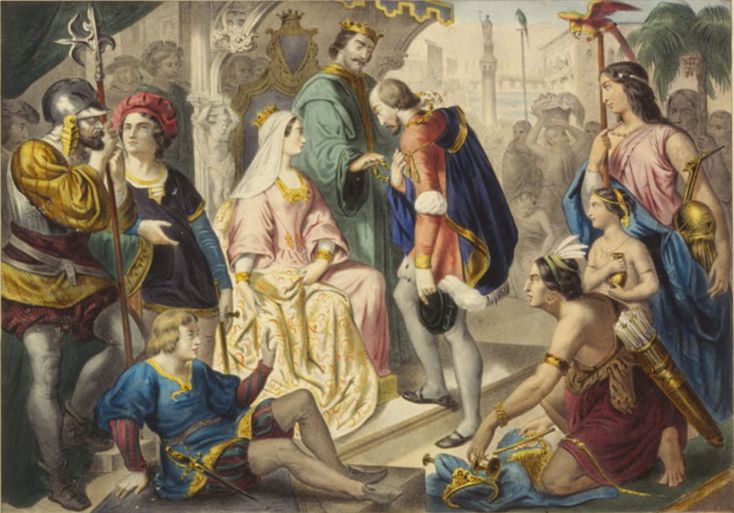
Leo XIII on the Servant of God, Christopher Columbus


Share/Bookmark

Link to Rorate Caeli post, containing excerpts from Leo XIII's Quarto abeunte saeculo.

Sunday, October 11, 2009

Aidan Nichols, OP - "Reason with Piety" (On Garrigou-Lagrange)


Share/Bookmark Aidan Nichols' recent book on Garrigou-Lagrange, Reason with Piety.


Here's the link to the book in Sapientia Press.

Here's the
link to the book in amazon.com.


Please post brief reviews on the book in the "comments" section below.  Feel free to comment on other reviews.

In Festo Maternitatis Beatae Mariae Virginis (Oct. 11), Evangelium Graece


Share/Bookmark
Τὰ παιδικὰ χρόνια τοῦ ᾿Ιησοῦ Χριστοῦ


43 καὶ τελειωσάντων τὰς ἡμέρας, ἐν τῷ ὑποστρέφειν αὐτοὺς ὑπέμεινεν ᾿Ιησοῦς ὁ παῖς ἐν ῾Ιερουσαλήμ, καὶ οὐκ ἔγνω ᾿Ιωσὴφ καὶ ἡ μήτηρ αὐτοῦ. 44 νομίσαντες δὲ αὐτὸν ἐν τῇ συνοδίᾳ εἶναι ἦλθον ἡμέρας ὁδὸν καὶ ἀνεζήτουν αὐτὸν ἐν τοῖς συγγενέσι καὶ ἐν τοῖς γνωστοῖς· 45 καὶ μὴ εὑρόντες αὐτὸν ὑπέστρεψαν εἰς ῾Ιερουσαλὴμ ζητοῦντες αὐτόν. 46 καὶ ἐγένετο μεθ᾿ ἡμέρας τρεῖς εὗρον αὐτὸν ἐν τῷ ἱερῷ καθεζόμενον ἐν μέσῳ τῶν διδασκάλων καὶ ἀκούοντα αὐτῶν καὶ ἐπερωτῶντα αὐτούς· 47 ἐξίσταντο δὲ πάντες οἱ ἀκούοντες αὐτοῦ ἐπὶ τῇ συνέσει καὶ ταῖς ἀποκρίσεσιν αὐτοῦ. 48 καὶ ἰδόντες αὐτὸν ἐξεπλάγησαν, καὶ πρὸς αὐτὸν ἡ μήτηρ αὐτοῦ εἶπε· τέκνον, τί ἐποίησας ἡμῖν οὕτως; ἰδοὺ ὁ πατήρ σου κἀγὼ ὀδυνώμενοι ἐζητοῦμέν σε. 49 καὶ εἶπε πρὸς αὐτούς· τί ὅτι ἐζητεῖτέ με; οὐκ ᾔδειτε ὅτι ἐν τοῖς τοῦ πατρός μου δεῖ εἶναί με; 50 καὶ αὐτοὶ οὐ συνῆκαν τὸ ρῆμα ὃ ἐλάλησεν αὐτοῖς. 51 καὶ κατέβη μετ᾿ αὐτῶν καὶ ἦλθεν εἰς Ναζαρέτ, καὶ ἦν ὑποτασσόμενος αὐτοῖς. καὶ ἡ μήτηρ αὐτοῦ διετήρει πάντα τὰ ρήματα ταῦτα ἐν τῇ καρδίᾳ αὐτῆς.

In Festo Maternitatis Beatae Mariae Virginis (Oct. 11), Homilia


Share/Bookmark Source: www.breviary.net


Ex Sermóne sancti Leónis Papæ
The Lesson is taken from a Sermon by St Leo the Pope
Sermo 1 de Nativitate Domini

Virgo régia Davídicæ stirpis elígitur, quæ sacro gravidánda fœtu divínam humanámque prolem prius concíperet mente quam córpore : et ne supérni ignára consílii ad inusitátos pavéret affátus, quod in ea operándum erat a Spíritu Sancto, collóquio dídicit angélico, nec damnum crédidit pudóris Dei Génitrix mox futúra.  Cur enim de conceptiónis novitáte despéret, cui efficiéntia de Altíssimi virtúte promíttitur?  Confirmátur credéntis fides étiam præeúntis attestatióne miráculi.  Donátur Elísabeth inopináta fœcúnditas, ut qui concéptum déderat stérili, datúrus non dubitarétur et Vírgini.  Verbum ígitur Dei Fílius, qui in princípio erat apud Deum, per quem facta sunt ómnia, et sine quo factum est nihil, propter liberándum hóminem ab ætérna morte, factus est homo.
His Mother was chosen a Virgin of the kingly lineage of David, and when she was to grow heavy with the sacred Child, her soul had already conceived him before her body.  She learned the counsel of God announced to her by the Angel, lest the unwonted events should alarm her.  The future Mother of God knew what was to be wrought in her by the Holy Ghost, and that her modesty was absolutely safe.  For why should she, unto whom was promised all sufficient strength through the power of the Highest, have felt hopeless merely because of the unexampled character of such a conception?  She believeth, and her belief is confirmed by the attestation of a miracle which hath already been wrought.  The fruitfulness of Elizabeth, before unhoped for, is brought forward that she might not doubt that he who had given conception unto her that was barren, would give the same unto her that was Virgin.  And so the Word of God, the Son of God, who was in the beginning with God, by whom all things were made, and without whom was not anything made that was made, to deliver man from eternal death, was made man.
V.  Tu autem, Dómine, miserére nobis.
R.  Deo grátias.
V.  But thou, O Lord, have mercy upon us.
R.  Thanks be to God.
R.  Gloriósæ Vírginis Maríæ Maternitátem digníssimam recolámus : * Cujus Dóminus humilitátem respéxit, quæ Angelo nuntiánte concépit Salvatórem mundi.
V.  Christo canámus glóriam in hac sacra solemnitáte mirábilis Genitrícis Dei.
R.  Cujus Dóminus humilitátem respéxit, quæ Angelo nuntiánte concépit Salvatórem mundi.
R.  Let us tell again of the right worthy Motherhood of the glorious Virgin Mary : * The same is she whose lowliness the Lord regarded, she who by the message of an Angel conceived the Saviour of the world.
V.  Let us sing praise to Christ on this the solemn Feastday of the wondrous Mother of God.
R.  The same is she whose lowliness the Lord regarded, she who by the message of an Angel conceived the Saviour of the world.

V.  Jube domne, (Dómine) benedícere.
V.  Vouchsafe, Reverend Father (O Lord), thy blessing.
Benedíctio 5: Christus perpétuæ det nobis gáudia vitæ.
R.  Amen.

Benediction 5: May Christ bestow upon us the joys of life eternal.
R.  Amen.

Lesson v
Sermo 2 de Nativitate Domini

Ingréditur hæc ínfima Jesus Christus Dóminus noster de cæli sede descéndens, et a patérna glória non recédens, novo órdine, nova nativitáte generátus.  Novo órdine, quia invisíbilis in suis, visíbilis factus est in nostris : incomprehensíbilis vóluit comprehéndi : ante témpora manens, esse cœpit in témpore.  Nova autem nativitáte génitus est : concéptus a Vírgine, natus ex Vírgine, sine patérnæ carnis concupiscéntia, sine matérnæ integritátis injúria : quia futúrum hóminum Salvatórem talis ortus decébat, qui et in se habéret humánæ substántiæ natúram, et humánæ carnis inquinaménta nescíret.  Orígo dissímilis, sed natúra consímilis ; humáno usu et consuetúdine, quod crédimus, caret : sed divína potestáte subníxum est, quod Virgo concéperit, Virgo pepérerit, Virgo permánserit.
Our Lord Jesus Christ, descending from his throne in heaven, but leaving not that glory which he hath with the Father, cometh into this lower world by being born after a new order and in a new birth.  He cometh after a new order, in that he who is unseen among his own, was seen among us ; the Incomprehensible was fain to be comprehended, and he that is from everlasting to everlasting began to be in time.  He was the Offspring of a new birth ; conceived of a maiden, without the passion of any fleshly father, without any breach of his Mother's virginity, since such a birth beseemed the coming Saviour of mankind, who was to have in him the nature of man's being, and to be free of any defilement of man's flesh.  Though he sprung not as we spring, yet is his nature as our nature ; we believe that he is free from the use and custom of men ; but it was the power of God which wrought that a maiden should conceive, that a maiden should bring forth, and yet abide a maiden still.
V.  Tu autem, Dómine, miserére nobis.
R.  Deo grátias.
V.  But thou, O Lord, have mercy upon us.
R.  Thanks be to God.
R.  Benedícta fília tu a Dómino, quia per te fructum vitæ communicávimus : * Sola sine exémplo placuísti Dómino nostro Jesu Christo.
V.  Nostras deprecatiónes ne despícias in necessitátibus nostris, sed a perículis cunctis líbera nos sancta Dei Génitrix.
R.  Sola sine exémplo placuísti Dómino nostro Jesu Christo.
R.  Blessed art thou of the Lord, O daughter, for through thee have we been given to eat of the tree of life : Thou, without ensample before thee, didst make thyself well-pleasing in the sight of our Lord Jesus Christ.
V.  Despise not our petitions in our necessities, but deliver us from all dangers, O holy Mother of God.
R.  Thou, without ensample before thee, didst make thyself well-pleasing in the sight of our Lord Jesus Christ.

V.  Jube domne, (Dómine) benedícere.
V.  Vouchsafe, Reverend Father (O Lord), thy blessing.
Benedíctio 6: Ignem sui amóris accéndat Deus in córdibus nostris.
R.  Amen.

Benediction 6: May God enkindle in our hearts the fire of his holy love.
R.  Amen.

Lesson vi
Ex Actis Pii Papæ undécimi
The Lesson is taken from the Acts of Pope Pius XI

Cum anno millésimo nongentésimo trigésimo primo, univérso orbe cathólico plaudénte, solémnia celebraréntur expléti sæculi décimi quinti, postquam in Ephesína synodo beáta María Virgo, de qua natus est Jesus, contra Nestórii hæresim Mater Dei a Pátribus, Cælestíno Papa præeúnte, conclamáta est, Summus Póntifex Pius undécimus faustíssimi evéntus memóriam, perénni suæ pietátis testimónio perpetuándam vóluit.  Itaque quod jam in Urbe exstábat nóbile Ephesínæ proclamatiónis monuméntum, triumphálem arcum in Basílica sanctæ Maríæ Majóris in Exquíliis, a decessóre suo Xysto tértio mirábili ópere musívo ornátum, témporis injúria fatiscéntem felíciter restituéndum una cum ala transvérsa Basílicæ munificéntia sua curávit.  Lítteris vero encyclicis, œcuménici Concílii Ephesíni genuínis lineaméntis descríptis, ineffábile divínæ Maternitátis beátæ Maríæ Vírginis privilégium, pie copioséque illustrávit, ut tam excélsi mystérii doctrína áltius fidélium ánimis insidéret.  Insimul autem benedíctam inter omnes mulíeres, Maríam Matrem Dei Nazarethanámque Famíliam nobilíssimum præ ómnibus exémplum præpósuit imitándum tum dignitátis ac sanctitúdinis casti connúbii tum educatiónis juventúti sancte tradéndæ.  Demum ut neque litúrgicum deésset monuméntum jussit ut festum divínæ Maternitátis beátæ Maríæ Vírginis cum Missa et Offício própriis die undécima Octóbris sub ritu dúplici secúndæ classis quotánnis ab univérsa Ecclésia celebrarétur.
In the year 1931, amid the applause of the whole Catholic world, solemn rites were celebrated to mark the completion of the fifteen centuries which had elapsed since the Council of Ephesus, moving against the Nestorian heresy, had acclaimed the blessed Virgin Mary, of whom Jesus was born, as Mother of God.  This acclamation had been made by the Fathers of the Church under the leadership of Pope Celestine.  Pius XI, as Supreme Pontiff, wished to commemorate the notable event and to give lasting proof of his devotion to Mary.  Now there had existed for many years in Rome a grand memorial to the proclamation of Ephesus―the triumphal arch in the basilica of Saint Mary Major on the Esquiline Hill.  This monument had already been adorned by a previous pontiff, Sixtus III, with mosaics of marvellous workmanship, now falling to pieces from the decay of the passing ages.  Pius XI, therefore, out of his own munificence, caused these to be restored most exquisitely and with them the transept of the basilica.  In an Encyclical Letter Pius set forth also the true history of the Council of Ephesus, and expounded fervently and at great length the doctrine of the prerogatives of the Blessed Virgin Mary as Mother of God.  He did this that the doctrine of this lofty mystery might sink more deeply into the hearts of the faithful.  In it he set forth Mary, the Mother of God, blessed among women, and the most holy Family of Nazareth as the exemplars to be followed above all others, as models of the dignity and holiness of chaste wedlock, as patterns of the holy education to be given youth.  Finally that no liturgical detail be lacking, he decreed that the feast of the Divine Motherhood of the Blessed Virgin Mary be celebrated annually on the 11th day of October by the universal Church with a proper Mass and Office under the rite of a double of the second class.
V.  Tu autem, Dómine, miserére nobis.
R.  Deo grátias.
V.  But thou, O Lord, have mercy upon us.
R.  Thanks be to God.
R.  Benedícta tu inter mulíeres, et benedíctus fructus ventris tui : * Unde hoc mihi, ut véniat Mater Dómini mei ad me?
V.  Respéxit humilitátem ancíllæ suæ, et fecit mihi magna, qui potens est.
R.  Unde hoc mihi, ut véniat Mater Dómini mei ad me?
V.  Glória Patri, et Fílio, et Spirítui Sancto.
R.  Unde hoc mihi, ut véniat Mater Dómini mei ad me?
R.  Blessed art thou among women, and blessed is the Fruit of thy womb : * Whence is this to me, that the Mother of my Lord should come to me?
V.  He hath regarded the lowliness of his handmaiden, and he that is mighty hath magnified me.
R.  Whence is this to me, that the Mother of my Lord should come to me?
V.  Glory be to the Father, and to the Son, and to the Holy Ghost.
R.  Whence is this to me, that the Mother of my Lord should come to me?

Friday, October 09, 2009

Garrigou-Lagrange on the "Communicatio Idiomatum"


Share/Bookmark
From Christ the Savior, Ch. XIV, Q. 12 (Available thru ITOPL):

The Consequences Of The Union As Regards Those Things That Belong To Christ In Himself

This question is about the terms employed in speaking of the mystery of the Incarnation.

We are concerned here with what is technically called the communication of idioms. "Idiom" is derived from the Greek and means the same as property in Latin. Hence communication of idioms is communication of properties. In other words, although the two natures in Christ are really distinct and inconfused, as defined against Eutyches, yet by reason of the hypostatic union the properties of the divine nature can be predicated of this man Jesus, and human attributes of God. Hence the communication of idioms is usually defined as the mutual predication and interchange in themselves of the two natures, the divine and the human, and their properties, by reason of the hypostatic union. The foundation for this communication of idioms in Christ is the hypostatic union itself, by reason of which one and the same suppositum has two natures, the divine nature and the human nature.

It must be observed concerning this communication that concrete names, such as God, man, in opposition to abstract names, such as Godhead, humanity, signify directly the suppositum, and indirectly the nature. For "God, ' signifies the suppositum that has the divinity, and "man" signifies the suppositum that has the humanity. If, therefore, the suppositum is the same for the two natures, then it is true to say: "God is man, " although it is false to say: "The Godhead is the humanity." Thus we shall see[1364] that the generally accepted rule, namely, concrete words of concrete subjects, both of natures and properties, generally speaking, can of themselves be predicated of either; but abstract words of abstract subjects cannot of themselves formally be predicated of either. Thus we shall see that we cannot say the Godhead is the humanity or that God is the humanity, or that the humanity is God.[1365]

Therefore we must take great care to distinguish between abstract terms and concrete terms. The abstract term signifies the nature separated from the subject, for example, humanity. The concrete term signifies the nature as existing in the subject, for example, man. Hence this distinction between concrete and abstract term is of great importance in distinguishing between the nature and the suppositum, since the nature is an essential part of the suppositum. There is the same distinction between "being" as a noun and "being" as a participle, or between the reality and the real itself.

The principal definitions of the Church about the communication of idioms are to be found in the fourth and tenth canons of the Council of Ephesus,[1366] and in the tenth and twelfth canons of the Second Council of Constantinople.[1367]

Notes: 


1244  cf. ad 3.
1245  Heb. 10:25
1246  Com. in Heb., 10:25
1247  Prov. 4:18
1248  Summa theol., Ia, q. 85, a. 7.
1249  Com. on Aristotle's De anima, Bk. II, lect. 94
1250  De veritate, q. 12, a. 6, ad 4; q. 24, a. 8, ad 6.


Obtain PDF's of Garrigou-Lagrange's works through:
Thursday, October 08, 2009

Dom Chautard on the Heresy of Good Works


Share/Bookmark


Link below takes you to his work, The Soul of the Apostolate (see pp. 23ff).

Monday, October 05, 2009

Why Philosophy is the Handmaid of Theology


Share/Bookmark


From St. Thomas' Commentary on Boethius' De Trinitate I.2.3 
(Leonine edition of work available on PDF thru ITOPL):

Whether in the Science of Faith, Which Is Concerning God, it Is Permissible to Use the Rational Arguments of the Natural Philosophers

Response. I answer that it must be said that gifts of grace are added to those of nature in such a way that they do not destroy the latter, but rather perfect them; wherefore also the light of faith, which is gratuitously infused into our minds, does not destroy the natural light of cognition, which is in us by natuise. For although the natural light of the human mind is insufficient to reveal those truths revealed by faith, yet it is impossible that those things which God has manifested to us by faith should be contrary to those which are evident to us by natural knowledge. In this case one would necessarily be false: and since both kinds of truth are from God, God would be the author of error, a thing which is impossible. Rather, since in imperfect things there is found some imitation of the perfect, though the image is deficient, in those things known by natural reason there are certain similitudes of the truths revealed by faith. Now, as sacred doctrine is founded upon the light of faith, so philosophy depends upon the light of natural reason; wherefore it is impossible that philosophical truths are contrary to those that are of faith; but they are deficient as compared to them. Nevertheless they incorporate some similitudes of those higher truths, and some things that are preparatory for them, just as nature is the preamble to grace.

If, however, anything is found in the teachings of the philosophers contrary to faith, this error does not properly belong to philosophy, but is due to an abuse of philosophy owing to the insufficiency of reason. Therefore also it is possible from the principles of philosophy to refute an error of this kind, either by showing it to be altogether impossible, or not to be necessary. For just as those things which are of faith cannot be demonstratively proved, so certain things contrary to them cannot be demonstratively shown to be false, but they can be shown not to be necessary.

Thus, in sacred doctrine we are able to make a threefold use of philosophy:

1. First, to demonstrate those truths that are preambles of faith and that have a necessary place in the science of faith. Such are the truths about God that can be proved by natural reason—that God exists, that God is one; such truths about God or about His creatures, subject to philosophical proof, faith presupposes.

2. Secondly, to give a clearer notion, by certain similitudes, of the truths of faith, as Augustine in his book, De Trinitate, employed any comparisons taken from the teachings of the philosophers to aid understanding of the Trinity.

3. In the third place, to resist those who speak against the faith, either by showing that their statements are false, or by showing that they are not necessarily true.

Nevertheless, in the use of philosophy in sacred Scripture, there can be a twofold error:

In one way, by using doctrines contrary to faith, which are not truths of philosophy, but rather error, or abuse of philosophy, as Origen did.

In another way, by using them in such manner as to include under the measure of philosophy truths of faith, as if one should be willing to believe nothing except what could be held by philosophic reasoning; when, on the contrary, philosophy should be subject to the measure of faith, according to the saying of the Apostle (2 Cor. 10:5), “Bringing into captivity every understanding unto the obedience of Christ.”


Videtur quod in his quae sunt fidei non liceat philosophicis rationibus uti...

Responsio. Dicendum quod dona gratiarum hoc modo naturae adduntur quod eam non tollunt, sed magis perficiunt; unde et lumen fidei, quod nobis gratis infunditur, non destruit lumen naturalis rationis divinitus nobis inditum. Et quamvis lumen naturale mentis humanae sit insufficiens ad manifestationem eorum quae manifestantur per fidem, tamen impossibile est quod ea, quae per fidem traduntur nobis divinitus, sint contraria his quae sunt per naturam nobis indita. Oporteret enim alterum esse falsum; et cum utrumque sit nobis a Deo, Deus nobis esset auctor falsitatis, quod est impossibile. Sed magis cum in imperfectis inveniatur aliqua imitatio perfectorum, in ipsis, quae per naturalem rationem cognoscuntur, sunt quaedam similitudines eorum quae per fidem sunt tradita.

Sicut autem sacra doctrina fundatur supra lumen fidei, ita philosophia fundatur supra lumen naturale rationis; unde impossibile est quod ea, quae sunt philosophiae, sint contraria his quae sunt fidei, sed deficiunt ab eis. Continent tamen aliquas eorum similitudines et quaedam ad ea praeambula, sicut natura praeambula est ad gratiam. Si quid autem in dictis philosophorum invenitur contrarium fidei, hoc non est philosophia, sed magis philosophiae abusus ex defectu rationis. Et ideo possibile est ex principiis philosophiae huiusmodi errorem refellere vel ostendendo omnino esse impossibile vel ostendendo non esse necessarium. Sicut enim ea quae sunt fidei non possunt demonstrative probari, ita quaedam contraria eis non possunt demonstrative ostendi esse falsa, sed potest ostendi ea non esse necessaria.

Sic ergo in sacra doctrina philosophia possumus tripliciter uti. Primo ad demonstrandum ea quae sunt praeambula fidei, quae necesse est in fide scire, ut ea quae naturalibus rationibus de Deo probantur, ut Deum esse, Deum esse unum et alia huiusmodi vel de Deo vel de creaturis in philosophia probata, quae fides supponit. Secundo ad notificandum per aliquas similitudines ea quae sunt fidei, sicut Augustinus in libro de Trinitate utitur multis similitudinibus ex doctrinis philosophicis sumptis ad manifestandum Trinitatem. Tertio ad resistendum his quae contra fidem dicuntur sive ostendendo ea esse falsa sive ostendendo ea non esse necessaria.

Tamen utentes philosophia in sacra doctrina possunt dupliciter errare. Uno modo in hoc quod utantur his quae sunt contra fidem, quae non sunt philosophiae, sed corruptio vel abusus eius, sicut Origenes fecit. Alio modo, ut ea quae sunt fidei includantur sub metis philosophiae, ut scilicet si aliquis credere nolit nisi quod per philosophiam haberi potest, cum e converso philosophia sit ad metas fidei redigenda, secundum illud apostoli 2 Cor. 10: in captivitatem redigentes omnem intellectum in obsequium Christi.

Obtain PDF's of Aquinas' works (Leonine) thru:

Sunday, October 04, 2009

Ex Martyrologio


Share/Bookmark
Assísii, in Umbria, natális sancti Francísci, Levítæ et Confessóris; qui trium Ordinum, scílicet Fratrum Minórum, Páuperum Dominárum, ac Fratrum et Sorórum de Pæniténtia Fundátor éxstitit.  Ipsíus autem vitam, sanctitáte ac miráculis plenam, sanctus Bonaventúra conscrípsit.
At Assisi in Umbria, the birthday of St. Francis, cleric and confessor, founder of three orders: the Friars Minor, the Poor Clares, and the Brothers and Sisters of Penance.  His life, filled with holy deeds and miracles, were written by St. Bonaventure.

The Object and End of a Human Act: Finis Operis and Finis Operantis


Share/Bookmark
The scholastic tradition, especially manuals on ethics and moral theology, very rarely receive credit these days for developing Thomistic thought in a positive way.  As a matter of fact, they are vilified for taking approaches that are different from that of St. Thomas--not only for emphasizing sin and vice more than virtue, grace, etc., for following the scholastic method (now out of fashion) too rigidly, for focusing on cases (casuistry) more than on principles, and for a host of other now-unpopular elements in these manuals that the nouvelle theologie is now all-too-happy to condemn (cf. Servais Pinckaers, The Sources of Christian Ethics), but also for the unmentionable sin of teaching the traditional morality (especially sexual morality) of the Church, which is supposedly no longer tenable for any 'respectable' contemporary theologian.  But, of course, the mission here at Ite ad Thomam is precisely to give these works due credit and, as far as possible, revive traditional scholastic Thomism.  So here's a little research I did on a particular issue which demonstrates that some doctrines that Thomistic moral theologians and ethicists take for granted coming from the Angelic Doctor are actually of later origin.  In particular, I did some research on the monumental moral doctrine that which identifies the object of the human act with the finis operis and the end of a human act with the finis operantis.  

The finis operis (end of the work) is the natural end of an act; for example, the finis operis of bulding is to make a building, and the finis operis of cooking is to cook food.  The finis operantis (end of the agent), however, is that to which the agent orders the natural end of the act; for example, the finis operantis of building could be to profit from the sale of the building, and the finis operantis of cooking could be to entertain guests.

Traditionally, the object of a human act (cf. I-II.18) is understood as the finis operis of that act, and the end of a human act (cf. I-II.18) is understood as the finis operantis of the act.  This interpretation is practically unanimous in most of the Thomistic manuals and commentaries on the Summa (some of the more recent examples are, Garrigou-Lagrange, De beatitudine; Noldin, Summa Theologiae Moralis; Merkelbach, Summa Theologiae Moralis).  And in fact, there are many indications in Summa Theologiae I-II.18 and elsewhere (cf. text 3 below) that this is the correct interpretation.  The ipsissima verba of the Angelic Doctor, however, never explicitly makes such an identification.  As the word search results below show, there are five distinct places in Aquinas' corpus where he uses the distinction between finis operis and finis operantis.  In none of these texts does Aquinas identify the finis operis with the object of a human act, or the finis operantis with the end of the act.  Clearly, then, we owe this interpretive move to the Thomistic commentary tradition; in particular, it is traceable at least as far back as Bañez (but not as far back as the St. Thomas himself).


Source: www.corpusthomisticum.org

PLACE 1. Super Sent., lib. 2 d. 1 q. 2 a. 1 co. Utrum Deo competat agere propter finem

Respondeo dicendum, quod agere aliquid propter finem est dupliciter: vel propter finem operis, vel propter finem operantis. Finis operis est hoc ad quod opus ordinatum est ab agente, et hoc dicitur ratio operis; finis autem operantis est quem principaliter operans intendit: unde finis operis potest esse in alio; sed finis operantis semper est in ipso; sicut patet in aedificatore, qui lapides congregat ad componendum eos, quod ista compositio, in qua consistit forma domus, est finis operis; sed utilitas quae provenit ex hoc operanti, est finis ex parte agentis. Cum autem omne opus divinum in finem quemdam ordinatum sit, constat quod ex parte operis Deus propter finem agit. Sed quia finis operis semper reducitur in finem operantis, ideo oportet quod etiam ex parte operantis, finis actionis ejus consideretur, qui est bonum ipsius in ipso. Sciendum est ergo, quod agere hoc modo, est dupliciter: vel propter desiderium finis; vel propter amorem finis: desiderium enim est rei non habitae; sed amor est rei quae habetur, ut Augustinus dicit; et ideo omni creaturae convenit agere propter desiderium finis, quia unicuique creaturae acquiritur bonum ab alio quod ex se non habet; sed Deo competit agere propter amorem finis, cujus bonitati nihil addi potest. Ipse enim bonitatem suam perfecte amat, et ex hoc vult quod bonitas sua multiplicetur per modum qui possibilis est, ex sui scilicet similitudine, ex quo provenit utilitas creaturae, inquantum similitudinem divinae bonitatis recipit: et ideo dicitur in littera, quod Deus fecit creaturam propter bonitatem suam, considerando finem operantis; et propter utilitatem creaturae, considerando finem operis; et propter hoc etiam dicit Augustinus, quod inquantum Deus est bonus, sumus: et Dionysius dicit, quod divinus amor non dimisit eum sine germine esse.


PLACE 2. Super Sent., lib. 2 d. 1 q. 2 a. 4 co. Utrum anima rationalis debeat uniri corpori

Respondeo dicendum, quod causa finalis ipsius conjunctionis animae et corporis assignatur in littera a Magistro sufficienter. Finis enim potest sumi vel ex parte agentis, vel ex parte ipsius operis. Ex parte agentis, scilicet Dei, finis est bonitas ejus, secundum quod cadit in voluntate ipsius volentis bonitatem suam in res diffundere: et haec est prima ratio quam Magister assignat. Ex parte autem operis, finis intentus est pertingere in assimilationem divinae beatitudinis. Hoc autem est secundum esse ejus, prout ipsa conjunctio animae et corporis est quaedam similitudo divinae beatitudinis, qua conjungitur spiritus Deo: et haec est secunda ratio quam assignat. Et etiam secundum operationem, prout scilicet anima per operationes quas in corpore exercet, ad divinam beatitudinem accedit merendo: et haec est tertia ratio.


PLACE 3. Super Sent., 4 d. 16 q. 3 a. 1 qc. 2 ad 3: Utrum circumstantia sit proprietas moralis actus sive ejus conditio

Ulterius. Videtur quod inconvenienter enumerentur circumstantiae in hoc versu: quis, quid, ubi, quibus auxiliis, cur, quomodo, quando....

Praeterea, non est idem circumstantia rei et quod dat rei speciem, quia illud est rei intraneum. Sed moralia recipiunt speciem a fine; unde Ambrosius:intentio operi tuo nomen imponit. Ergo cur, quod finem importat, non debet dici circumstantia.

Ad tertium dicendum, quod est duplex finis, scilicet ultimus et propinquus. Ultimus quidem non potest poni circumstantia, quia omnes circumstantiae sumuntur in proportione ad ipsum. Propinquus etiam est duplex. Quidam qui est finis operis, secundum quod philosophus dicit in 2 Eth., quod quaedam conjuncta sunt malo fini; et iste finis dat speciem actui; unde vel non est circumstantia, si consideretur tantum genus moris; vel referendo ad ipsam substantiam actus, includitur in hac circumstantia quid. Alius vero est finis agentis, qui quandoque ex malo actu bonum intendit, vel e converso; et hic finis dicitur haec circumstantia cur. Ab hoc autem actus non recipit speciem propriam, sed quasi communem, secundum quod actus imperati induunt speciem virtutis vel vitii imperantis supra speciem quam habent ex habitu eliciente.


Place 4. Summa Theologiae IIª-IIae, q. 137 pr.: Videtur quod perseverantia non sit virtus...
Praeterea, virtus est qua recte vivitur, secundum Augustinum, in libro de Lib. Arbit. Sed sicut ipse dicit in libro de perseverantia, nullus potest dici perseverantiam habere quandiu vivit, nisi perseveret usque ad mortem. Ergo perseverantia non est virtus.

Ad secundum dicendum quod eodem nomine quandoque nominatur et virtus, et actus virtutis, sicut Augustinus dicit, super Ioan., fides est credere quod non vides. Potest tamen contingere quod aliquis habet habitum virtutis qui tamen non exercet actum, sicut aliquis pauper habet habitum magnificentiae, cum tamen actum non exerceat. Quandoque vero aliquis habens habitum incipit quidem exercere actum, sed non perficit, puta si aedificator incipiat aedificare et non compleat domum. Sic ergo dicendum est quod nomen perseverantiae quandoque sumitur pro habitu quo quis eligit perseverare, quandoque autem pro actu quo quis perseverat. Et quandoque quidem habens habitum perseverantiae eligit quidem perseverare, et incipit exequi aliquandiu persistendo; non tamen complet actum, quia non persistit usque in finem. Est autem duplex finis, unus quidem qui est finis operis; alius autem qui est finis humanae vitae. Per se autem ad perseverantiam pertinet ut aliquis perseveret usque ad terminum virtuosi operis, sicut quod miles perseveret usque ad finem certaminis, et magnificus usque ad consummationem operis. Sunt autem quaedam virtutes quarum actus per totam vitam debet durare, sicut fidei, spei et caritatis, quia respiciunt ultimum finem totius vitae humanae. Et ideo respectu harum virtutum, quae sunt principales, non consummatur actus perseverantiae usque ad finem vitae. Et secundum hoc, Augustinus accipit perseverantiam pro actu perseverantiae consummato.


PLACE 5. Summa Theologiae II-II, q. 141 a. 6 ad 1.: utrum regula temperantiae sit sumenda secundum necessitatem praesentis vitae

Videtur quod regula temperantiae non sit sumenda secundum necessitatem praesentis vitae. Superius enim non regulatur ab inferiori. Sed temperantia, cum sit virtus animae, est superior quam necessitas corporalis. Ergo regula temperantiae non debet sumi secundum necessitatem corporalem.

Ad primum ergo dicendum quod, sicut dictum est, necessitas huius vitae habet rationem regulae inquantum est finis. Considerandum est autem quod quandoque aliud est finis operantis, et aliud finis operis, sicut patet quod aedificationis finis est domus, sed aedificatoris finis quandoque est lucrum. Sic igitur temperantiae ipsius finis et regula est beatitudo, sed eius rei qua utitur, finis et regula est necessitas humanae vitae, infra quam est id quod in usum vitae venit.

Dominica XVII post Pentecosten: Evangelium (Textus Graece)


Share/Bookmark
Θεραπεία παραλυτικοῦ


Θ´ ΚΑΙ ἐμβὰς εἰς πλοῖον διεπέρασε καὶ ἦλθεν εἰς τὴν ἰδίαν πόλιν. 2 Καὶ ἰδοὺ προσέφερον αὐτῷ παραλυτικὸν ἐπὶ κλίνης βεβλημένον· καὶ ἰδὼν ὁ ᾿Ιησοῦς τὴν πίστιν αὐτῶν εἶπε τῷ παραλυτικῷ· θάρσει, τέκνον· ἀφέωνταί σοι αἱ ἁμαρτίαι σου. 3 καὶ ἰδού τινες τῶν γραμματέων εἶπον ἐν ἑαυτοῖς· οὗτος βλασφημεῖ. 4 καὶ ἰδὼν ὁ ᾿Ιησοῦς τὰς ἐνθυμήσεις αὐτῶν εἶπεν· ἵνα τί ὑμεῖς ἐνθυμεῖσθε πονηρὰ ἐν ταῖς καρδίαις ὑμῶν; 5 τί γάρ ἐστιν εὐκοπώτερον, εἰπεῖν, ἀφέωνταί σου αἱ ἁμαρτίαι, ἢ εἰπεῖν, ἔγειρε καὶ περιπάτει; 6 ἵνα δὲ εἰδῆτε ὅτι ἐξουσίαν ἔχει ὁ υἱὸς τοῦ ἀνθρώπου ἐπὶ τῆς γῆς ἀφιέναι ἁμαρτίας – τότε λέγει τῷ παραλυτικῷ· ἐγερθεὶς ἆρόν σου τὴν κλίνην καὶ ὕπαγε εἰς τὸν οἶκόν σου. 7 καὶ ἐγερθεὶς ἀπῆλθεν εἰς τὸν οἶκον αὐτοῦ. 8 ἰδόντες δὲ οἱ ὄχλοι ἐθαύμασαν καὶ ἐδόξασαν τὸν Θεὸν τὸν δόντα ἐξουσίαν τοιαύτην τοῖς ἀνθρώποις.

Dominica XVIII post Pentecosten: Commentarium super evangelium


Share/Bookmark
Absolutio: A vínculis peccatórum nostrórum absólvat nos omnípotens et miséricors Dóminus.
R.  Amen.

Absolution:  May the Lord Almighty and merciful break the bonds of our sins and set us free.
R.  Amen.

V.  Jube domne, (Dómine) benedícere.
V.  Vouchsafe, Reverend Father (O Lord), thy blessing.
Benedíctio 7: Evangélica léctio sit nobis salus et protéctio.
R.  Amen.

Benediction 7:  May the Gospel's holy lection be our safeguard and protection.
R.  Amen.

Lesson vii
Léctio sancti Evangélii secúndum MatthæumThe Lesson is taken from the Holy Gospel according to Matthew
Chap. 9, 1-8
In illo témpore : Ascéndens Jesus in navículam transfretávit et venit in civitátem suam.  Et réliqua.
At that time : Jesus entered into a ship, and passed over, and came into his own city.  And so on, and that which followeth.
Homilía sancti Petri ChrysólogiA Homily by St. Peter Chrysologus
Sermo 50
Christum in humánis áctibus divína gessísse mystéria, et in rebus visibílibus invisibília exercuísse negótia, léctio hodiérna monstrávit.  Ascéndit, inquit, in navículam, et transfretávit, et venit in civitátem suam.  Nonne ipse est, qui, fugátis flúctibus, maris profúnda nudávit, ut Israëlíticus pópulus inter stupéntes undas sicco vestígio velut móntium cóncava pertransíret?  Nonne hic est, qui Petri pédibus marínos vórtices inclinávit, ut iter líquidum humánis gréssibus sólidum præbéret obséquium.
This day's reading hath shewn us an instance of how Christ, in those things which he did as Man, worked deep works of God, and by things which were seen wrought things which were not seen.  The Evangelist saith : Jesus entered into a ship, and passed over, and came into his own city.  Was not this he who had once parted the waves hither and thither, and made the dry ground appear at the bottom of the sea, so that his people Israel passed dry-shod between masses of water standing still, as through an hollow glen in a mountain?  Was not this he who made the depths of the sea solid under the feet of Peter, so that the watery path offered a firm way for human footsteps?
V.  Tu autem, Dómine, miserére nobis.
R.  Deo grátias.
V.  But thou, O Lord, have mercy upon us.
R.  Thanks be to God.
Respond vii as in the Proper

V.  Jube domne, (Dómine) benedícere.
V.  Vouchsafe, Reverend Father (O Lord), thy blessing.
Benedíctio 8: Divínum auxílium máneat semper nobíscum.
R.  Amen.

Benediction 8: May help divine be with us all, for ever abiding.
R.  Amen.

Lesson viii
Et quid est, quod ipse sibi sic maris dénegat servitútem, ut brevíssimi lacus tránsitum sub mercéde náutica transfretáret?  Ascéndit, inquit, in navículam, et transfretávit.  Et quid mirum, fratres?  Christus venit suscípere infirmitátes nostras, et suas nobis conférre virtútes ; humána quærere, præstáre divína ; accípere injúrias, réddere dignitátes ; ferre tædia, reférre sanitátes : quia médicus, qui non fert infirmitátes, curáre nescit ; et qui non fúerit cum infírmo infirmátus, infírmo non potest conférre sanitátem.
Wherefore then denied he unto himself a like service from the sea, but crossed over that narrow lake at the cost of a voyage on shipboard?  He entered into a ship, and passed over.  What wonder, my brethren?  Christ came to take our weakness upon him, that he might make us partakers of his strength : to seek the things of men, that he might give to men the things of God ; to receive insults, that he might bestow honours ; to bear weariness, that he might grant rest ; for the physician that is himself beset by no frailties, knoweth not how to treat the frailties of others, nor he that is not weak with the weak, how to make the weak strong.
V.  Tu autem, Dómine, miserére nobis.
R.  Deo grátias.
V.  But thou, O Lord, have mercy upon us.
R.  Thanks be to God.
R.  Duo Séraphim clamábant alter ad álterum : *Sanctus, sanctus, sanctus Dóminus Deus Sábaoth :* Plena est omnis terra glória ejus.
V.  Tres sunt qui testimónium dant in cælo : Pater, Verbum, et Spíritus Sanctus : et hi tres unum sunt.
R.  Sanctus, sanctus, sanctus Dóminus Deus Sábaoth.
V.  Glória Patri, et Fílio, et Spirítui Sancto.
R.  Plena est omnis terra glória ejus.
R.  The two Seraphim did cry the One to the Other : * Holy, holy, holy is the Lord God of Hosts : * The whole earth is full of his glory.
V.  For there are Three that bear record in heaven, the Father, the Son, and the Holy Ghost : and these Three are One.
R.  Holy, holy, holy is the Lord God of Hosts.
V.  Glory be to the Father, and to the Son, and to the Holy Ghost.
R.  The whole earth is full of his glory.

V.  Jube domne, (Dómine) benedícere.
V.  Vouchsafe, Reverend Father (O Lord), thy blessing.
Benedíctio 9: Ad societátem cívium supernórum perdúcat nos Rex Angelórum.
R.  Amen.

Benediction 9: May the King of Angels give us fellowship with all the citizens of heaven.
R.  Amen.

Lesson ix
Christus ergo, si in suis mansísset virtútibus, commúne cum homínibus nil habéret ; et nisi implésset carnis órdinem, carnis in illo esset otiósa suscéptio.  Ascéndit, inquit, in navículam, et transfretávit, et venit in civitátem suam.  Creátor rerum orbis Dóminus, posteáquam se propter nos nostra angustávit in carne, cœpit habére humánam pátriam, cœpit civitátis Judáicæ esse civis, paréntes habére cœpit paréntum ómnium ipse parens ; ut invitáret amor, attráheret cáritas, vincíret afféctio, suadéret humánitas, quos fúgerat dominátio, metus dispérserat, fécerat vis potestátis extórres.
Therefore, if Christ had abode still in his strength, he had in no wise been a fellow of men ; if in him Flesh had not run the way of flesh, then had it been idle for him to have taken Flesh at all.  He entered into a ship, and passed over, and came into his own city.  The Lord, the Maker of the world, and of all things that are therein, having been pleased for our sakes to prison himself in our flesh, began to have an human home, and to be a citizen of a Jewish city ; himself the Father of all, to have parents ; and all, that his love might invite, his charity draw, his tenderness bind, his gentleness persuade them whom his Kingship had scared, his awfulness scattered, and his power terrified out of his dominion.
V.  Tu autem, Dómine, miserére nobis.
R.  Deo grátias.
V.  But thou, O Lord, have mercy upon us.
R.  Thanks be to God.

Dominica XVIII post Pentecosten: Cantus Proprii


Share/Bookmark Link to sanctamissa.org page.
Link to christusrex.org page.

Gratia est semen gloriae


Share/Bookmark
From Garrigou-Lagrange, The Three Ages of the Interior Life, Ch. 1:

All tradition declares that the life of grace on earth is in reality the seed of glory. St. Thomas delights also in saying: "For grace is nothing else than a beginning of glory in us." Bossuet often expresses himself in the same terms.

This explains why St. Thomas likes to say: "The good of grace in one is greater than the good of nature in the whole universe." The slightest degree of sanctifying grace contained in the soul of an infant after baptism is more precious than the natural good of the entire universe, all angelic natures taken together included therein; for the least degree of sanctifying grace belongs to an enormously superior order, to the order of the inner life of God, which is superior to all miracles and to all the outward signs of divine revelation.  The same supernatural life, the same sanctifying grace, is in the just on earth and in the saints in heaven. This is likewise true of infused charity...

Wednesday, September 30, 2009

Ex Martyrologio


Share/Bookmark
In Béthlehem Judæ deposítio sancti Hierónymi Presbyteri, Confessóris et Ecclésiæ Doctóris, qui, ómnium stúdia litterárum adéptus ac probatórum Monachórum imitátor factus, multa hæresum monstra gládio suæ doctrínæ confódit; demum, cum ad decrépitam usque vixísset ætátem, in pace quiévit, sepultúsque est ad Præsépe Dómini.  Ejus corpus, póstea Romam delátum, in Basílica sanctæ Maríæ Majóris cónditum fuit.
In Bethlehem of Juda, the death of St. Jerome, priest and doctor of the Church.  Excelling in all kinds of learning, he imitated the life of the most approved monks, and disposed of many monstrous heresies with the sword of his doctrine.  Having at length reached a very advanced age, he rested in peace and was buried near the manger of our Lord.  His body was afterwards transferred to Rome, and placed in the basilica of St. Mary Major.

Sunday, September 27, 2009

Dominica XVII post Pentecosten: Cantus Proprii


Share/Bookmark Nexus ad SanctaMissa.org.

Dominica XVII post Pentecosten: Homilía S. Joánnis Chrysóstomi


Share/Bookmark Source: www.breviary.net

Lesson vii
Léctio sancti Evangélii secúndum Matthæum
The Lesson is taken from the Holy Gospel according to Matthew
Chap. 22, 34-46
In illo témpore : Accessérunt ad Jesum pharisæi, et interrogávit eum unus ex eis legis doctor tentans eum : Magíster, quod est mandátum magnum in lege?  Et réliqua.
At that time : The Pharisees came unto Jesus, and one of them, which was a lawyer, asked him a question, tempting him, saying : Master, which is the great commandment in the Law?  And so on, and that which followeth.
Homilía sancti Joánnis Chrysóstomi
A Homily by St. John Chrysostom
Homilia 72 in Matthæum
Sadducæis confúsis, pharisæi rursus aggrediúntur ; cumque quiéscere oportéret, decertáre voluérunt : et legis perítiam profiténtem præmíttunt, non díscere, sed tentáre cupiéntes ; ac ita intérrogant : Quodnam primum mandátum in lege sit.  Nam cum primum illud sit, Díliges Dóminum Deum tuum : putántes causas sibi allatúrum ad mandátum hoc corrigéndum, áliquid addéndo, quóniam Deum se faciebat, hoc modo intérrogant.  Quid ígitur Christus?  Ut osténdat idcírco ad hæc eos devenísse, quia nulla in eis esset cáritas, sed invídiæ livóre tabéscerent : Díliges, inquit, Dóminum Deum tuum : hoc primum et magnum mandátum est.  Secúndum autem símile huic : Díliges próximum tuum sicut teípsum.
When the Pharisees had heard that Christ had put the Sadducees to silence, they gathered themselves together for a fresh attack ; just when it behoved them to be quiet, they willed to contend ; and so they put forward one of themselves who professed skill in the law, not wishing to learn, but to lay a snare.  This person therefore proposed the question : Which is the great commandment in the law?  The first and great commandment is : Thou shalt love the Lord thy God, but they expected that he would make some exception or addition to this in his own case, since he made himself God.  With this expectation they asked him the question ; but what said Christ?  To shew that they had adopted this course, because they were loveless, and sick with envy, he answered : Thou shalt love the Lord thy God with all thy heart, and with all thy soul, and with all thy mind.  This is the first and great commandment.  And the second is like unto it : Thou shalt love thy neighbour as thyself.
V.  Tu autem, Dómine, miserére nobis.
R.  Deo grátias.
V.  But thou, O Lord, have mercy upon us.
R.  Thanks be to God.
Respond vii as in the Proper

V.  Jube domne, (Dómine) benedícere.
V.  Vouchsafe, Reverend Father (O Lord), thy blessing.
Benedíctio 8: Divínum auxílium máneat semper nobíscum.
R.  Amen.

Benediction 8: May help divine be with us all, for ever abiding.
R.  Amen.

Lesson viii
Quam ob rem símile est huic?  Quóniam hoc illud indúcit, et ab illo rursus munítur.  Quicúmque enim male agit, ódio habet lucem, et non venit ad lucem.  Et rursus : Dixit insípiens in corde suo, Non est Deus.  Deínde séquitur : Corrúpti sunt, et abominábiles facti sunt in stúdiis suis.  Et íterum : Radix ómnium malórum avarítia est ; quam quidam appeténtes, erravérunt a fide.  Et, Qui díligit me, mandáta mea servábit : quorum caput et radix est : Díliges Dóminum Deum tuum, et próximum tuum sicut teípsum.
Why is this second commandment like unto the first?  Because the first is the second's source and sanction.  For every one that doeth evil hateth the light, neither cometh to the light.  And again : The fool hath said in his heart : There is no God.  And there followeth : They are corrupt, and become abominable in their works.  And yet again : The love of money is the root of all evil ; which while some coveted after, they have erred from the faith.  And yet once more : If ye love me, keep my commandments―of which commandments the head and root is : Thou shalt love the Lord thy God ; and thy neighbour as thyself.
V.  Tu autem, Dómine, miserére nobis.
R.  Deo grátias.
V.  But thou, O Lord, have mercy upon us.
R.  Thanks be to God.
R.  Duo Séraphim clamábant alter ad álterum : *Sanctus, sanctus, sanctus Dóminus Deus Sábaoth :* Plena est omnis terra glória ejus.
V.  Tres sunt qui testimónium dant in cælo : Pater, Verbum, et Spíritus Sanctus : et hi tres unum sunt.
R.  Sanctus, sanctus, sanctus Dóminus Deus Sábaoth.
V.  Glória Patri, et Fílio, et Spirítui Sancto.
R.  Plena est omnis terra glória ejus.
R.  The two Seraphim did cry the One to the Other: * Holy, holy, holy is the Lord God of Hosts : *The whole earth is full of his glory.
V.  For there are Three that bear record in heaven, the Father, the Son, and the Holy Ghost : and these Three are One.
R.  Holy, holy, holy is the Lord God of Hosts.
V.  Glory be to the Father, and to the Son, and to the Holy Ghost.
R.  The whole earth is full of his glory.

V.  Jube domne, (Dómine) benedícere.
V.  Vouchsafe, Reverend Father (O Lord), thy blessing.
Benedíctio 9: Ad societátem cívium supernórum perdúcat nos Rex Angelórum.
R.  Amen.

Benediction 9: May the King of Angels give us fellowship with all the citizens of heaven.
R.  Amen.

Lesson ix
Si ergo dilígere Deum, dilígere próximum est : (nam si díligis me, o Petre, inquit, pasce oves meas) si étiam diléctio próximi facit ut mandáta custódias : mérito ait in his totam legem et prophétas pendére.  Et quemádmodum in superióribus, cum de resurrectióne interrogarétur, plus dócuit quam tentántes petébant ; sic in hoc loco de primo interrogátus mandáto, secúndum étiam non valde quam primum inférius, sponte áttulit ; secúndum enim est primo símile.  Ita occúlte insinuávit, ódio illos ad quæréndum incitári.  Cáritas enim, inquit, non æmulátur.
If, therefore, to love God is to love our neighbour also, (as it appeareth where it is written : Simon, son of Jonas, lovest thou me?  And he said unto him : Lord, thou knowest all things ; thou knowest that I love thee.  Jesus saith unto him : Feed my sheep)―and if love is the fulfilling of the law, justly doth the Lord say that on these two commandments hang all the law and the Prophets.  And even as when, before this, being intérrogated about the Resurrection, he answered them more than they asked, so, now, being intérrogated concerning the first and great commandment, he answereth them, of his own accord, touching that second one also, which is little lower than the first, for the second is like unto it.  Herein he would have them understand that it was hatred stirred them up to question him.  For Charity, saith the Apostle, envieth not.
V.  Tu autem, Dómine, miserére nobis.
R.  Deo grátias.
V.  But thou, O Lord, have mercy upon us.
R.  Thanks be to God.

Dominica XVII post Pentecosten: Evangelium (Textus Graece)


Share/Bookmark
Mt. 22: 34-46
Περὶ τῆς μεγαλυτέρας ἐντολῆς


34 Οἱ δὲ Φαρισαῖοι ἀκούσαντες ὅτι ἐφίμωσε τοὺς Σαδδουκαίους, συνήχθησαν ἐπὶ τὸ αὐτό, 35 καὶ ἐπηρώτησεν εἷς ἐξ αὐτῶν, νομικός, πειράζων αὐτὸν καὶ λέγων· 36 διδάσκαλε, ποία ἐντολὴ μεγάλη ἐν τῷ νόμῳ; 37 ὁ δὲ ᾿Ιησοῦς ἔφη αὐτῷ· ἀγαπήσεις Κύριον τὸν Θεόν σου ἐν ὅλῃ τῇ καρδίᾳ σου καὶ ἐν ὅλῃ τῇ ψυχῇ σου καὶ ἐν ὅλῃ τῇ διανοίᾳ σου. 38 αὕτη ἐστὶ πρώτη καὶ μεγάλη ἐντολή. 39 δευτέρα δὲ ὁμοία αὐτῇ· ἀγαπήσεις τὸν πλησίον σου ὡς σεαυτόν. 40 ἐν ταύταις ταῖς δυσὶν ἐντολαῖς ὅλος ὁ νόμος καὶ οἱ προφῆται κρέμανται.
Περὶ τοῦ Μεσσίου


41 Συνηγμένων δὲ τῶν Φαρισαίων ἐπηρώτησεν αὐτοὺς ὁ ᾿Ιησοῦς 42 λέγων· τί ὑμῖν δοκεῖ περὶ τοῦ Χριστοῦ; τίνος υἱός ἐστι; λέγουσιν αὐτῷ· τοῦ Δαυῒδ. 43 λέγει αὐτοῖς· πῶς οὖν Δαυῒδ ἐν Πνεύματι Κύριον αὐτὸν καλεῖ λέγων, 44 εἶπεν ὁ Κύριος τῷ Κυρίῳ μου, κάθου ἐκ δεξιῶν μου ἕως ἂν θῶ τοὺς ἐχθρούς σου ὑποπόδιον τῶν ποδῶν σου; 45 εἰ οὖν Δαυῒδ καλεῖ αὐτὸν Κύριον, πῶς υἱὸς αὐτοῦ ἐστι;
46 καὶ οὐδεὶς ἐδύνατο αὐτῷ ἀποκριθῆναι λόγον, οὐδὲ ἐτόλμησέ τις ἀπ᾿ ἐκείνης τῆς ἡμέρας ἐπερωτῆσαι αὐτὸν οὐκέτι.

Wednesday, August 26, 2009

The Relevance of St. Thomas Aquinas (link)


Share/Bookmark