Showing posts with label Bouyer. Show all posts

Monday, May 09, 2011

Quaeritur: Aren't You Unfairly Criticizing Gilson?


Share/Bookmark
From a comment on a previous post:
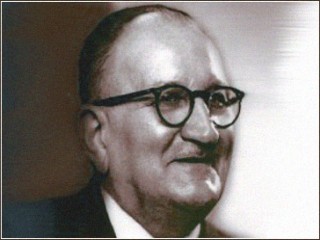
Alan: Quaeritur: You comment [regarding Bouyer's claim that Aquinas "never systematized" his philosophy separately from his theology, and that he only philosophized in a theological context]

"St Thomas's philosophy can be found in his Commentaries on Aristotle exactly in that way: in a non-theological context. Only there, in fact, does it follow its own properly rational principles. The philosophy contained in the Summa is formally theology, and only materially philosophical. This is something that Gilson and his followers are willingly blind to."

I did not get this impression of Gilson when reading his chapter on Faith and Reason in Le Thomisme [English translation: The Christian Philosophy of St. Thomas Aquinas].

He writes:

"Even in the commentaries on Aristotle, his mind always knows where it is going, and there too, it works towards the doctrine of Faith, not as an explanation, but as a completion and counterpoise of mental balance. [...] We do not find in any of his works a body of his philosophical conceptions set out for their own sake and in their rational order. There is indeed a series of writings composed by St. Thomas according to the philosophical method: these are his commentaries on Aristotle and a small number of minor works. But the smaller works give us only a fraction of his ideas and the commentaries on Aristotle, following patiently the meanderings of an obscure text, enable us to guess only imperfectly what a "Summa" of the Thomistic philosophy might have been like, if it had been systematised by St. Thomas himself with that lucidity of genius which dominates his Summa Theologica."


Don Paco: Respondeo dicendum: That text you quote from Gilson is a perfect example of what I'm criticizing in him (and in Bouyer, who is only echoing the Gilsonian position).

The traditional Dominican Thomistic view is that in Aquinas' commentaries on Aristotle we do find "a body of his philosophical conceptions set out for their own sake and in their rational order."*

But Gilson rejected this (and this rejection is in fact one of the foundations of his novel form of Thomism). He thinks that Aquinas' commentaries fall short of this description because (a) they are done with theological motives, and hence they are not the work of a philosopher, but the work of a theologian (he thus seems to imply that they are formally theological); and especially because (b) in them, Aquinas is enslaved to "following patiently the meanderings of an obscure text." 

In other words, he sees the commentaries not as a full-fledged philosophical exposition of the philosophical sciences, done according to their own principles, but as a theologian's doxographical (historical) interpretation of an ancient philosopher. Aquinas, in this view, is not acting as a philosopher who, on the occasion of Aristotle's writings, presents his own philosophical positions, but rather, is acting as a theologian who is merely telling us what exactly Aristotle said, regardless of whether he thinks Aristotle is right or not (rather like a modern historian of philosophy does when giving an exposition on Plotinus, Descartes, or whomever else).  Ergo, Gilson concludes, Thomistic philosophers should not draw Aquinas' philosophy from the Commentaries, but from the Summa.  

(To indulge in a bit of caricature, courtesy of one of my former professors: "Aquinas died, and Gilson was born, and everyone in between got it wrong.  Thank God for Gilson, the Thomistic messias.")

Sed contra, Aquinas himself thinks that in Aristotle's works we find a complete corpus of philosophical sciences "set out for their own sake and in their rational order," to use Gilson's very words.  That this is so is evident from Aquinas' division of Aristotle's texts: there, he identifies the Philosopher's divisions with the divisions of the science itself which is being divided.  So, for instance, in the Physics, he will say that Aristotle first treats the principles of mobile being (Book I) and then the principles of the science (Book II), and at the same time he justifies this division, explaining why this has to be done.  (Aquinas engages extensively in this type of philosophical work of dividing sciences at the beginning of each lectio or set of lectiones.  Sadly, these divisiones textus are habitually ignored by many students of Aquinas' commentaries, and are even left out of some translations).  

That Aquinas thought that Aristotle's works represented the philosophical sciences themselves is even more evident from the prooemia to the commentaries.** In other words, Aquinas himself thinks Aristotle's words are not the mere "meanderings of an obscure text" but philosophical science itself done according to its proper philosophical order. The commentaries, then, are Aquinas' own completion and explanation of what he thought was an already-existing "summa of philosophy," as it were.

Because Gilson does not see it this way, he is inclined to regard the Summa theologiae as the most important source for Aquinas' philosophy. Yet the philosophy that he finds in the Summa is not a philosophy that is sought for its own sake; it is not pure philosophy. Rather, it is what Gilson calls "Christian philosophy," philosophy as being exercized within the science of theology. This is why Gilson organizes his entire The Christian Philosophy of St. Thomas Aquinas (original French, Le Thomisme) according to the theological order in which philosophical topics are discussed in the Summa theologiae, instead of organizing them in the philosophical order in which St. Thomas himself thinks they should be treated.  Gilson,  therefore, and hence most modern Thomists (who are, whether knowingly or not, influenced by his thought), are abandoning the philosophical methodology of St. Thomas and bringing in his theological methodology into philosophy.***

------------

Notes:

* For an example of this traditional Dominican Thomistic approach to interpreting St. Thomas, see H.D. Gardeil, An Introduction to the Philosophy of St. Thomas Aquinas 4 vols. available through ITOPL (only vols. 2-4 are in English translation; all four vols. are available in the original French).  See also Garrigou-Lagrange, Reality, ch. 1 (also available thorugh ITOPL).

** See especially his prooemium to the Posterior Analytics.  There, he performs an ambitious  division of the whole art of logic into its integral parts, and simultaneously tells the reader which works of Aristotle correspond to which parts of logic.  He does something similar regarding the integral parts of natural science and Aristotle's books on this science in Physics I, lectio 1 (this work does not have a prooemium but simply includes its prefatory material directly in the first lectio).

*** See the prooemia to the Commentaries, as well as the various texts throughout the Commentaries on the Division and Order of the SciencesSome scholarly work has been done on the philosophical importance of Aquinas' divisiones textus and prooemia.  A particularly important contribution to the issue has been done  in Spanish: see Jorge R. Morán, "Tomás de Aquino, intérprete de Aristóteles" in Héctor Velázquez (ed.), Tomás de Aquino, Comentador de Aristóteles, Mexico City, Mexico: Universidad Panamericana, 2010; pp. 125-154.


Friday, August 20, 2010

Louis Bouyer: Enemy of Traditional Theology


Share/Bookmark
Fr. Louis Bouyer, Neo-Modernist, not-quite-ex-Lutheran, Conciliar Peritus, unleashes his neo-modernist hogwash and tells Garrigou-Lagrange, Sertillanges, John of St Thomas, and the rest of the tradition of Scholastic Thomists what St Thomas really taught about God and Revelation.

Taken from Bouyer's The Invisible Father: Approaches to the Mystery of the Divinity, pp. 248-257, with comments by Don Paco in red.

Neo-Thomist Equivocations on Thomism

Let us take as an example one of the most venerable productions of the last Thomist, or rather, Neo-Thomist renaissance {note that the term 'neo-Thomist' is a pejorative one}: the long and great book of Fr. Reginald Garrigou-Lagrange, OP, Dieu, son existence et sa nature [God: His Existence and His Nature].  In it, the theological teaching of St Thomas is analyzed, carefully taken to pieces and put together again, with a clarity and a fidelity most deserving of praise.  Yet few readers, putting down the book, will have escaped the impression that in it the God of the Bible and the Gospel has been reduced to a caput mortuum [dead head] of frozen abstractions.  And yet its author undoubtedly exemplified in his time that rare combination of theologian and eminent man of the spirit, and it was his constant concern to develop spirituality and theology in tandem.  How then, we must ask, could such a theologian have produced a summa about God frankly so overwhelmingly boring and, more especially, the speculative ramifications of which (practically) never contribute to a genuine enrichment of thought?  {Typical Neo-Modernist critique of everything traditional: "it is boring."  Cf. Von Balthasar, Raising the Bastions.  This is quite telling of their motives and of their unworthiness as theologians or even as churchmen.}

E. Gilson, with such Thomists in mind, was perfectly right in saying that one can’t see the forest for the trees, and that this is an inevitable result of their systematic effort to separate what is philosophical from their master’s theology, so as to reorganize and rebuild it, purportedly, according to its own innate exigencies.  It is at the very least surprising that disciples, beyond the Angelic Doctor, of Aristotle himself should have forgotten that order is of being.  Instead, they imposed an order on Thomas’ thought which was not his own, and thereby turned it into something quite different from his, even if (which is supposing a good deal, given such manipulating) the individual pieces were fully respected.  {Note that the neo-modernist finds Gilson to be on his side.}

It was not in fact by chance that St Thomas never separately systematized his philosophy {never mind about his commentaries on Aristotle!  They don’t count because they do not represent St Thomas’ philosophy, only Aristotle’s...} that he never detached it from Christian theology but always developed it within the latter.  However purely rational philosophical developments should be and remain, for St Thomas it was quite certain that they did not thereby become independent of the situation of the thinker producing them.  If the one philosophizing is a Christian, this will have an effect on his thought, even if, while philosophizing, he uses nothing but rational concepts and procedures accessible, at least in principle, to any and every man even unenlightened by revelation.  {Agreed, but St Thomas's philosophy can be found in his Commentaries on Aristotle exactly in that way: in a non-theological context.  Only there, in fact, does it follow its own properly rational principles.  The philosophy contained in the Summa is formally theology, and only materially philosophical.  This is something that Gilson and his followers are willingly blind to.}

The result is that when John of St Thomas, the first to do this, transformed Thomism by developing philosophy independently of and prior to the theology dealing with the Christian revelation, he inevitably created a different philosophy and a different theology, however careful he was to use nothing but elements taken straight from his master.  Even when he is scrupulously precise in repeating St Thomas’ words and key phrases, they no longer say the same thing.  {Bouyer, on the other hand, can't even use St Thomas' words themselves, because they would prove that he is in error.}

That this is true of “John of St Thomist” theology, {note the audacious ad hominem, a mockery of traditional Thomistic theology} right from its very beginning, is revealed by that theologian’s understanding of what, following St Thomas, he calls a “theological conclusion.”  According to him it is possible, even while adhering to a strict application of syllogistic reasoning, to have two kinds of theological conclusions—one flowing from two revealed premises, the other from one revealed and one philosophical premise.  And this latter kind by its very nature will widen the field, if not precisely of revelation as such, at least of the knowledge we can draw from it.  This may appear at first sight to be a quite innocuous and legitimate development of St Thomas’ idea of a theological conclusion.  In fact, it transforms it to the point of being unrecognizable.  The whole meaning of theological endeavor is at a stroke radically altered, and at the same time even our very conception of revelation.

For St Thomas there are not and cannot be theological conclusions which are not already comprised within revelation.  A theological conclusion is and can only be a revealed doctrinal affirmation of which one has established the logical relationship it has with other doctrinal affirmations of the same species.  The whole of theology moves within faith and so within revelation.  To suppose that it can evade it in order to increase its scope (!) is no longer to understand anything about revelation itself, {thus, pretty much all of post-Tridentine theology, which is founded on this doctrine, is unable to understand revelation} as if theology could ever flatter itself of having gone so far beyond revelation as to be able to complete it.

This in fact supposes that, according to John of St Thomas and those who have followed him, revelation is nothing but an accumulation of externally juxtaposed propositions, to which one can further add philosophical propositions, thus aspiring to enrich revelation by philosophico-theological hybrids.  It is of course this which purportedly justifies the separation of philosophy and of the theology concerned with the revealed datum, and the reconstruction of the first prior to the second, with, consequently, the naive expectation of “developing” the objects of revelation by artificially inseminating them with external philosophical propositions.  {Bouyer, you are disgusting.}  But at this point one is miles away from genuinely Thomist views of theology as the science of God, having its whole basis on his word.  One has in the first place lost sight of St Thomas’ strong sense of revelation as the communication of a single mystery {barf!} that of God himself, an organically coherent mystery {double barf!} which speculation can attempt to inventory, to analyze and synthesize but never exhaust, and even less indulge in the grotesque pretension of adding something to it to complete and develop it {Apparently, Bouyer never read the first question of the Summa: “Hence sacred doctrine makes use also of the authority of philosophers in those questions in which they were able to know the truth by natural reason ... as extrinsic and probable arguments...” ST I.1.8 ad 2}.

Traveling on such a road—and this has been the mentality, more or less of Baroque Thomism, not to mention modern Neo-Thomism—one inevitably comes to prolong this now bloodless religious philosophy into a correspondingly depreciative theology of revelation.  Such a theology ceases to be able to vivify by the vision of faith, and at the same time refine and reform our merely human concepts, and it increasingly tends to yield to the disastrous policy of clearing out the Word of God of everything that cannot be circumscribed by or reduced to pre-formed concepts constructed without reference to the Word.

It is therefore not surprising if such so-called Thomism gives the impression that the philosophico-theological thought of St Thomas is nothing but a gigantic and futile exercise in tautology which, while claiming to explain and develop the statements of the faith, in fact eviscerates and disjoins them.  And it is worth emphasizing that if this can happen in the case of so distinguished a mind and so worthy a  man of the spirit as Fr. Garrigou-Lagrange, then how much worse it will be when this kind of philosophy and theology is taken up by some college rector whose chief concern is to bring out the “errors” of his colleagues, and either has no interior life or never dreams (quite rightly!) of nourishing it on his theology!

The Existential Character of Authentic Thomism

Once we have become aware of all of this, and drawn the moral, we are in a position to rediscover St Thomas’ God.  He is not simply that first unmoved mover of the universe, blithely indifferent to it, even disdainfully ignorant of its existence, and who in any case is only capable of referring everything outside and within himself to a hideous egoism or egotism expanded to infinite dimensions.  Such was Laberthonnière’s accusation.  The first thing we must realize is what E. Gilson exposed in a history of the Neo-Thomists, far more devastating than anything Laberthonnière ever wrote {Note: Gilson's critique of traditional Thomism is more devastating than that of a declared enemy of Thomism}, and without making the latter’s mistake of believing the Neo-Thomists when they claimed to be unfolding their master.  This is the fundamental misunderstanding which travesties the whole of Thomism from top to bottom and in particular St Thomas’ theology: that of transposing his thought from the most radical existentialism there has ever been to a deadly essentialism {as always, the critics of 'essentialist Thomism' never define either 'essentialism' or 'existentialism'; instead, you are expected to 'feel' what those terms mean}.  How could the God whose essence is to be precisely “Pure Act,” the very act of existing without any limitation, possibly be summed up by concepts?  {Here you are expected to 'feel' that essentialism has to do with ascribing attributes, or 'concepts', to God...  Ooh, those evil Thomists!}

But to realize, in the deepest sense, the significance of this starting-point, one must see St Thomas’ Metaphysics, not as simple, superficially modified Aristotelianism, but as what E. Gilson, fifty years ago, was so bold as to call “the metaphysics of Exodus,” without himself immediately grasping every consequence of that insight [The Spirit of Medieval Philosophy, vol. 1, London, 1950, p. 51].  {So even Gilson was not as bright a Thomist as Bouyer!}

In other words, the point of anchorage and the spring-board for this whole metaphysic is the mysterious saying of the burning bush: “I am who am.”  This must not be hastily translated in the way that St Augustine did in his Soliloquies, still wrapped up as he was in the cocoon of his Neo-platonism: “I am the beinng who is always and forever.”  This is to stay with a platonizing essentialism, even though its contours have been practically pushed out of sight.  {Read: Augustine was moronic 'essentialist' who did not understand God.}  The phrase must be taken as St Thomas took it with a rigor no previous Christian thinker had approached: “I am what I am; I am the only one who can define the infinite, ever actual fullness of his existence.” {Note that this is Bouyer’s own amateurish expression, not St Thomas’.  And it falls desperately short of the Gilsonian existentialism which it tries to convey.  A better rendering would be: "I am he whose essence is to exist."}  This is what St Thomas meant practically every time he spoke of Ipsum Esse.

Yet at the same time one must emphasize the point so few recognize, namely, how laughably illusory {traditional Thomism is laughable now} are all those well-intentioned attempts to introduce more logic into St Thomas {Are you implying, Bouyer, that St Thomas cannot be improved or given more logical rigor?  Are you denying that philosophical and theological thought should develop?}.  We see Sertillanges, for instance, disarmingly doing his open best to expurge from St Thomas’ system any platonic left-overs, especially the theory of ideas...

The facile acceptance, then, of the commonly-used method of exposition introduced a discordance into Thomist theology.  To this we must add the congenital weakness of any theology which allows itself to turn, at least apparently, into a collection of questions, however ingeniously arranged.  {The scholastic method is bad?  Sorry, but I got the opposite impression from Leo XIII, St Pius X, Pius XII, etc., etc.}  It will inevitably come to treat the Word of God or revelation, as it will be called, as a stack of juxtaposed propositions which it will be the whole task of theology to put in logical order.  Experience has shown ad nauseam the effect of such an arrangement on pupils, if not on the master himself.  Docility to it has the disastrous result of dissipating the mystery of God and our freely-given association with his life, or at least of concealing it under a spider’s web of abstractions.  First, these last are superimposed upon the harmonious play of imaged expressions found in the Word of God.  Then, and soon, they replace them in fact, if not in principle...  {Of course, Bouyer could not leave out his Protestant residue: traditional Thomism is no good because it is un-biblical.}


Saturday, January 23, 2010

Ven. Pius XII's Condemnation of the Nouvelle Theologie


Share/Bookmark
From Pope Ven. Pius XII's encyclical Humani Generis: 


13. These new opinions, whether they originate from a reprehensible desire of novelty or from a laudable motive, are not always advanced in the same degree, with equal clarity nor in the same terms, nor always with unanimous agreement of their authors. Theories that today are put forward rather covertly by some, not without cautions and distinctions, tomorrow are openly and without moderation proclaimed by others more audacious, causing scandal to many, especially among the young clergy and to the detriment of ecclesiastical authority. Though they are usually more cautious in their published works, they express themselves more openly in their writings intended for private circulation and in conferences and lectures. Moreover, these opinions are disseminated not only among members of the clergy and in seminaries and religious institutions, but also among the laity, and especially among those who are engaged in teaching youth.


14. In theology some want to reduce to a minimum the meaning of dogmas; and to free dogma itself from terminology long established in the Church and from philosophical concepts held by Catholic teachers, to bring about a return in the explanation of Catholic doctrine to the way of speaking used in Holy Scripture and by the Fathers of the Church. They cherish the hope that when dogma is stripped of the elements which they hold to be extrinsic to divine revelation, it will compare advantageously with the dogmatic opinions of those who are separated from the unity of the Church and that in this way they will gradually arrive at a mutual assimilation of Catholic dogma with the tenets of the dissidents.


15. Moreover, they assert that when Catholic doctrine has been reduced to this condition, a way will be found to satisfy modern needs, that will permit of dogma being expressed also by the concepts of modern philosophy, whether of immanentism or idealism or existentialism or any other system. Some more audacious affirm that this can and must be done, because they hold that the mysteries of faith are never expressed by truly adequate concepts but only by approximate and ever changeable notions, in which the truth is to some extent expressed, but is necessarily distorted. Wherefore they do not consider it absurd, but altogether necessary, that theology should substitute new concepts in place of the old ones in keeping with the various philosophies which in the course of time it uses as its instruments, so that it should give human expression to divine truths in various ways which are even somewhat opposed, but still equivalent, as they say. They add that the history of dogmas consists in the reporting of the various forms in which revealed truth has been clothed, forms that have succeeded one another in accordance with the different teachings and opinions that have arisen over the course of the centuries.


16. It is evident from what We have already said, that such tentatives not only lead to what they call dogmatic relativism, but that they actually contain it....


See also: Fr. Reginald Garrigou-Lagrange, OP - "Where is the New Theology Leading Us?"