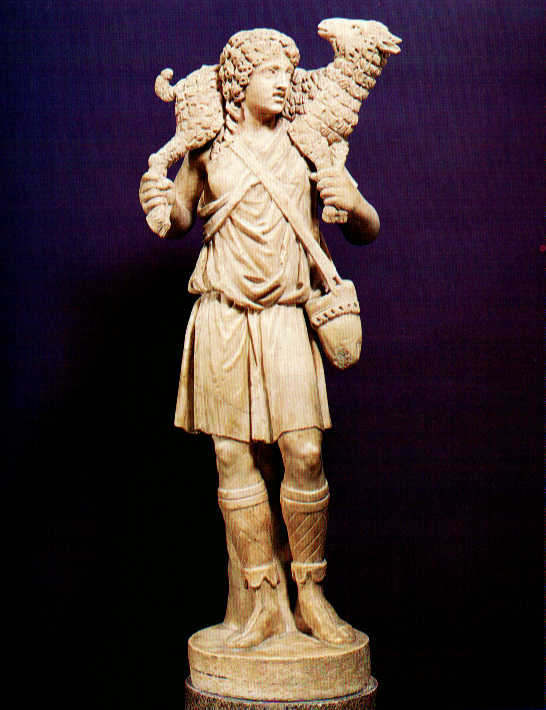
Tuesday, April 15, 2008

Salaverri on Papal Primacy (in English)


Share/Bookmark


From

Salaverri's
De Ecclesia Christi
in
Sacrae Theologiae Summa.
2a ed. Madrid:
Biblioteca de Autores Christianos (BAC), 1952.
Vol. 1.

(Tract. III: Lib. 1, cap. 3, Art. 3:
§§ 384-91; 401-3; 409-26.)

Translated by Juliana M. Volz


ARTICLE III:

THE ROMAN PONTIFF, THE SUCCESSOR IN PRIMACY

Thesis 9. By perennial divine right the Roman Pontiff is the Successor of St. Peter in Primacy.

384. Relationship. It has been shown by us (th. 7) that the Primacy in the Church is eternal by divine right. In this thesis we further seek, who then is the person who obtains de facto this Primacy by divine right.

385. Notions. THE PRIMACY is the supreme monarchic authority of the whole Church, which is to last eternally, which Christ conferred upon St. Peter (cf. th. 5).

We understand that to be appointed by DIVINE RIGHT which has beginning and value “from the institution of Christ Himself” (cf. D 1825).

PERENNIAL is the authority that perpetually, even until the consummation of the world, will have endured according as it has been explained in the thesis concerning perennity (th. 7).

386. The Successor of St. Peter is understood to be the Roman Pontiff, not merely materially, but also formally, that is, the substitute of the person of St. Peter in all the authority of the office annexed to the Primacy, without any change of right. Wherefore, the condition of legitimate election and the accepting of the same having been fulfilled, the Roman Pontiff obtains by the same divine right for his own very self the same supreme authority of jurisdiction, by which Christ Himself fully appointed St. Peter [as] His Vicar on earth or [as] the supreme visible head of the universal Church (cf. CIC 109, 219).

387. THE ROMAN PONTIFF is the legitimate Bishop of the Roman diocese. In the thesis, however, it is understood not in a redundant manner (reduplicative), or qua and in so far as he is the Roman Bishop, but in a specifying manner (specificative), or as he who is the legitimate Bishop of the Roman diocese. For according to the Vatican Council, two things must be properly distinguished in this matter: 1) the law of perpetual succession in Primacy, and 2) the condition of succession in the same perennial Primacy. The law of perpetual succession is a positive ordinance, which Christ formally established, so that St. Peter might have successors in perpetuity. The condition of succession was made the bishopric of Rome, which comes to pass so that the successor in Primacy is only the Roman Bishop. Now the law of succession is perennial from divine right; the condition of succession, however, according to various opinions of Catholics, is either from divine right, or from human ecclesiastical right, or from ecclesiastical apostolic right, according to the nature of the right whereby St. Peter de facto joined the succession in Primacy with the Roman Bishopric.

388. Status quaestionis. In the thesis we abstract from the nature of right, which has been united to the succession in Primacy with the Roman Bishopric, and we defend that itself which was defined by solemn judgment in the Vatican Council (D 1825).

389. Adversaries against this thesis are innumerable.

1) All non-Catholics, both those who are called Christians and those who reject the Christian name, unanimously reject Roman Primacy.

2) Also all are opposed to this thesis whom we enumerated as adversaries in the theses concerning the Primacy of St. Peter (th. 4 and 5) and also the thesis, which immediately precedes this one, concerning the succession of Apostles.

390. 3) Those who are unwilling to admit the hierarchical nature of the Church instituted by Christ: Marsilius Patavinus (D 496-498), Wycliff (D 588, 617, 621), Hus (D 635, 653-655; cf. D 674), Luther (D 765), Jansenists (D 1319), Febronians (D 1500), Pistorians (D 1502-1503). All Protestants, and also those who say that the Church and her head are subordinate to the authority of the State, approach [this error].

4) They who refuse to acknowledge the monarchical constitution of the Church, such as the Anglicans, Protestants, Episcopalians or Presbyterians, to whom the said Old Catholics approach, or they who, unwilling to embrace the Vatican Council’s definition concerning the Primacy of Roman Pontiffs, separated themselves with Dollinger from the Roman Church, crying, “Away from Rome”.

391. 5) Opposed especially to this thesis are the Eastern Schismatics, who after the middle of the ninth century proclaimed with Photius the city Constantinople to be the second Rome; who, in the middle of the eleventh century, with Michael Cerularius, accomplished the separation from the Roman Church; and who, after Constantinople had been captured by the Turks in the year 1453, pronounced the Patriarchical See of the Russian Orthodox Church to be the third Rome; but who signified the conferring of the supreme jurisdiction of the Patriarch of the Russians in the year 1917 through the rite whereby they passed on the “Shepherd’s Staff of St. Peter”.

The doctrines and difficulties of the Easterns concerning Primacy, by which they labor to weaken the arguments of the Catholics, have been collected in the Encyclicals of the Synod of Constantinople of the year 1848, which 33 Orthodox Bishops signed, responding to the encyclical of Pius IX of the same year, In the supreme Chair of Peter the Apostle, by which the Supreme Pontiff exhorted them, so that they might hasten to return to the unity of the Catholic Church.

All propagators of Pan-Christianity or Ecumenism, such as Heiler, Aulen, Tomkins, Visser’t, Hooft, and others, who defend the full autonomy of the Churches and [who] can only aim at a certain union among these, approach [this error] now no less adversely. In a similar manner, Barth says, “The government of the Church pertains properly and exclusively to Christ the Lord; and therefore with the Papal system, to yet a greater degree than the Episcopal system, it harms the free preaching of the Word in the free congregation of the living Christ, which is the Church.” Similarly Craig says: “Christ Himself alone is the supreme leader of the Church: He [Himself] alone possesses that right of governing.”

[...]

Dogmatic value.
The thesis, therefore, is of divine and sollemnly defined faith (de fide divina sollemniter definita), especially in the Vatican Council.

400. Proof.
In the Primacy, by divine, perennial right, someone always must be the evident successor of St. Peter. Now, none could be [the successor] other than the Roman Pontiff. Therefore, in the Primacy, by divine, perennial right, the Roman Pontiff is the successor of St. Peter.

The Major
is evident: a) Someone must be [the successor] always, for the Primacy is perennial. b) He must be evident, for the Primacy is the endowed supreme power for the office of teaching, sanctifying, and ruling men existing in the common conditions of this world and united in the visible society of the Church.

The Minor
is to be proven. Only the Roman Pontiff has always claimed for himself the Primacy and is recognized by the Church as the successor of St. Peter. Therefore, no one could be the successor of St. Peter in the Primacy other than the Roman Pontiff.

401. Antecedent 1) The Roman Pontiff claims for himself Primacy: A) exercite [in deed], B) signate [in word].

A) He does so exercite every time that he exercises his own authority over other Bishops or over the universal Church, which can be proved soundly by innumerable documents of all times, according as it is recounted in the Acts of the Roman Pontiffs.

For example:
  • St. Clement of Rome (ca. 96) in reconciling the Corinthian Schism (D 41).
  • St. Stephen (ca. 257) in the question concerning re-baptism (D 46-47 with note).
  • St. Julius I (a. 341) in the epistle to the Antiochenes (D 57a).
  • St. Siricius (a. 385) in the epistle to Himerius, the Tarraconian Bishop (D 87).
  • St. Innocent I (a. 417) in the epistle to the African Bishops (D 100; cf. also R 2014).

402. B) The Roman Pontiff claims Primacy for himself signate, or by the words expressed, especially since the fifth century.

For example:

  • St. Zosimus (a. 418) to the Bishops of Africa, approving their doctrine against the heresy of the Pelagians (D 109).
  • St. Boniface I (a. 422) to Rufus and the other Bishops of Macedonia (D 5000s).
  • St. Caelestinus I (a. 431) to the Bishops going to the Council of Ephesus (R 2018).
  • St. Leo the Great (a. 446) to the Bishops of Vienna and Thessalonica (Kch 891-896).
  • St. Gelasius I (a. 495), dealing with the primacy of the Patriarchal Sees (D 163).
  • Pelagius I (a. 560) writing to a certain schismatic Bishop (D 230).
  • Hadrian I (a. 785) to the Patriarch Tarasius and to the II Nicene Council (D 298).
  • St. Nicholaus I (a. 865) to the Emperor Michael against Photius (D 332-333).
  • St. Leo IX (a. 1053) against the schismatic Michael Cerularius (D 351-353).
  • Clement VI (a. 1351) to the Consoler, the Catholicon of the Armenians (D 570 d-h).
  • Benedict XIV (a. 1743) the profession of Faith prescribed for the Orientals (D 1473).
  • Pius IX (a. 1864) against naturalism and communism (D 1698).

Far more testimony can be enumerated by which the Roman Pontiffs claim Primacy for themselves, exercite or signate. Certain things from what we cited have been collected from the Enchiridion – To them can be added Benedict XV (a. 1917) in the Code of Canon Law in which the Roman Primacy is claimed excellently (CIC 218, 219), and also Pius VII (a. 1801), who in the Apostolic Letter “Qui Christi Domini vices” deprived all the Bishops of Gaul together from all jurisdiction (Br [T] 35, 215-228).

403. Antecedent 2) The Primacy of the Roman Pontiff is recognized by the Church: A) in theory, B) in practice.

A) In theory. 1) St. Ignatius, Antiochene Martyr (ca 107) in his epistle to the Romans, greets the Roman Church, extolling her, with the most magnificent epithets, before others, by which he implicitly understands her singular preeminence (R 52). This greeting, not only in solemnity, but also in the newness of form, excels by far the other greetings, by which St. Ignatius himself praises the remaining Churches of Ephesus, Magnesia, Tralles, Philadelphia, Smyrna.

St. Ignatius especially expresses the preeminence of the Roman Church while he says: “which rules in the place of the region of the Romans … placed over the [bond of] charity, having the law of Christ, marked with the name of the Father”.

409.
[…] In Conclusion: Therefore, contained in those things that St. Ignatius writes is an implicit recognition of the Primacy of the Roman Bishop, for without any limit of place and person he asserts the Roman Church to hold government of the universal life of Christians.

410. 2) St. Irenaeus (ca. 180) attests the supreme authority of the Church to belong to the Roman See by reason of doctrine. Now the one Church in Christ is the supreme authority under all aspects. Therefore St. Irenaeus implicitly attests the supreme authority of the Church to belong to the Roman See in all aspects.
The Major is proved, for St. Irenaeus holds as an axiom, that the consensus of the whole Church in doctrine is efficacious as supreme authority (R 209 210). However, he asserts even further, that the consensus of the whole Church necessarily equates to the testimony of the Roman Church alone (R 210 213). Therefore St. Irenaeus attests the supreme authority of the Church to belong to the Roman See by reason of doctrine.

411. The necessity, which we assert in the minor, St. Irenaeus expresses in these words: “For it is necessary for the entire Church to convene in the Roman Church, on account of her more powerful principality” (R 210). Now, such necessity, according to the various opinions of authors, can be understood as either moral or logical. If St. Irenaeus affirms the necessity [to be] moral, then he holds that the whole Church is morally obliged to assent to the Roman Church; if, however, he affirms the necessity [to be] logical, then he holds that, from the doctrine of the Roman Church, by logical necessity, the same is inferred to be the doctrine of the whole Church, because it cannot be the case unless it is supposed that the authority of the whole Church be in accord with the authority of the Roman Church. Therefore, in the first case formally, in the other equivalently, St. Irenaeus attests the authority of the Roman See to be supreme.

412. 3) Tertullian (ca. 210) recognizes in general the singularity, eminence, and fullness of the Roman Church (R 297). He further confesses the opinion held by the Roman Bishop to be acknowledged by the whole Church (Kch 218 bis). Finally, having become a Montanist, he tried to persuade himself that the Primacy over the whole Church was a personal privilege granted by Christ to St. Peter alone (R 387).

413. 4) St. Cyprian (ca. 252), defending the unity of the Church against schismatics, said “one is the Church and one the Chair established upon Peter by the voice of the Lord”, and he calls the Roman See “the Chair of Peter and principal Church, whence the unity of priests has originated” (R 573-575 580). St. Cyprian employs a terminology similar to this in his treatise On the Unity of the Church (R 555).

Authors do not agree in accurately determining the doctrine of St. Cyprian concerning the Roman Primacy. It can be said, at least, he theoretically professed the Roman Bishop to be the origin and center of unity, on account of the succession of Peter. He does not seem to have reached full strength concerning the plenitude of the primatial power; however he always presupposes and teaches that the prerogative derived from St. Peter belongs to the Roman See, which [prerogative] cannot be attributed to any other See, and by the power of which [prerogative] Catholic unity depends on the Roman Bishop, in such a way that it cannot be obtained except through him, by him, and with him.

414. 5) Anonymus adversus aleatores (ca. 260) clearly exhibits the idea of Primacy, saying: “the divine and paternal piety of the Apostolate gained us the leadership and ordained the vicarious See of the Lord by celestial condescension and we carry the origin of authentic Apostolate, upon which Christ founded the Church, in our superior, having also accepted the power of loosing and binding” (Kch 310).

6) St. Optatus of Milevi in Africa and Prudentius in Spain (ca. 370) profess the same doctrine. St. Optatus (R 1242). Prudentius, however, writes: “Grant, O Christ, unto Thy Romans – that [theirs] may be Christian as a city – through which Thou hast granted that, to the other [cities]: the mind of sacred things be one – May all members from thence – be united to her in creed.” And elsewhere: “May one faith flourish which is founded in the original Church – which Paul kept, and which [is] the Chair of Peter.”

415. 7) St. Jerome (ca. 376), inquiring about the question of the Antiochene schism, in which St. Basil was defending parts of Meletius, but St. Athanasius was defending the rights of Paulinus, responded in a letter to Pope Damasus: “I, he said, am associated with the communion of the Chair of Peter. I know the Church to be built upon that stone. Whoever will have eaten the lamb outside of this house is profane … I did not know Vitalis, I reject Meletius, I ignore Paulinus. Whoever does not assemble with you, scatters” (R 1346). The testimonies of St. Ambrose (R 1261) and of St. Augustine (R 1507) can also be brought together.

416. B) Primacy recognized in Practice. 1) In the Ecumenical Councils:

  • In the Council of Ephesus, concerning the cause of Nestorius, under Caelestinus I (a. 431; D 112).
  • In the Council of Chalcedon, against the Monophysites under Leo I the Great (a. 451; D 143 note 3 and 149).
  • In the IV Lateran Council, in the cause of the Waldensians and Albigensians, under Innocent III (a. 1215; D 740).
  • In the II Council of Lyons, concerning the unity of the Greeks, under Gregory X (a. 1272; D 466).
  • In the Council of Florence, concerning the unity of the Orientals, under Eugenius IV (a. 1439; D 694).
  • In the V Lateran Council, concerning the renewal of the customs and disciplines in the Church, under Leo X (a. 1516; D 740).
  • In the Vatican Council, concerning the Catholic faith and concerning the Church, under Pius IX (a. 1870; D 1824-1826).

417. 2) On the occasion of controversies concerning diverse questions:
a) In the Corinthian schism (ca. 96), St. Clement the Roman imposes submission by the authority of primacy. For with John the Apostle and the disciples of St. Paul, founder of the Corinthian Church, surviving, St. Clement writes to the Apostolic Church, and not indeed [because] he was asked [to do so], but moved by his office, bitterly censoring, enjoining obedience, and demanding the same through the legates whom he sent (D 41; R 25 27 29). Now, St. Dionysius the Corinthian (ca. 170) and Clement the Alexandrine (ca. 200) attest, the letter was written by St. Clement. The Corinthian Church, however, has given obedience, to the point that the same letter was frequently read with great veneration in church, almost as if it were Sacred Scripture. Therefore, the apostolic Corinthian Church recognized in practice the authority of Primacy of the Roman Bishop.

418. b) In the controversy concerning the day of Easter (ca. 190), St. Victor, the Roman Bishop, appointed councils so that it might be celebrated by the Churches. From the acts of the Councils he knew Easter to be celebrated almost everywhere according to the Roman custom, that is, the first Sunday that occurs after the 14th day of the month Nisam, according to the tradition of the Apostles. Nevertheless he learned that only the Churches of Asia celebrate Easter two days after the 14th day of the month of Nisam, according to the tradition that they said [is] accepted by St. John the Apostle. Knowing these things, St. Victor decrees that in the whole Church Easter be celebrated according to the Roman custom, and pronounces the Churches of Asia that felt otherwise “to be alien from the unity of the Church” (Kch 97 100). Now, no one denied then this right of decreeing with primacy to St. Victor, although some, as St. Irenaeus, dissuaded him from carrying out this decree. Therefore in practice, then, the authority of Primacy of the Roman Bishop was recognized.

419. c) St. Stephen (ca. 257), the Roman Bishop, decreed with primatial authority what is to be held in the question concerning the heretics to be rebaptized. For at Carthage under Agrippinus (ca. 220), at Caesarea Cappadocia under Firmilianus (ca. 230), and at length at Carthage under S. Cyprian (ca. 255-256), five Councils of Bishops have been celebrated, of which the last three Cyprian presided. These five Councils declared the baptism of heretics invalid. Wherefore St. Cyprian demanded a definition by St. Stephen, the Roman Bishop, confirming the decisions of the councils. However, St. Stephen replies with authority: “Let nothing be innovated upon except what has been handed down” (D 46). In the same sense he wrote to Firmilianus the Bishop, and threatened him for contending with excommunication (D 47 nota; Kch 309). And at length, all followed the decision of St. Stephen, although in the beginning, on account of practical difficulties, its execution was impeded to a certain degree. Therefore the authority of Primacy of St. Stephen was recognized in practice.

420. d) In the appellation for the Roman Bishop against the opinion of the synods, Basilides, Bishop, was deposed from the See of Astroga by the synod of Spanish Bishops (ca. 256). St. Stephen, the Roman Bishop, accepts the recourse of Basilides and commands [him] to be replaced in the Bishopric from which he had been deposed. Then the Spanish Bishops ran to St. Cyprian, not to ask [his] opinion, but only so that he might be “either a comfort or a help” to them. St. Cyprian responds, the execution of the decision of St. Stephen must be deferred to until the Roman Bishop is made more fully a witness concerning the truth of the facts. Wherefore it is manifest that the authority of the Roman Pontiff to decree even against the conciliar opinion of Bishops of another province, was acknowledged.

421. e) In the Arian controversy (a. 325-381) the many signs of the Primacy of the Romans are laid open, which, if taken together with those most difficult circumstances of things and persons, supply a truly valid argument, which certainly serves as proof.

In the first ecumenical Council of Nicea
(a. 325) St. Silvester I rules through his legates, although 300 other Bishops, united to decree concerning the case of Arius, were almost all Orientals. In this Council “the Catholic Church anathemized” (D 54) the Arians, which openly signified its ecumenicity.

Each part of the contenders appealed to St. Julius I (ca. 341). The Pontiff, however, knowing the cause, absolved St. Athanasius from the accusations of the Arians, with decrees having been published in the Roman and Sardican Councils (a. 341 and 343), in which he also reserved for himself the causes that were to be decided concerning the Bishops (D 57 a-e).

422. St. Liberius, afflicted by innumerable vexations by the Emperor Constantine and by the Arians, at length after the death of the Emperor (a. 361) returned from exile, condemns authoritatively the Arian formula edited at Constantinople (a. 360) and (a. 366) absolved and received fifty-nine abjuring Bishops.

St. Damasus (a. 369) condemns the Semi-Arian Council of Rimini and promulgates the formula of faith that was to be signed by all the Eastern Bishops. The signing bishops acknowledge the authority of Primacy of St. Damasus. The Emperor Theodosius (a. 380) promulgates the Edict concerning the Catholic faith in favor of St. Damasus (Kch 828).

423. In the Second Ecumenical Council, the First Council of Constantinople (a. 381). The bishops of the East solemnly profess the formula of faith against the Arians, published in the first Nicene Council, and finish the one against the Macedonians (D 85 86). Finally with this reason, under St. Damasus the question begun by Arius was finished on the practical occasion of which the acknowledgment of the Primacy of the Roman Bishop was laid open.

424. f) In the Priscillian controversy (a. 380-447) the primatial authority of the Roman Bishop can be easily shown to be acknowledged in practice by the Spanish Bishops.

St. Damasus (a. 380) responds to the Spanish Bishops and Priscillianus who had recourse to him, that it is not licit to condemn as a criminal anyone who ahs not previously been heard in court. Each part recognized the authority of St. Damasus to decree this, although many Spanish Bishops supposed this to be unnecessary.

While Priscillianism is regaining strength, St. Siricius (a. 396) responds to the Bishops of the Council of Zaragoza, who require more efficacious remedies from him, by more carefully determining the conditions for abjurations and absolutions of the Priscillianists.

425. St. Innocent I (a. 404) rejects the Bishops’ recourse to him against the Priscillianists who were reconciled according to the form of St. Siricius, confirms the previous opinion of St. Siricius, and authoritatively condemns those who refuse to submit.

St. Leo I (a. 447), to the Bishops who had recourse to him against the Priscillianists sprouting everywhere, replies: he condemns Priscillianism by means of sixteen articles, and he commands that, with the Councils of the Bishops in Spain having been enforced, all the Bishops sign the formula sent by him. The Bishops, in obeying the commands of St. Leo, recognize the Primacy of the Roman Pontiff in practice.

426. g) In the questions on the discipline of the Tarraconian Church, St. Siricius (a. 385), as the successor of St. Peter in the Roman See, authoritatively responds to the questions from Himerius, the Tarraconian Bishop, that were proposed to St. Damasus the predecessor of St. Siricius, and he decrees and ordains with authority many things, which pertained to the reformation and discipline of the Churches of Spain (D 87-90).

From these, which precede, we are now able to conclude: the Primacy of the Roman Bishop, with occasional controversy concerning diverse questions, has been recognized in practice and openly by the Church.

Monday, April 14, 2008

Dominica Tertia post Pascha (Semiduplex)


Share/Bookmark

Proprium Missae cum sermonibus S. Thomae Aquinatis

Introitus (part./mp3):

Jubilate Deo omnis terra, alleluia: Psalmum dicite nomini ejus, alleluia: date gloriam laudi ejus, alleluia, alleluia, alleluia. Ps. Dicite Deo, quan terribilia sunt opera tua, Domine! In multitudine virtutis tuae mentientur tibi inimici tui. V. Gloria.

Oratio:

Deus, qui errantibus, ut in viam possint redire iustitiae, veritatis tuae lumen ostendis: da cunctis, qui Christiana professione censentur, et ilia respiiere, quae huic inimica sunt nomini; et ea, quae sunt apta, sectari. Per Dominum nostrum.


Lectio Epistolae B. Petri Apost. (1 Pet. 2:11-19):

Carissimi, obsecro vos tamquam advenas et peregrinos abstinere vos a carnalibus desideriis, quæ militant adversus animam, conversationem vestram inter gentes habentes bonam : ut in eo quod detrectant de vobis tamquam de malefactoribus, ex bonis operibus vos considerantes, glorificent Deum in die visitationis. Subjecti igitur estote omni humanæ creaturæ propter Deum : sive regi quasi præcellenti : sive ducibus tamquam ab eo missis ad vindictam malefactorum, laudem vero bonorum : quia sic est voluntas Dei, ut benefacientes obmutescere faciatis imprudentium hominum ignorantiam : quasi liberi, et non quasi velamen habentes malitiæ libertatem, sed sicut servi Dei. Omnes honorate : fraternitatem diligite : Deum timete : regem honorificate. Servi, subditi estote in omni timore dominis, non tantum bonis et modestis, sed etiam dyscolis. Hæc est enim gratia, in Christo Jesu Domino nostro.


Alleluia (
part./mp3):

Alleluia, alleluia. V. Ps. no, 9 Redemptionem misit Dominus populo suo.

Alleluia (part./mp3):

Alleluia. V. Luc. 24, 46 Oportebat pati Christum, et resurgere a mortuis: et ita intrare in gloriam suam. Alleluia.


+Sequentia S. Evangelii Secundum Joannem (Joan. XVI, 16-22):

In illo tempore: Dixit Jesus ad discipulis suis: Modicum, et iam non videbitis me: et iterum modicum, et videbitis me: quia vado ad Patrem. Dixerunt ergo ex discipulis eius ad invicem: Quid est hoc, quod dicit nobis: Modicum et non videbitis me: et iterum modicum, et videbitis me, et quia vado ad Patrem? Dicebant ergo: Quid est hoc, quod dicit: Modicum? nescimus quid loquitur. Cognovit autem Iesus, quia volebant eum interrogare, et dixit eis: De hoc quaeritis inter vos quia dixi: Modicum, et non videbitis me: et iterum modicum, et videbitis me. Amen, amen dico vobis: quia plorabitis et flebitis vos, mundus autem gaudebit: vos autem contristabimini, sed tristitia vestra vertetur in gaudium. Mulier cum parit, tristitiam habet, quia venit hora eius: cum autem pepererit puerum, iam non meminit pressurae propter gaudium, quia natus est homo in mundum. Et vos igitur nunc quidem tristitiam habetis, iterum autem videbo vos, et gaudebit cor vestrum: et gaudium vestrum nemo tollit a vobis.


Sermo S. Thomae de Dominica Secunda post Oct. Paschae, ex Epistola:

Obsecro vos tamquam advenas et peregrinos abstinere vos a carnalibus desideriis, quae militant adversus animam etc., 1 Petr. 2. Quatuor notantur in verbis istis. Primo (1) indicitur carnalium vitiorum abstinentia, ibi: abstinete vos a carnalibus desideriis; secundo (2) ostenditur abstinentiae necessitas, ibi: quae militant adversus animam; tertio (3) praecipitur conversationis honestas, ibi: conversationem inter gentes habentes bonam; quarto (3) subjungitur bonae conversationis utilitas, ibi: ut in eo quod detrectant de vobis tamquam de malefactoribus, ex bonis operibus vos considerantes, glorificent dominum in die visitationis.

  • (1) Circa primum notandum, quod tria sunt genera desideriorum, a quibus Scriptura praecipit abstinere. Primo (a) a desideriis saecularibus; secundo (b) a desideriis nocivis et inutilibus; tertio (c) a desideriis carnalibus. (a) Desideria saecularia sunt cum desiderantur honores saeculares. Tit. 2: apparuit gratia salvatoris nostri omnibus hominibus erudiens nos ut abnegantes impietatem et saecularia desideria, sobrie et juste et pie vivamus in hoc saeculo. (b) Desideria nociva sunt cum desiderantur divitiae temporales. 1 Tim. 6: qui volunt divites fieri, incidunt in tentionem et in laqueum Diaboli, et desideria multa inutilia et nociva, quae mergunt homines in interitum et perditionem et cetera. (c) Desideria carnalia sunt cum desiderantur delectationes carnales. Rom. 16: carnis curam ne feceris in desideriis.
  • (2) Circa secundum notandum, quod carnalia desideria tripliciter militant adversus animam; et ideo habemus necesse abstinere ab eis. (a) Primo militant adversus eam continue impugnando. Job 6: militia est vita hominis super terram. Tota vita hominis est quasi pugna quaedam. (b) Secundo mortaliter per culpam vulnerando. Prov. 21: desideria occidunt pigrum: noluerunt manus ejus quicquam operari. (c) Tertio aeternam perditionem et interitum infligendo. 1 Tim. 6: desideria multa inutilia, quae mergunt homines in interitum: desideria enim carnalia occidunt per culpam hic, et in futuro occidunt per mortem aeternam.
  • (3) Circa tertium notandum, quod bona conversatio consistit in tribus. (a) Primo in mentis puritate. 2 Cor. 1: gloria nostra haec est testimonium conscientiae nostrae, quod in simplicitate cordis, et sinceritate Dei, et non in sapientia carnali, sed in gratia Dei conversati sumus in hoc mundo. (b) Secundo in morum honestate, sive sanctitate. 2 Petr. 3: cum igitur omnia solvenda sint, quales nos oportet esse in sanctis conversationibus et pietatibus, expectantes, et properantes in adventum diei domini. (c) Tertio in caelestium gaudiorum continua aviditate. Philip. 3: nostra conversatio in caelis est.
  • (4) Circa quartum notandum, quod tripliciter ponit utilitatem de bona conversatione. (a) Prima est detractorum confutatio vel cohibitio, ibi, in eo quod detractant de vobis. 1 Petri 2: haec est voluntas Dei, ut benefacientes, obmutescere faciatis imprudentium hominum ignorantiam. (b) Secundo honorificatio, ibi, ex bonis operibus vos considerantes, glorificent Deum in die visitationis. Matth. 5: sic luceat lux vestra coram hominibus, ut videant opera vestra bona, et glorificent patrem vestrum, qui in caelis est. (c) Tertio magna bene conversantium remuneratio, ibi, in die visitationis. Glossa ibi: in die visitationis, idest in tempore retributionis. Quanta sit gloria donanda nobis, solus Deus cognoscit: ad quam nos perducat dominus Jesus. Amen.


S. Thomas, ex Evangelio:

Mundus gaudebit, vos autem contristabimini; sed tristitia vestra vertetur in gaudium: Joan. 16. Tria notantur in istis verbis. (1) Primo mundanorum stultitia, ibi, Mundus gaudebit. Eccle. 2: Risum reputavi errorem, et dixi gaudio: Quid frustra deciperis? (2) Secundo sanctorum sapientia, ibi, Vos autem contristabimini. Eccle. 7: Cor sapientis ubi tristitia, cor stultorum ubi laetitia. (3) Tertio futura sanctorum laetitia, ibi, Trititia vestra vertetur in gaudium. Luc. 6: Beati qui lugetis, quoniam gaudebitis etc.

  • (1) Circa primum notandum, quod tria ostendunt laetitiam mundanorum esse stultam. (a) Primo tempus; quia modo non est tempus gaudendi, sed flendi. Eccle. 1: Tempus flendi, et tempus ridendi. Praemittit tempus flendi, subjungit tempus ridendi, ut ostenderet quod tempus flendi est praesens, et futurum erit ridendi; unde quidam: Nunc est tempus flendi, nunc tempus peccata lugendi. (b) Secundo locus; quia mundus iste locus est tristitiae, et non laetitiae. Psalm. 83: ascensiones in corde suo disposuit, in valle lacrymarum, in loco quem posuit. Judic. 2: Angelus domini ascendit de Galgala ad locum flentium. (c) Tertio causa, quia gaudent de malis. Proverb. 2: laetantur cum male fecerint, et exultant in rebus pessimis. Satis ergo patet quod stultum est gaudium mundanorum, cum gaudeant in tempore tristitiae, in loco miseriae, in perpetratione malitiae. Augustinus: quid est saeculi gaudium? Breviter dicam: impudicitia, nequitia, inspectabiliter nugari, turpitudinem facere, ebriositate ingurgitari.
  • (2) Circa secundum notandum, quod est sapientiae tristari, propter tria. (a) Primo, quia per tristitiam corripitur hominis malitia. Eccli. 7: per tristitiam vultus corrigitur animus delinquentis. (b) Secundo, quia per momentaneam tristitiam evadit homo aeterna supplicia. Gregorius: sancti praesentem vitam lucrum putant, quia per hanc aeternam evadere non ignorant. Nahum 1: afflixi te, et non affligam te amplius. (c) Tertio, quia per modicam tristitiam acquirunt aeterna gaudia. 2 Corinth. 4: id enim quod in praesenti est momentaneum et leve tribulationis nostrae, supra modum in sublimitate aeternum gloriae pondus operatur in nobis, non contemplantibus nobis quae videntur, sed quae non videntur. Quae enim videntur, temporalia sunt; quae non videntur, aeterna.
  • (3) Circa tertium notandum, quod futura sanctorum laetitia dicitur esse in tribus. (a) Primo in divinae praesentiae consolatione, ibi, iterum autem videbo vos. Augustinus in Lib. de civitate Dei: primum erit ipse Deus, qui erit omnia in omnibus, qui erit nobis salus, honor et gloria, pax et gaudium et omnia bona. Gen. 14: ego merces tua magna nimis. (b) Secundo in summa cordis exultatione, ibi, et gaudebit cor vestrum. Isa. 35: gaudium et laetitiam obtinebunt. (c) Tertio in aeternitatis assecutione, ibi, gaudium vestrum nemo tollet a vobis. Isa. 15: venient in Sion cum laude; et laetitia sempiterna super capita eorum. Ad quam laetitiam perducat nos Christus. Amen.


Ant. ad Offertorium (partit./mp3):

Ps. 145, 2 Lauda, anima mea, Dominum: laudabo Dominum in vita mea: psallam Deo meo, quamdiu ero, alleluia.


Secreta:

His nobis, Domine, mysteriis conferatur, quo, terrena desideria mitigantes, discamus amare caelestia. Per Dominum.


(Praefatio paschalis, in qua dicitur: in hoc potissimum gloriosius praedicare.)


Ant. ad Communionem (partit.
):

Modicum, et non videbitis me, alleluia: iterum modicum, et videbitis me, quia vado ad Patrem, alleluia, alleluia.


Postcommunio:

Sacramenta quae sumpsimus, quaesumus, Domine: et spiritualibus nos instaurent alimentis, et corporalibus tueantur auxiliis. Per Dominum.


(Cfr. Cantus Proprii & Breviarium)

Saturday, April 05, 2008

Dominica 2a post Pascha (Semiduplex)


Share/Bookmark
Proprium Missae cum sermone S. Thomae

Introitus (part./mp3):
Misericordia Domini plena est terra, alleluia: verbo Domini caeli firmati sunt, alleluia, alleluia. Ps. Exultate iusti in Domino: rectos decet collaudatio. V. Gloria.

Oratio:

Deus, qui in Filii tui humilitate iacentem mundum erexisti: fidelibus tuis perpetuam concede laetitiam; ut, quos perpetuae mortis eripuisti casibus, gaudiis facias perfrui sempiternis. Per eundein Dominum.

Lectio Epistolae beati Petri Apostoli (1 Petri 2, 21-25)

Carissimi: Christus passus est pro nobis, vobis relinquens exemplum, ut sequamini vestigia eius. Qui peccatum non fecit, nee inventus est dolus in ore eius: qui cum malediceretur, non maledicebat: cum pateretur, non comminabatur: tradebat autem iudicanti se iniiiste: qui peccata nostra ipse pertulit in corpore suo super lignum: ut peccatis mortui, iustitise vivamus: cuius livore sanati estis. Eratis enim sicut oves errantes, sed conversi estis nunc ad pastorem et episcopum animarum vestrarum.

Alleluia
(
part./mp3):
Alleluia, alleluia. V. Luc. 24, 35 Cognoverunt discipuli Dominum Iesum in fractione panis.

Alleluia (
part./mp3):
Alleluia. V. Io. 10, 14 Ego sum pastor bonus: et cognosco oves meas, et cognoscunt me meae. Alleluia.


+Sequentia S. Evangelii Secundum Joanem
(X:11-16)

In illo tempore: Dixit Iesus phariseis: Ego sum pastor bonus. Bonus pastor animam suam dat pro ovibus suis. Mercenarius autem, et qui non est pastor, cuius non sunt oves proprise, videt lupum venientem, et dimittit oves, et fugit: et lupus rapit, et dispergit oves: mercenarius autem fugit, quia mercenarius est, et non pertinet ad eum de ovibus. Ego sum pastor bonus: et cognosco meas, et cognoscunt me meae. Sicut novit me Pater, et ego agnosco Patrem: et animam meam pono pro ovibus meis. Et alias oves habeo, quse non sunt ex hoc ovili: et illas oportet me adducere, et vocem meam audient, et fiet unum ovile, et unus pastor.


Sermo S. Thomae de Dominica post Oct. Paschae, ex Evangelio.
Bonus pastor animam suam ponit pro ovibus suis. Joan. 10. In istis verbis tria notantur:
1) Primo magna Domini nostri Jesu Christi bonitas, ibi, Bonus pastor;
2) secundo magna ipsius caritas, ibi, Animam suam dat;
3) tertio electorum ipsius sanctitas vel bonitas, ibi, Pro ovibus suis.
  1. Circa primum sciendum, quod Christus dicitur bonus pastor propter tria. Tria enim sunt officia boni pastoris. (A) Primum est oves defendere; secundum est in bonis pascuis tenere, et pascere; tertium est errantes requierere. Sic Dominus noster Jesus Christus primo oves suas defendit a leonibus, idest daemonibus; a lupis idest tyrannis; ab ursis, idest haereticis. Ezech. 24: Pro eo quod facti sunt greges mei in rapinam, et oves meae in devorationem omnium bestiarum; et post: Liberabo gregem meum. Joan. 10: Non peribunt in aeternum, et non rapiet eas quiquam de manu mea. (B) Secundo oves suas in prato Scripturae, gratiae et gloriae pascit. Ezech. 34: In pascuis uberrimis pascam eas, et in montibus excelsis Israel erunt pascuae earum. (C) [Tertio] errantes solicite requirit. Luc. 15: Quis ex vobis homo qui habet centum oves, et si perdiderit in deserto, et vadit ad illam que perierat, donec inveniat eam? Ezech. 34: Et ecce ego ipse requiram oves meas etc.
  2. Circa secundum notandum, quod tria nobis dedit Christus, in quibus apparuit magna ejus caritas. (A) Primo corpus in cibum. Matth. 26: Accipite, et manducate: hoc est corpus meum. (B) Secundo sanguinem in potum. Matth. 26: Accipite et bibite ex hoc omnes: hic est enim sanguis meus. (C) Tertio animam in pretium. 1 Joan. 5: In hoc cognovimus caritatem Dei, quia animam suam pro nobis posuit. Jo. 10: Animam meam pono pro ovibus meis.
  3. Circa tertium notandum, quod tres sunt actus bonitatis. (A) Primus est nulli nocere. 2 Cor. 7: Nemini dantes ullam offensionem. (B) Secundus est injurias patienter ferre. Rom. 11: Nulli malum pro malo reddentes etc. (C) Tertium est sua et se omnibus libenter tribuere. Dionysius: Bonum est sui ipsius diffusivum. 1 Joan. 3: Et nos debemus pro fratribus animas ponere. Propter haec tria dicuntur Sancti oves. (A) Primo, quia oves nemini injuriam faciunt; (C) secundo, quia mansuete mala sufferunt; (C) tertio, quia se et sua ad usum hominum tribuunt.

Qui sic sunt oves Christi, pervenient sine dubio ad ovile Christi, quod est caeleste regnum. Matth. 25: Statuet oves quidem a dextris etc.: et post: Venite benedicti Patris mei, percipite regum: ad quod nos perducat. Amen.


Ant. ad Offertorium (part./mp3):

Deus, Deus meus, ad te de luce vigilo: et in nomine tuo levabo manus meas, alleluia.

Secreta:

Benedictionem nobis, Domine, conferat salutarem sacra semper oblatio: ut, quod agit mysterio, virtute perficiat. Per Dominum.

(Praefatio paschalis, in qua dicitur: in hoc potissimum gloriosius praedicare.)

Communio (part./mp3):

Ego sum pastor bonus, alleluia: et cognosco oves meas, et cognoscunt me meae, alleluia, alleluia.

Postcommunio:

Praesta nobis, quaesumus, omnipotens Deus: ut, vivificationis tuae gratiam consequentes, in tuo semper munere gloriemur. Per Dominum.

Sunday, March 30, 2008

Dominica in Albis (Quasimodo Sunday)


Share/Bookmark
A Sermon by Rev. Jonathan Romanoski, FSSP
+
JMJt

“Blessed are the merciful: for they shall obtain mercy.”

Today we celebrate the last day of our Easter Octave, the end of a day so solemn that it has lasted 8 days, and in the spirit of which we will continue for another 42 days until Pentecost. Dom Gueranger tells us that, “such is the solemnity of this Sunday that... no feast however great, can ever be kept upon it,” which is why for instance we still wait until tomorrow to celebrate the feast of the Annunciation, as it has been trumped by every day of this octave of octaves.

Though often referred to as Low Sunday, it is more liturgically referred to as Sunday in albis, referring to the white garments of the neophytes which are only now set aside after their baptism at the vigil mass, which was the apex of the whole liturgical season, and indeed the center piece of the entire Christian life, as it is the mystery of all holiness and growth in holiness. For in baptism the old man is put to death, and we truly become “partakers of the divine nature,” temples of the Holy Ghost,” other Christs to now live and manifest His life throughout the earth. The Council of Sens, in fact saw the renewal of Baptismal vows, as the chief way to reform and renew the lives of the faithful, as all our sin springs from our neglect and depreciation of this mystery, this ineffable gift of God’s mercy.

It is a feast in which the liturgy has us meditate on the Divine Mercy, well captured in the Divine Mercy image, which echoes the Epistle we just read today, in which we are told that we have the victory which conquers the world- the one true faith, which we have received from the water and the blood which flowed from the side of Jesus Christ, and that we have received the testimony in ourselves, of the Father, the Word and the Holy Ghost now dwelling in our soul, made present by the testimony on earth of the Spirit the Water and the Blood, given to us in Baptism. As Pius XII says in his Encyclical on the Sacred Heart, summing up the Catholic tradition, “from the wounded Heart of the Redeemer was born the Church, the dispenser of the Blood of the Redemption -- whence flows that plentiful stream of Sacramental grace from which the children of the Church drink of eternal life.”
Yet today, as the Church has the newborn children of God set aside their baptismal garment to live a new life, She is ever mindful of the battle that awaits them. And so today She has focus on the second great sacrament of His Mercy, instituted in the Gospel today, when our Lord says to his disciples, “Peace be to you. As the Father hath sent me, I also send you,” as other Christs sharing in the redemption of the world. Then, “he breathed on them,” to re-create the world anew, with the breath that hovered over the waters of creation, and says, “Receive ye the Holy Ghost, whose sins you shall forgive they are forgiven them; and whose sins you shall retain they are retained.” Today the Church fortifies us all, white robes aside, with the Sacrament of Penance, so that if God forbid we neglect to care for the infinite gift of God Himself received in Baptism, we yet have a way to recover this divine state again, through the confession of our sins. But in order that we may understand confession well, and how to confess well, we must first understand what mercy is, which is hardly understood at all today.

“In God,” Blessed Dom Marmion tells us, “There is...one perfection which is perhaps the key of all that befalls us here below: it is mercy. Mercy is love in the face of misery; if there were no misery, there would be no mercy...we shall be in Heaven the living witnesses of the Divine Mercy.” St. Thomas explains this for us in more detail, noting that mercy is a compassionate response to another’s misery. Through our bond with them we sense the evil they suffer as our own, or if they are more distant to us we consider that the same evil could befall us. It arises often first in an emotion of sympathy, but in order to be virtuous it must be governed by right reason, without which it is in fact an emotion which greatly hinders reason and is greatly abused, as evident in those who waste their time for “animal rights,” “tree rights” or whatever fill in the blank “rights” which simply advances through a manipulation of human sympathy, via cute puppies, sad faces, sappy music, or whatever and has no real ordering toward the common good.
And what is the rule that the movement of mercy must obey? St. Augustine tells us, "this movement of the mind obeys reason, when mercy is vouchsafed in such a way that justice is safeguarded, whether we give to the needy or forgive the repentant." That justice is safeguarded. For note well that mercy has as it’s aim the fulfillment of justice, and not the casting off of justice. Consider the great mercy God has shown mankind, in coming to earth, and dying for our sins. He did not come down to earth so as to lower the bar of holiness, telling mankind not to worry about striving for a heavenly life, but rather to raise it, telling us to now be holy as the Father in heaven is Holy. The holiness of God himself! But he descended so as to make it possible- to give us the grace to ascend to heaven. He suffered and died so as to pay the debt of justice, and win for us the grace of justification in our union with Christ crucified. It is quite true that mercy goes beyond justice in that it strives for more than what is merely due, as Christ died for us while we were yet sinners, his enemies, but it is never contrary to justice as it always aims at making others just. Hence the more important spiritual works of mercy- like admonishing the sinner, and instructing the ignorant. How different are these from the world’s effeminate, irrational, counterfeit versions of mercy in tolerating sin, celebrating diversity, saving animals and trees, pacifism, financial assistance for the lazy, and whatever other act which has nothing to do with the true sanctification of souls and their eternal happiness. Such is not the mercy of God and such should not be the mercy of man. The mercy of God is indeed a chief manifestation of His omnipotence, as in it He shows Himself bountiful to our distress, says St. Thomas. Yet mercy is in no way incompatible with God who condemns the sinner to hell to punish him for all eternity unto the glorification of His justice, in which St. Thomas tells us there is yet found the mercy of God, as even this eternal torture is less than a sinner deserves for his infinite offense. Although they differ as acts toward us, in God, mercy and justice are the same, which is the great mystery of this life, of predestination, of heaven and hell. As the Scriptures tell us, “Mercy and truth have met each other: justice and peace have kissed.”

In this light we can understand how confession works, in which the priest exercises the office of judge, as the council of Trent defined. A judge not only to forgive but also to retain sins, in those who are not to be forgiven, that is to say the unrepentant, who confess their sins with no thought of changing their sinful ways or avoiding the near occasion of sin. Contrition, remember is the necessary matter for a valid confession, and one must have a truly supernatural detestation, and resolve to change one’s life and avoid the occasion of sin, so as to be just, in order for it to be valid.. As St. John Bosco said in his day, “more souls are condemned by confessing badly than by not confessing.” The priest in the case of the unrepentant must guard the justice of God and not abuse the sacrament in such sacrilegious application, which would be a mockery of God’s mercy, God will not give His mercy so that we can more conveniently crucify the Son of God anew. But rather, as he extended His mercy to St. Mary Magdalene worthy of being stoned for adultery, so he does to us in confession, telling us “neither will I condemn thee,” but he adds, “go, and now sin no more.”

Let us then go forth with this understanding, confessing our sins from hence forth, not to get out of jail free, but so as to truly reform our life. And inspired by this mercy let us go forth to mercifully help others grow in justice, for St. Thomas says, as regards our external works, “the sum total of the Christian religion consists in mercy.” And according to the challenge of exercising true divine mercy, which aims to increase one’s share in the faith that conquers the world, and the divine nature received from the blood and water of the heart of Christ, shall we be judged.

“Blessed are the merciful: for they shall obtain mercy.”

Mary, Mother of Mercy: Pray for us.

AMDG
+

Sunday, March 23, 2008

Dominica Resurrectionis (Easter Sunday)


Share/Bookmark
A Homily by Rev. Jonathan Romanoski, FSSP

+

"And if Christ be not risen again, then is our preaching vain, and your faith is also vain... for you are yet in your sins."

It has been my great pleasure to be with you since the feast of the Holy Family, which seems but a short time ago in this liturgical year in which we have passed so quickly from Our Lord’s Nativity, to his Passion and Resurrection. But this compact view should help us see the unity of the mystery of God’s plan, as the divine riddle only makes sense when you hear the end of it.

The Word became Flesh and dwelt amongst us. The fullness of Divine Love itself, came down from heaven, in infinite condescension, to dwell among us, as one of us, like to us in all things but sin. In the first beat of His divine heart, he merited enough grace to redeem the world, being as it was an act of infinite love of a divine person. Yet he was not content to rest there. He wanted to teach us the depths of His love, and most importantly how to Love, as He then took us into the desert for forty days, teaching us to renounce the things of this world, that we might gain those of heaven. And He taught us still further in His Passiontide, the true reality of our sin, by which we spit in the face, crown with thorns, and nail to the cross, Love and Goodness Himself. Yet while we, not accepting his incarnation, and even killing the Author of Life, merited even greater eternal punishment, He still more greatly condescended in His infinite mercy, immolating the mortal flesh He had assumed as a holocaust of divine charity on the cross, begging our pardon, and making Himself captive once again in our midst, in the Most Holy Eucharist, so as to try yet again in the madness of His Divine Love to unite Himself to us His enemies, whom He now calls His friends.

Dom Gueranger sums this us most admirably as he writes, “Everything, both in the order of time and in the workings of the Liturgy, has been a preparation for Easter. The four thousand years that followed the promise made by God to our first parents were crowned by the event that we are now to celebrate... The angels themselves are dazzled by the grand Mystery, as the Church tells us in one of her Easter hymns, where she says: ‘The angels gaze with wonder on the change wrought in mankind: it was flesh that sinned, and now Flesh taketh all sin away, and the God that reigns is the God made Flesh’.”

For today we receive the tangible proof of all that God has revealed and done; that our sins are taken away; and that Christ who was thought unable to save Himself, by His death has conquered death. For Christ has risen, alleluia. Christ has truly risen, alleluia. The Resurrection is the mystery of our Faith, as it is the tangible miracle of miracles, which confirms with certainty all that Christ did and taught; the chief miracle manifesting His divinity, who declared, “I AM the resurrection and the life.”

And so it is the chief miracle, which the world will war against. Let us review their plan of attack, that we may always be ready with a reason for the hope that is within us. They begin against the reliability of the documents which describe the events themselves, the historically inerrant Sacred Scriptures, which any honest historian would have to admit on purely secular grounds are the most reliable documents of any ancient historical account that civilization has, as they are far, far more numerous in manuscript copies, perfectly in accordance with each other in what they teach, and far more ancient in extant manuscripts than any other ancient history. They were attested to by the pagans of their day and most of all by those who shed their blood for what they saw, with no hope of gain in this life, as they were the most miserable of all men, if in this life only, they had hope in Christ, says St. Paul, as there was no earthly gain to be had, and if it were for eternal retribution in the next life, they never would have lied. Which documents as well have so many hard sayings--foolishness to the gentiles, and stumbling blocks to the Jews, and so many shameful facts about their human authors, who abandoned their Lord, and never understood what he was saying. As even Rousseau, that great enemy of the faith, said, “My friend, something made up does not sound like this.”

Yet the enemy does not stop here, as they are not really interested in reason anyway. And so they proceed with their “enlightened” theories about what really happened, thousands of years removed from the fact, asserting that the apostles merely hallucinated out of their exceeding hope to see the Lord resurrected. Yet what do we read? That to the contrary they were not exceedingly credulous, but rather had given up hope, and would not believe St. Mary Magdalene, nor would St. Thomas believe the other apostles until he had placed his hands in Our Lords sacred wounds. And these appearances lasted not for a moment but for forty days straight, in which our Lord spoke and ate with them. And not only did the incredulous apostles and “doubting Thomas” see him, but five-hundred eye witnesses saw him as well, whose testimony was not called into doubt.
All right, so much for that one, let’s try brilliant idea #2- there was an earthquake, and Our Lord’s body fell into the earth and disappeared. Just one little problem- the linen cloths with which his body was wrapped, and his burial shroud, which we still have today, were left behind, neatly arranged. Now, people don’t usually fall through their clothes, do they?

All right, one more, straight from the Pharisees’ playbook. The Pharisees you will recall, giving testimony to the fact that our Lord prophesied his resurrection, became exceedingly afraid that it would come true, and so begged Pilate, to guard the tomb under the Roman seal with soldiers. These were soldiers of the greatest army on the planet, who were defending the seal of Rome itself. If this seal were broken they would have probably been burned alive for betraying it, and those who broke it crucified upside down. The rock placed over it would have weighed about three to four thousand pounds. So against all this we are supposed to believe, (I’m sorry, “rationally deduce”) that twelve incredulous cowards, charged these trained soldiers, or bribed them with fishes or riches that they didn’t have, in exchange for risking their lives and the honor of Rome, and then proceeded to roll away a two-ton stone so that they could hide their dead founder, who was thus proved to have been a liar and a fake, so that they could in turn go about preaching a lie which would be quite ridiculous in content to both Jews and Greeks, living a life of suffering and persecution, without any earthly gain, so as to gain eternal life, which they now knew didn’t exist. Behold the faith of the rationalists so contrary to reason! It takes much less faith to simply acknowledge the fact of the resurrection. No one believed this ludicrous account of the Pharisees either, as the best the enemies could come up with was to say that the soldiers fell asleep, and then the disciples stole the body somehow. As St. Augustine famously quipped, “Sleeping witnesses, you adduce: truly you yourself have fallen asleep.”

Any reasonable man who studies the issue would conclude as Simon Greenleaf, a professor of Law at Harvard, who wrote one of the most authoritative works on the nature of legal evidence ever produced, concluded after scrutinizing the claims of the four Evangelists, that namely, they pass the test of all legal standards with flying colors. And who could believe the contrary, as Dante wrote, “That all the world, said I, should have been turned to Christian, and no miracle been wrought, would in itself be such a miracle, the rest were not an hundredth part so great.”

Why do we review these proofs this morning? Because defending our faith is part of being holy, as St. Peter says, “sanctify the Lord Christ in your hearts, being ready always to satisfy every one that asketh you a reason of that hope which is in you.” And as St. Pius X said, “We are forced to agree with those who hold that the chief cause of the present indifference and, as it were, infirmity of soul, and the serious evils that result from it, is to be found above all in ignorance of things divine.” And the modernists continue to attack with still greater fury our faith from every side. And what is worse, they have poisoned the well itself, shaking the confidence of Catholics in what Vatican I defined are the most certain proofs of divine revelation- miracles and prophecies, in exchange for mere persuasions based on the fulfillment of human hope, with no basis in fact, which is how people think of religion today, who speak of it in a context of nothing more than mere belief, a strong opinion, or just fantasies of the imagination. Such is not the Catholic faith. Our faith is based on facts--et Verbum caro factum est. The Word who became flesh, taught in the flesh, died in the flesh, and rose in the flesh. As the beloved disciple who leaned on our Lord’s breast, stood at Calvary and then beheld the empty tomb wrote, “That which was from the beginning, which we have heard, which we have seen with our eyes, which we have looked upon, and our hands have handled, of the word of life. For the life was manifested; ...and hath appeared to us: That which we have seen and have heard, we declare unto you, that you also may have fellowship with us, and our fellowship may be with the Father, and with his Son Jesus Christ. And these things we write to you, that you may rejoice, and your joy may be full.”

Rejoice and be glad O Virgin Mary, Alleluia: for the Lord hath truly risen, Alleluia.
+

Saturday, March 15, 2008

¡Como Fray Toribio!


Share/Bookmark
Si me preguntan que cómo me siento después de haber terminado mi tesis doctoral, les respondo, ¡Como Fray Toribio!

Tomado del libro, Fray Gerundio de Campazas, por José Francisco de Isla:


"Era lector [Fray Toribio,] un religioso mozo, como de hasta treinta años escasos, de mediano ingenio, de astante comprehensión, de memoria feliz, estudiantón de cal y canto, furiosamente aristotélico, porque jamás había leído otra filosofía, ni podía tolerar que se hablase de ella; eterno disputador, para lo cual le ayudaba una gran volubilidad de lengua, una voz clara, gruesa y corpulenta, una admirable consistencia de pecho y una maravillosa fortaleza de pulmones: en fin, un escolástico esencialmente tan atestado de voces facultativas, que no usaba de otras, ni las sabía, para explicar las cosas más triviales. Si le preguntaban cómo lo pasaba, respondía:

-Materialiter bien; formaliter, subdistingo: reduplicative ut homo, no me duele nada; reduplicative ut religioso, no deja de haber sus trabajos.

En una ocasión, se le quejó su madre de que, en las cartas que la escribía, no la hablaba palabra de su salud. Y él respondió: «Madre y señoría mía: Es cierto que signate no decía a usted que estaba bueno, pero exercite ya se lo decía. Ahora pongo en noticia de usted como estoy explicando a mis discípulos la trascendencia o la intrascendencia del ente: yo llevo la analogía, y niego la trascendencia. A mi hermana Rosa dirá usted que me alegro mucho lo pase bien, así ut quo como ut quod, y que en cuanto a las calcetas con que me regala, la materia ex qua me pareció un poco gorda, pero la forma artificial viene con todos sus constitutivos. De las cuatro libras de chocolate que usted me envía, diré in rei veritate lo que me parece. Las cualidades intrínsecas son buenas, pero las accidentales le echaron a perder, por haber estado aplicado más tiempo del conveniente a la naturaleza ígnea, mediante la virtud combustiva. B. L. M. de usted su hijo inadaequate et partialiter, y su capellán totaliter et adaequate. -Fray Toribio, lector de artes»."

Sunday, March 09, 2008

Dominica de Passione (Passion Sunday)


Share/Bookmark
A Homily by Rev. Jonathan Romanoski, FSSP
+
JMJtf

+ He that is of God heareth the words of God +

Today the Church enters upon the sacred mystery of Passiontide, in which She has us turn our entire gaze upon the sufferings of Christ. In ancient times, when the Church was fervent, the faithful redoubled their efforts of penance, almsgiving and pardon to their enemies, to become more mystically united with Christ in His passion. Indeed these two weeks of fasting in particular, St. Leo the Great tells us, goes back to the Apostles themselves. For all has now come to a climactic clash; the malice of the Jews has reached a feverish pitch, as they begin to accuse their Christ and their King, of being none other than the devil himself. Our Lord who no one can accuse of sin, who has worked so many miracles, healed so many lives, and even raised men from the dead, will no longer be tolerated by this world.

Why? Why would the world not love a perfect man who has done them so much good, who has shown himself to have power to overcome their greatest fears- of hunger, of illness and even death? It is because Christ the King came not to establish an earthly kingdom nor lead men back to a paradise of naturalism, without suffering or death, but rather to teach them to hold the world in contempt, to embrace suffering and death so as to attain the Kingdom of Heaven. All his miracles and alleviations of ills were not an end in themselves, as Lazarus would die again, but merely a means to get their attention, that they might hear what He has to say.

And what has he to say? Before Abraham was made I AM. I and the Father are One. I AM the Way the Truth and the Life. No one comes to the Father except through me. The Jews understood all these statements correctly...that He claimed equality with God, but yet they sought to kill Him.

I have spoken of the Jews so far, the religion not the race, who condemned our Lord to death. Indeed they are, according to God’s own word, the first in the order of guilt, as they are the first in the order of promise, having had received God’s self revelation for thousands of years, and amongst whom the fullness of the Godhead dwelt in bodily form, and who thus were the first-hand witnesses of all His teachings and miracles. But this crime of deicide applies to us as well. We, who have cried out every time that we have sinned- I will not serve...We have no king but Caesar...His blood be upon us and upon our children. Indeed, in a sense, it applies more thoroughly to the baptized soul, who has received so much more than all the Patriarchs and Prophets could have ever dreamt of. Our consideration, for these last two weeks, must therefore be not only on our cultural enemies who propagate this social order which rejects Christ’s divinity in every way, which the Church has so often condemned and admonished us to fight against, like the Freemasons, the followers of the Talmud and it’s injunctions to destroy Catholics, and Catholic society, and the many others who work for a secular society in which Christ is not King, but much more must our reflection be on ourselves, our own sins, and the naturalism in our lives, which has no part with Christ. In Catholic days gone by, lawsuits and even wars would be put on hold, so as to focus on the Passion of Christ- which reveals the depths of the Love of God, and the sinfulness of ourselves.

Let us then like Christ, as the gospel and the purple veil bid us, seek to hide ourselves for these two weeks from the world, and escape from the clamor of it’s noise, not by neglecting or avoiding the duties of our state in life in which we find and embrace God’s will, but through a deeper effort at recollection and detachment from diversions and distractions, distractions not so much of the mind but of the will, striving to be still and know that He is God- He who IS, and that we are that which is not.

And what will we discover in this meditation about our sinfulness and God’s holiness? Regarding our sinfulness, we will discover most of all that our sin springs from our forgetfulness of God, a forgetfulness for which we hold the blame, a turning away rather, in which we decide that we will not think of God and His blessed law, that we are not of God. Consider the difference between the convert who knows nothing, who has led a life of sin. When he hits bottom and realizes he “is not,” and that he is rather of God, and turns to hear His voice, how quickly will he learn, as he seeks a remedy for his ignorance, admitting that the knowledge of good and evil is not of himself. Compare his state of knowledge with the Catholic who lives a lukewarm life or one even of sin; who pushes Our Lord out of their life into a little box of one hour on Sunday, maybe; who tells him they are sorry for their sins, but do not mention them in confession, or wait so long to do so, and make no effort to change; who receives the infinite God in Holy Communion, to the holy envy of the angels themselves, but does so sacrilegiously, or when done well never spends time in thanksgiving after Mass, for the greatest gift one could ever receive. Who tell their parents and others to stop telling them of God’s truth when they begin to hang around the wrong crowd, adopt a sinful lifestyle at college, etc. This soul knows not God, because it is not of God, that is, it will not acknowledge its dependency on Him. As one poor soul told me, whom I ask you to pray for, “I don’t believe in Christ because I don’t want to.” Would that we were all so honest about our intentions. The Pharisees were not interested in our Lord’s interpretation of the law, but only an excuse to kill Him, b/c He was not what they WANTED. This is the face behind the ugly mask of sin and our so-called ignorance- our own self will- “do as thou please.”

But He that is of God heareth the words of God. Seek and ye shall find. Those who want to follow the will of God will find it, and in it perfect joy, which the world of self-will, so anxiously filled with unrest and fear of losing its idols, cannot understand. Yet the mystery of our lives, is that we go back and forth, between these two realities- serving God and serving ourselves. One day a partaker of the divine nature, the next day nailing our Lord to the Cross again.

How can we stop this insanity? Let us turn to the meditation on God’s holiness. The Scriptures tell us that if we remember our last end, we shall not sin, our last end being not only death and the passing away of all things, friends, family, with which we were only meant to serve God, but most of all God Himself our last end, the fulfillment of our restless heart, the vision of whom will take away all liberty to sin, as we will finally see that He alone is Good.

And so I recommend to you for these last weeks of Lent, not any particular practice, but the most essential practice, the one thing necessary- the practice of the presence of God. When God spoke to Abraham and said “walk before Me, and be thou perfect.” “He mentioned only one point because it contains all the others,” for “All saints, under both the Old and the New Law, have held to this more than to any other rule,” says Fr. Grou in his great work on the subject called “Spiritual Maxims,” which you can read on-line at Catholic Treasury, along with the other famous work “The Practice of the Presence of God,” by Bro. Lawrence of the Resurrection. To summarize these very inspiring works, Let us say briefly what this practice is based on and how to carry it out.

It is based on the divine indwelling in the soul through sanctifying grace, by which, God Himself tells us, we become partakers of His divine nature, as the Father Son and Holy Ghost take up their abode within the temple of our soul. How little does the baptized soul think of this most necessary consideration. If thou didst but know the gift of God! And who it is that wishes to speak to you in the deep waters of your soul. He whom the heavens cannot contain, He who IS, Goodness, Charity and Absolute Joy itself dwells in your soul by sanctifying grace. How could we ever sin, or put ourselves in the occasion of sin, inviting the devil into our house, where our Divine Saviour dwells, if we kept this in mind.

And how are we to keep this reality in mind? These eminent authors tell us that there are so many ways that the Holy Ghost will inspire one to do so, if they truly seek Him, as men of God, which I encourage you to read about. But the key to this practice- is simply to seek Him in everything. It is not to always try to avoid every other thought and occupation, which would be impossible to do, but rather to seek to love God in every occupation, “whether you eat or drink or whatever you do;” to think of him in those free moments throughout the day, as creator and sustainer of His beautiful creation, as dwelling in our soul, imagining that we have just received our Lord in the Eucharist, as He wishes to dwell there all the day, which will be easier to do if we practice by making a good thanksgiving after Mass.

Mothers, know that you can practice the presence of God in your children, in whom we are certain that the Most Holy Trinity dwells, if they have been baptized and have not reached the age of reason, capable of sinning. May this be your consolation as you rise to nurse them at night. The saints especially recommend contemplation of the Passion, as it so moves the heart; frequent ejaculatory prayers- “My God I love Thee,” “save me O Lord for I am drowning,” “O Mary my heart and my soul,” and whatever else keeps the fire kindled throughout the day for you. You know more about this practice than you think. Consider those who are in love, how while amidst their occupations their beloved remains ever present in their mind, and whenever they have the chance they naturally think of them again. They are animated by this love throughout the day, which is well noted by those around them. They keep their picture on their desk to remind them of their love. They call them or text message them for brief moments throughout the day to tell them they love them. Yet all true loves are but a faint image of the love of Christ the Bridegroom of every baptized soul espoused to Him on the Cross, when His Most Sacred Heart was pierced for love of you. That is the heart of this practice, to love Him in all things, a love which faileth not as our weary minds might if we turned this into some sort of philosophical exercise. I wish I had time to say more. Bro. Lawrence said that it he would have been a preacher it is the only thing he would have spoke of. Yet, it is not so much a thing to speak of but something to practice with one’s whole heart, one’s whole soul, one’s whole mind and one’s whole strength. For this is the mystery of sin and the mystery of holiness- we get to choose. And you will get what you really want. He that is of God, heareth the words of God.

Mary Mother of Divine Grace: Pray for us


+

AMDG

Sunday, March 02, 2008

Blog Update


Share/Bookmark Dear Friends,

I want to share with you some news. I am essentially done writing my dissertation. I have to do some revisions and submit it. After two months, if it is approved, I will fly back to Marquette University (Milwaukee, WI) to defend it and receive my doctoral degree.

Thank you for your prayers.

Best,
-FJR.

Sunday, February 24, 2008

Dominica 3a in Quadragesima (3rd Sunday in Lent)


Share/Bookmark
A Homily by Rev. Jonathan Romanoski, FSSP
JMJtf
+

“Resist the devil, and he will fly from you.”

In the Ancient Roman Liturgy which we follow so closely throughout Lent, this Sunday, the 3rd Sunday of Lent, was known as “Scrutiny Sunday,” in which the Church began to examine more closely Her candidates for baptism, for proof of their zeal and good purpose, “so that, without error,” the ancient rite says, “we may proceed with the celestial mystery and open the gates of heaven, defeating the devil with all his works and pomps.” Hence the high moral standard highlighted in the epistle- “as befits saints,” who will be flooded with God’s own holiness at the baptismal font. Hence too, the stational Church of St. Lawrence today (Basilica di San Lorenzo fuori le mura, pictured), where the Roman Pontiffs celebrated this Sunday, so as to inspire the catechumens by the zeal of this great martyr, who as you recall, while being burnt on the grid iron, said, “turn me over I am done on this side.”

But lest you think this sermon is intended solely for the catechumen, we must scrutinize ourselves still more. We, who have received the divine indwelling in our Baptism so long ago, and have been so frequently a partaker of our divine Paschal Lamb, the reception of whom but a few times made great saints out of St. Maria Goretti, for example, and Bl. Imelda who died of love at her First Holy Communion. How do we stand in our attempts to “defeat the devil with all his works and pomps?” If we neglect this struggle, and leave our own interior castle empty of virtue and sanctity, the gospel tells us we will wind up 7 times worse, which is readily verifiable in so many fallen away Catholics and once Catholic countries. Let us then review who the devil is and what are his works and pomps.

The devil you will recall is an angel, created by God. Indeed he was the highest of angels. He was created good, and as a creature depended entirely on God to exist and to act. He scorned this dependence however, and would not serve. Why? There are different opinions, as there is little revealed about it other than it was due to pride. Some of the Fathers and Schoolmen, however, give this for a reason, namely- he was shown a mystery far above even his own angelic understanding, that is, the mystery of the Incarnation, wherein God would assume human nature and not an angelic one, the nature of a rational-animal. And in this he was shown as well the mystery of the Mother of God, who as a mere human being would be placed above all the angels including himself the highest Seraph, in glory. This was something seemingly backwards as indeed in the angelic order, the more endowed the nature of an angel was the higher degree of glory it received in the supernatural order. Nature and grace were proportionate. But God chose the weak things of this world to shame the strong both here and in the world above, to show that it is all His gratuitous gift, that everything is grace. But this Satan could not accept. He would not stoop down to obey and serve a mere human being. He would try rather to be like God without God. How foolish indeed!

And so he fell “and his tail drew the third part of the stars of heaven” away with him, the Apocalypse tells us, which is often interpreted as referring to the fall of the angels, the number of which were many. This leaves many empty seats in heaven, which St. Thomas tells us, expressing a common tradition, are to be filled up by mankind, which causes even greater resentment of the fallen angels toward us. For, they are condemned to hell for all eternity, which they chose by loving themselves more than God. And misery loves company. They are forever fixed in their hatred for God, who would place a mere human being above them. But they know quite well that they cannot harm God in any way, so they are left to make every effort to efface his image and likeness, and pervert the order that he has established on earth, where they prowl about seeking the ruin of souls.

So what exactly can they do to us? The Scriptures and the Liturgy remind us that we are slaves of the devil, the prince of this world, by our sin, and the Church takes great care to exorcize even infants who are about to be baptized. What is the meaning of this? It is to say that due to original sin, and our consequent disordered desires we will not be able to avoid sin without the grace of God, and so we are doomed to failure, doomed to everlasting hell. Yet we are not utterly corrupt as Luther and Calvin thought. And not everything the pagan does is a sin. We do retain our free will and the devil cannot make us do anything. What he can do though, is propose images and words to our imagination, stir up our passions, and arrange external temptations, through his powerful influence, or even by some extraordinary / preternatural activity, as we see in the lives of St. John Vianney and St. Padre Pio, who were often beat up by the devil. The former even had his bed set on fire by the devil. And if people involve themselves in the occult, like Ouija boards, Tarot cards, satanic music, (and you’d be surprised to hear the names of the number of bands who were so involved in the occult and incorporated such occultism into their music, like the Beatles, the Rolling Stones, the Eagles, and other so called “light” rock bands), they can even open themselves up to full diabolical possession in which they lose control over all their motor faculties- speech, movement, etc. The demons are pure spirits and have a virtually unlimited power over matter. They could destroy the world in a matter of moments, as there is nothing to hinder the exercise of their power over it, as such.

But they wish not to simply destroy the physical world. They’d rather make use of it to destroy your immortal soul. What will be the plan of attack? Based on what we said, remember that they eternally resent you, as a bodily creature, as part animal, called to stand above them- pure spirits. And so they will make every effort to tempt you to an animal like existence, by tempting you to worship your body, to indulge in sensuality, to eat, drink and be merry inordinately, seeking nothing higher than sensual gratification; to cause you to spend most of your time preoccupied with games, sports, fashion, food, toys, cars, hunting, fishing, and all the other good things of this world, which are meant to be used to serve and love God rather than replace Him, whereas the devil wants us to worship them, and place our happiness therein. He will encourage especially immodest clothing, music, and media which are centered on unbridling the passions, which being undone cause souls to fall into hell as fast and numerous as snowflakes, as our Lady of Fatima told us.

Such self-centered worship of the appetites, which can never be satisfied, and which can never be shared, (in the sense that a material good is limited and can only be enjoyed by the one who has it, in contrast to spiritual goods which can be shared without diminution), will in turn lead to economic strife, and false economic solutions, which degrade man’s dignity still further, denying his rights to property, a just wage, etc., amidst the lust to consume and possess all for oneself or for the state, treating others and workers as mere animals without rights, meant only to work, and consume. Pope Pius XII described this very dynamic when he wrote, “The modern world is in a state of agitation which leads to a confusion between what is good and what is evil, together with a love of novelty. The forces of evil are solidly organized against us on all sides, while our archenemy, the devil, tries his best to harm mankind by all the means at his disposal.” “The spirit of evil” he says, “relies especially on the misery and despair of the unemployed to separate them from Christ, the one and only Savior, and to throw them into the stream of atheism and materialism, implicating them in the mechanisms of social organizations contrary to the order established by God.”

They hate and despise the hierarchical order of society, as they hate God from whom all authority derives. In short they are working for a social order, in which the Church would be subordinate to the State; the name of God merely tolerated at a distance if at all; children would not be subject to their parents, nor wives to their husbands. Man meant to increase and multiply for the common good, would subordinate new immortal lives to passing pleasure. And remember how much the devil hates Our Lady, and in Her, both virginity and maternity. In short it would be a society very much like our own: Secular, Sensual, Marxist, worshipping the dollar bill, the love of which is the root of all evil. You see now what we are up against? “Our wrestling is not against flesh and blood; but against Principalities and Powers, against the rulers of the world of this darkness, against the spirits of wickedness in the high places.”

How then can we stand against such an enemy? First let us recall that these wicked spirits are held in existence in every moment by the hand of God, in whom, like every other mere creature, they live and move and have their being. And thus all their activity, is entirely subordinate to His Providence, which activity he permits to strengthen and prove the just in combat, or punish the evil for their sin, who will glorify His divine justice in the end. And how are we to pass this test? First, there are the sacramentals that the Church gives us- holy water, the sign of the Cross, exorcised salt, scapulars, the Miraculous Medal, the very powerful Medal of St. Benedict, which contains an exorcism on it. There are also general exorcism prayers that the laity can say, invocations for deliverance by the power of the Most Holy Names of Jesus and Mary; invocation to St. Joseph the Terror of Demons and to St. Michael his ancient foe who cast him out of heaven, although as of 1984, by Vatican decree, the long prayer to St. Michael cannot be said by the laity, as it is taken directly out of the Roman Ritual reserved to priests, and even then only to a priest with the permission of the Bishop may say it. We must be careful not to usurp authority that we don’t have lest we wind up in worse trouble. So it is often best just to pray to Our Lord and Our Lady and the saints to deliver you, and to bind these demons in hell.

But of course diabolical possession is not so much to be feared as the slavery to the devil by sin, in which the devil will often just keep quiet so as not to startle you from your slow and sure slide into hell. As St. Cyprian says, “Caution is easier where danger is manifest, and the mind is prepared beforehand when the adversary avows himself. The enemy is more to be feared and guarded against when he creeps upon us secretly; when deceiving us by the appearances of peace, he steals forward by hidden approaches, whence he has received the name of serpent.” And so the best way to avoid this worse imprisonment is by frequent confession, frequent devout communions, the most holy Rosary, fasting, mortification of curiosity, time in prayer, and the overall practice of the virtues. If we fill up our house with such divine ornamentation we will have nothing to fear. “Be subject therefore to God, but resist the devil, and he will fly from you.”
As St. Augustine explains, “It is by true piety that men of God cast out the hostile power of the air who opposes godliness; it is by exorcising it, not by propitiating it. They overcome all the attacks of the enemy by praying to their God against him, not by praying to him. For the devil cannot conquer or subdue any except those who are in league with sin; and therefore he is overcome in the name of him who assumed a human nature, without sin.” The demons will not want to come back to be bound again by the strong man, Jesus Christ who reigns in the soul of the just, who has cast out the prince of this world. St. Teresa enrobed in such sanctity tells us, “for, although I used to sometimes see the devils... I have hardly ever been afraid of them again – indeed, they seem to be afraid of me...they are no more trouble to me now than flies. They seem to be such cowards – as soon as they see that one despises them they flee, powerless...May His Majesty make us fear Him whom we should fear, understanding that one venial sin can do more harm than all the forces of hell combined...If only we will hate everything for God’s sake and embrace the Cross, trying to serve him in truth, the devil will fly from those truths as from a plague...”

And if we have so plucked out the plank from our own eye, how soon our society will be re-conquered for Christ our King, for all culture depends on what we worship and love. As the great St. Augustine wrote, “Two loves have formed two cities; the earthly by the love of self, even to the contempt of God; the heavenly by the love of God, even to the contempt of self...In the one, the princes and nations it subdues are ruled by the love of ruling; in the other the princes and the subjects serve one another in love, the latter obeying while the former take thought for all. The one delights in its own strength, represented in the person of its rulers; the other says to its God, ‘I will love thee, O Lord, my strength’.”

For, “men” he says, “are separated from God only by sins, from which we are cleansed in this life, not through any virtue of ours, but by the divine compassion; through his mercy, not through our own power. For whatever virtue we call our own is itself bestowed upon us by his goodness.”

For in the end, this is the whole reason that God allows the demons to buffet us. It is the truth that the demons didn’t understand in heaven, nor even St. Paul in the third heaven, but rather when the latter was on the ground being beaten by the former, crying out for deliverance, only to hear that most important truth, that rock of all humility and sanctity. “My grace is sufficient for thee; for power is made perfect in infirmity. Gladly therefore will I glory in my infirmities, that the power of Christ may dwell in me.”

Our Lady Queen of the Angels, and Virgin Most Humble: Pray for us.

+
AMDG