Showing posts with label Catholic Encyclopedia. Show all posts

Monday, February 28, 2011

Wikipedia's "Scholasticism" - A Piece of Rubbish


Share/Bookmark

Dear Scholastic Thomists,

I usually pay little to no attention to errors and misinformation in wikipedia articles, because its democratic approach to truth is as nonsensical as the relativism that it presupposes.  But the fact remains that people do go to Wikipedia for basic information (including myself, for topics with which I'm unfamiliar at least), so when  Wikipedia misrepresents an important Catholic topic, we must not ignore it.  

Wikipedia's "scholasticism" article (English) is just about the worst presentation of scholasticism I've ever encountered.  In my humble opinion, even the simple English version is more satisfactory.

1) The English article does have a fairly decent, albeit selective and incomplete, historical exposition of the early and high scholastic movements.  Yet, strangely, it leaves later Scholasticism (14th-20th centuries) for other articles, as if these did not belong to the subject of scholasticism.  I would say that these centuries represent the most interesting part of the history of Scholasticism!

2) The reference to a "Second Scholatsicism" perpetuates the myth of the discontinuity of Scholasticism, in particular the supposed 'decline of Scholasticism' after Ockham and its sudden reappearance after Trent; similarly, its reference to "Neo-Scholasticism" perpetuates the same myth, insofar as it gives the impression that Scholasticism somehow disappeared after the "Second Scholasticism" and was resurrected by Pope Leo XIII.  Sed contra, Scholasticism has always been practiced with varying degrees of enthusiasm since St. Anselm, at least until Vatican II; cf. the chronology of authors at the bottom of the Catholic Encyclopedia article on Thomism.

3) "Post-Thomistic Scholasticism."  Since when did Scholasticism outlive Thomism?  If anything, the opposite has been the case: Thomism has outlived Scholasticism, in the sense that, today, scholasticism is (practically) dead and Thomism lives on.  That's just about the whole point of my blog: to say that we need to be, not "Existential" Thomists, or "Analytical" Thomists, or "Historical" Thomists, but we need to abandon all that novelty go back to traditional, i.e., Scholastic Thomism (or what our enemies and detractors mockingly call "Thomism of the Strict Observance" or "Barroque Thomism").  Or, to use Fr. Z's glorious expression, we need to be "ossified unreconstructed manualists" (Fr. Z, can you tell I want one of those mugs?).  I propose that this section of the article be renamed Post-Scholastic Thomism.

4) That same section has questionable content.  It says, as of today (?!):
"Still, those who had learned Scholastic philosophy continued to have unresolved questions about how the insights of the medieval synthesis could be applied to contemporary problems. This conversation left the academic environment for internet discussion groups such as Aquinas,[13] Christian Philosophy,[14] and Thomism,[15] and websites such as Open Philosophy,[16] where it continues today."
That first sentence is poppycock.  It is an implicit universal affirmative, as in "all those...."  Some of us don't: we know that the 'medieval synthesis' (i.e., Thomism), at least in its principles, is universally true for all ages, regardless of what 'contemporary problems' might arise.  And the second sentence is guilty of being obvious propaganda for those discussion groups (I'm not jealous, I promise).  It goes against Wikipedia rules to do this.  But if you're going to do it, why not advertise something more serious, like the Societas Scholasticorum, which is not a mere 'internet discussion group' but a non-profit organization for the restoration of Scholasticism.  Plus, the scholastic-thomistic 'conversation' has not left the academic environment.  There has always been a handful of scholastic Thomists in academia, even throughout the post-conciliar crisis.  We might not be the hotshots of the academic world, and we certainly are not appreciated by our less-conservative colleagues, but we are there nonetheless, a thorn on their sides.

5) "Analytical Scholasticism".  That's just an oxymoron.  Maybe they  mean "Analytical Thomism."  But, apart from its merits, Analytical Thomism (if it can be called 'Thomism' at all) does not follow the scholastic method.  Period.  We must not confuse Thomism with Scholasticism.  And, assuming that Analytical Thomism is (a version of?) Thomism, we cannot  therefore conclude that it is "Analytical Scholasticism."

6) The Scholastic Method.  This section in particular has made me sad, given the energy I'm putting into teaching the scholastic method in the Quaestiones Disputatae Forum.  It describes what is actually the lectio element of scholasticism, or what has also be called 'positive theology' in the modern manuals.  But what makes scholasticism scholaticism is not positive theology, but the disputatio element, or in modern terms, scholastic theology, i.e., the element that seeks to derive theological conclusions from the articles of the faith (discovered by positive theology) by means of demonstrative syllogisms.  This information does not come until the last section, called "Scholastic Instruction" (different from "The Scholastic Method").  The information is not detailed.

7) What to do? I propose that we, traditional-minded Thomists, make a collaborative effort to re-write that article altogether. We should especially give examples of scholastic argumentation.  What say you!?

Tuesday, February 02, 2010

Anniversary of the Death of Palestrina (1594)


Share/Bookmark And also of his birth (1526).


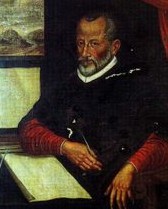
Giovanni Perluigi da Palestrina

The greatest composer of liturgical music of all time, born at Palestrina (ancient Praeneste) in 1514 or 1515, according to Baini, Riemann, and others, according to Haberl, in 1526; died at Rome, 2 February, 1594. His early history is practically unknown. Giuseppe Ottavia Pittoni (1657-1743), in notizie dei maestri di cappella si di Rome che ultramontani, 1600-1700, a manuscript in the Vatican, relates that young Pierluigi sang in the streets of Rome while offering for sale the products of his parents farm and that he was heard on such an occasion by the choirmaster of Santa Maria Maggiore, who, impressed by the boy's beautiful voice and pronounced musical talent, educated him musically. As to the identity of the choirmaster, tradition gives no clue. Some hold that Palestrina was taught by Jacques Arcadelt (1514-60), choirmaster and composer in Rome from 1539 to 1549. The opinion, so long held, that Claude Goudimel (1505-72) was his principal teacher has now been definitively abandoned. As far as is known, he began his active musical life as organist and choirmaster in his native city in 1544; his reputation increasing, in 1551 he was called to Rome, entrusted with the direction and musical formation of the choirboys at St. Peter's, and within the same year was advanced to the post of choirmaster. In 1554, he dedicated to Julius III (1549-55) his first compositions, a volume of masses for four voices, and was rewarded with the appointment as a member of the papal chapel in contravention of the rules governing that body. The pope had set aside the rule requiring those who held membership in the papal choir to be in Holy Orders, and also used his authority to exempt him from the usually severe entrance examination. These circumstances and the further fact that his voice was much inferior to those of the other singers, aroused the opposition, and antagonism of his fellow-members. The papal singers did not appreciate the object of the pope, which was to secure for the gifted young man the necessary leisure to compose.

In the course of the same year, Palestrina published a volume of madrigals. The texts of some of these the composer himself in later years considered too free. In the dedication of his setting of the Canticle of Canticles to Gregory XIII, he expresses not only regret but repentance, for having caused scandal by this publication. Marcellus II, as cardinal, had protected and admired Palestrina, but died after a reign of only twenty-one days. Paul IV, shortly after his accession, re-inforced the former rules for the government of the papal choir. Besides Palestrina, there were two other lay married members in the choir. All were dismissed with a small pension, in spite of the understanding that these singers were engaged for life.

The worry and hardship caused by the dismissal brought on a severe illness; restored, the composer took charge, 1 October, 1555, of the choir at St. John Lateran, where he remained until February, 1561. During this period he wrote, beside Lamentations and Magnificats, the famous Improperia. Their performance by the papal choir on Good Friday was ordered by Paul IV, and they have remained in its repertoire for Holy Week ever since. This production greatly increased Palestrina's fame. In 1561 he asked the chapter of St. John Lateran for an increase in salary, in view of his growing needs and the expense of publishing his works. Refused, he accepted a similar post at Santa Maria Maggiore, which he held until 1571. It is not know at what period of his career Palestrina came under the influence of St. Philip Neri, but there is every reason to believe it was in early youth. As the saint's penitent and spiritual disciple, he gained that insight into the spirit of the liturgy, which enabled his to set it forth in polyphonic music as it had never before been done. It was his spiritual formation even more than his artistic maturity, which fitted him for the providential part he played in the reform of church music.

The task of hastening the reforms decreed by the Council of Trent was entrusted by Pius IV to a commission of eight cardinals. A committee of two of these, St. Charles Borromeo and Vitellozzo Vitelli, was appointed to consider certain improvement in the discipline and administration of the papal choir, and to this end they associated to themselves eight of the choir members. Cardinal Vitelli caused the singers to perform certain compositions in his presence, in order to determine what measures could be taken for the preservation of the integrity and distinct declamation of the text in compositions in which the voices were interwoven. St. Charles, as chancellor of his uncle, Pius IV, was the patron of Palestrina, increasing his pension in 1565. He celebrated a solemn Mass in presence of the pontiff on 19 June, 1565, at which Palestrina's great Missa Papae Marcelli was sung. These historical data are the only discoverable basis for the legends, so long repeated by historians, concerning the trial before the cardinals and pope of the cause of polyphonic music, and its vindication by Palestrina, in the composition and performance of three masses, the Missa Papae Marcelli among them. Haberl's studies of the archives conclusively demolished these fictions, but their continued repetition for nearly two hundred years emphasizes the fact of Palestrina's activity, inspired by St. Philip and encouraged by St. Charles, in the reform of church music, an activity which embraced his entire career and antedated by some years the disciplinary measures of the Church authorities.

The foundation of his reform is the two principles legitimately deduced from the only references to church music in the Tridentine decrees:
  • the elimination of all themes of reminiscent of, or resembling, secular music;
  • the rejection of musical forms and elaborations tending to mutilate or obscure the liturgical text.

Pius IV created for Palestrina the office of "Composer of the Papal Chapel" with an increased salary. In this office he had only one successor, Felice Anerio. When in 1571 Giovanni Animuccia, choirmaster at St. Peter's, died, Palestrina became his successor, thus being connected with the papal choir and St. Peter's at the same time. An attempt of his jealous and intriguing colleagues in the papal chapel to have him dismissed by Pius V was unsuccessful. During this year he wrote a number of motets and laudi spirituali for the Oratory of St. Philip Neri. Besides the duties of choirmaster at St. Peter's, composer to the papal chapel, director of music at St. Philip's Oratory, he also taught at the school of music of Giovanni Maria Nanini. In addition, Gregory XIII commissioned him to prepare a new version of the Gregorian chant. His exact share in this edition, afterwards published under the name of editio Medicaea because printed in a press belonging to Cardinal de' Medici, and what was prepared by his pupil Giovanni Guidetti, Felice Anerio, and Francesco Suriano, has long been a matter of controversy. The undertaking was not particularly congenial to Palestrina and kept him from original production, his real field of activity. His wife's death in 1580 affected him profoundly. His sorrow found expression in two compositions, Psalm 136, "By the waters of Babylon", and a motet on the words "O Lord, when Thou shalt come to judge the world, how shall I stand before the face of Thy anger, my sins frighten me, woe to me, O Lord". With these he intended to close his creative activity, but with the appointment in 1581 as director of music to Prince Buoncompagni, nephew of Gregory XIII, he began perhaps the most brilliant period of his long life.

Besides sacred madrigals, motets, psalms, hymns in honour of the Blessed Virgin, and Masses, he produced the work which brought him the title of "Prince of Music", twenty-nine motets on the words from the Canticle of Canticles. According to his own statement, Palestrina intended to reproduce in his composition the Divine love expressed in the Canticle, so that his own heart might be touched by a spark thereof. For the enthronement of Sixtus V, he wrote a five-part motet and mass on the theme to the text Tu es pastor ovium, followed a few months later by one of his greatest productions, the mass Assumpta est Maria. Sixtus had intended to appoint him director of the papal choir, but the refusal of the singers to be directed by a layman, prevented the execution of his plan. During the last years of his life Palestrina wrote his great Lamentations, settings of the liturgical hymns, a collection of motets, the well-know Stabat Mater for double chorus, litanies in honour of the Blessed Virgin Mary, and the offertories for the ecclesiastical year. His complete works, in thirty-three volumes, edited by Theodore de Witt, Franz Espagne, Franz Commer, and from the tenth volume on, by Haberl, are published by Breitkopf and Hartel; Msgr. Haberl presented the last volume of the completed edition to Pius X on Easter Monday, 1908. Palestrina's significance lies not so much in his unprecedented gifts of mind and heart, his creative and constructive powers, as in the fact that he made them the medium for the expression in tones of the state of his own soul, which, trained and formed by St. Philip, was attuned to and felt with the Church. His creations will for all time stand forth as the musical embodiment of the spirit of the counter-reformation, the triumphant Church.


Saturday, January 30, 2010

There Was Thomism Before Aeterni Patris


Share/Bookmark
Thomas Cardinal Zigliara, OP (1833-1893) - Biography


ZIGLIARA, O.P., Tommaso (1833-1893)

Birth. October 29, 1833, Bonifacio, diocese of Ajaccio, Corsica, France.

Education. Classical studies, Bonifacio; joined the Order of Preachers, 1851; religious profession, 1852; Dominican house of studies, Rome (philosophy); Dominican house of studies, Perugia (theology).

Priesthood. Ordained, May 17, 1856, Perugia, by Gioacchino Pecci, archbishop-bishop of Perugia, future Pope Leo XIII. Professor of philosophy in Rome and in Corbara, Corsica. Concurrently, faculty member, Seminary of Viterbo, and master of novices, Dominican convent of Gradi. Master of novices, Rome, and later, 1870-1879, faculty member of Dominican Collegio S. Tommaso della Minerva; rector, 1873-1879. Consultor of the SS. CC. of the Index and of Extraordinary Ecclesiastical Affairs.

Cardinalate. Created cardinal deacon in the consistory of May 12, 1879; received the red hat and the deaconry of Ss. Cosma e Damiano, May 15, 1879. In 1879 contributed to the writing of the encyclical Aeterni patris, restoring Thomism as the basis of Christian philosophy. Director of the Leonine Commission for the the edition of the works of St. Thomas Aquinas, 1880. Protector of the Bibliographic Society, Rome, July 4, 1885. Prefect of the S.C. of Indulgences and Relics, December 16, 1886. Prefect of the S.C. of Studies, October 28, 1887. In 1890 contributed to the writing of the encyclical Rerum novarum. Opted for the order of cardinal priests and the title of S. Prassede, June 1, 1891. Protector of the Theological Academy, Rome, April 12, 1892. He enjoyed world wide fame as a leading scholar in Thomistic philosophy and theology.

Episcopate. Elected bishop of the suburbicarian see of Frascati, January 16, 1893; died before receiving the episcopal consecration.

Death. May 10, 1893, Rome. Exposed in the Church of S. Maria sopra Minerva and buried in the chapel of the Dominican Friars, Campo Verano Cemetery, Rome.


Tommaso Maria Zigliara (Baptismal name, FRANCESCO).

Cardinal, theologian, and philosopher, b. at Bonifacio, a seaport town of Corsica, toward the end of October, 1833; d. in Rome, 11 May, 1893. His early Classical studies were made in his native town under the Jesuit teacher, Father Aloysius Piras. At the age of eighteen he was received into the Dominican Order at Rome, and in 1852 he made his religious profession. From the beginning Zigliara was a student of uncommon brilliancy. He studied philosophy in Rome and theology at Perugia, where, 17 May, 1856, he was ordained by Cardinal Joachim Pecci, then Archbishop of Perugia. Soon afterwards the young priest was appointed to teach philosophy, first in Rome, then at Corbara in his native Corsica, and later in the diocesan seminary, at Viterbo, being at the same time master of novices in the neighbouring convent at Gradi.

When his work at Viterbo was finished, he was called to Rome, again made master of novices, and shortly appointed regent, or head professor, of the Minerva college. Before assuming this latter duty, he was raised to the dignity of master in sacred theology. When his community was forced by the Italian Government in 1873 to give up the convent of the Minerva, Zigliara with other professors and students took refuge with the Fathers of the Holy Ghost, who had charge of the French College in Rome. Here the lectures were continued until a house near the Minerva was secured. Zigliara's fame was now widespread in Rome and elsewhere. French, Italian, German, English, and American bishops were eager to put some of their most promising students and young professors under his tuition. Between Cardinal Pecci, Archbishop of Perugia, and Zigliara there had existed for many years the closest friendship, and when the former became pope as Leo XIII, in his first consistory (1879) he created Zigliara a cardinal. Zigliara was first numbered among the cardinal-deacons, then he became a cardinal-priest, and in 1893 he was appointed Bishop of Frascati, one of the seven suburban sees; but, owing to the sickness which ended in his death, he never received episcopal consecration.

He was a member of seven Roman congregations, besides being prefect of the Congregation of Studies and co-president of the Academy of St. Thomas Aquinas. He was a man of deep piety and devotion, and a tireless student to the end of his life. In addition to his many duties as cardinal, he was entrusted with the superintendence of the Leonine edition of the works of St. Thomas, the first volume of which contains his own commentary. He also found time to publish his Propaedeutica ad Sacram Theologiam and to write an extensive work on the sacraments, of which only the tracts on baptism and penance received final revision before his death. The most important, however, of Zigliara's works is his Summa Philosophica, which enjoys a world-wide circulation. For many years this has been the textbook in a great number of the seminaries and colleges of Europe, Canada, and America; and not very long ago it was adopted as the textbook for the philosophical examination in the National University of Ireland. His other works are: Osservazioni su alcune interpretazioni di G.C. Ubaghs sull' ideologia di San Tommaso d'Aquino (Viterbo, 1870); Della luce intellettuale e dell' ontologismo secondo la dottrina di S. Bonaventura e Tommaso d'Aquino (2 vols., Rome, 1874); De mente Concilii Vienensis in definiendo dogmate unionis animae humanae cum corpore (1878); Commentaria S. Thomae in Aristotelis libros Peri Hermeneias et Posteriorum analyticorum, in fol. vol. I new edit. Opp. S. Thomae: (Rome, 1882); Saggio sui principi del tradizionalismo; Dimittatur e la spiegazione datane dalla S. Congregazione dell' Indice.

By his teaching and through his writings, he was one of the chief instruments, under Leo XIII, of reviving and propagating Thomistic philosophy throughout the entire Church. In his own order and in some universities and seminaries, the teaching of St. Thomas had never been interrupted, but it was reserved for Zigliara to give a special impetus to the movement which has made Thomistic philosophy and theology dominant in the Catholic world.


Saturday, December 05, 2009

'Dogmatic Facts' (Catholic Encyclopedia Article)


Share/Bookmark
Definition

By a dogmatic fact, in wider sense, is meant any fact connected with a dogma and on which the application of the dogma to a particular case depends.

The following questions involve dogmatic facts in the wider sense: Is Pius X, for instance, really and truly Roman Pontiff [1909], duly elected and recognized by the Universal Church? This is connected with dogma, for it is a dogma of faith that every pontiff duly elected and recognized by the universal Church is a successor of Peter. Again, was this or that council ecumenical? This, too, is connected with dogma, for every ecumenical council is endowed with infallibility and jurisdiction over the Universal Church. The question also whether canonized saints really die in the odour of sanctity is connected with dogma, for every one who dies in the odour of sanctity is saved.

In the stricter sense the term dogmatic fact is confined to books and spoken discourses, and its meaning will be explained by a reference to the condemnation by Innocent X of five propositions taken from the posthumous book of Jansenius, entitled "Augustinus". It might be asked, for example, whether the pope could define that Jansenius really was the author of the book entitled "Augustinus". It is conceded that he could not. He may speak of it as the work of Jansenius, because, in general repute, at least, it was regarded as the work of Jansenius. The precise authorship of a book is called a personal fact. The question turned on the doctrine of the book. The Jansenists admitted that the doctrine enunciated in the condemned propositions was heretical; but they maintained that the condemned doctrine was not taught in the "Augustinus". This brings us to what are called "particular facts of doctrine". Thus it is a fact that God exists, and that there are Three Persons in God; here the same thing is fact and dogma. The Jansenists admitted that the pope is competent to deal with particular facts of doctrine, but not to determine the meaning of a book. The controversy was then carried to the meaning of the book. Now it is conceded that the pope cannot define the purely internal, subjective, perhaps singular meaning, which an author might attach to his words. But the pope, in certain cases, can determine the meaning of a book judged by the general laws of interpretation. And when a book or propositions from a book are condemned, "in the sense of the author", they are condemned in the sense in which the book or propositions would be understood when interpreted according to the ordinary laws of language. The same formula may be condemned in one author and not in another, because, interpreted by the context and general argument of the author, it may be unorthodox in one case and not in another. In the strict sense, therefore, a dogmatic fact may be defined as "the orthodox or heterodox meaning of a book or proposition"; or as a "fact that is so connected with dogma that a knowledge of the fact is necessary for teaching and conserving sound doctrine". When we say that a book contains unorthodox doctrine, we convey that a certain doctrine is unorthodox; here we have close connection between fact and dogma.

The Church and dogmatic facts

Jansenists distinguished between "fact" and "dogma". They held that the Church is infallible in defining revealed truth and in condemning errors opposed to revealed truth; but that the Church is not infallible in defining facts which are not contained in Divine revelation, and consequently that the Church was not infallible in declaring that a particular doctrine, in a particular sense, was found in the "Augustinus" of Jansenius. This would confine the infallible teaching of the Church to mere abstract doctrines, a view that cannot be accepted. Theologians are unanimous in teaching that the Church, or the pope, is infallible, not only in defining what is formally contained in Divine revelation, but also in defining virtually revealed truths, or generally in all definitions and condemnations which are necessary for safe-guarding the body of revealed truth. Whether it is to be regarded as a defined doctrine, as a doctrine de fide, that the Church is infallible in definitions about dogmatic facts, is disputed among theologians. The reason of this difference in opinion will appear below (3). The Church, in all ages, has exercised the right of pronouncing with authority on dogmatic facts; and this right is essential to her teaching office. She has always claimed the right of defining that the doctrine of heretics, in the sense in which it is contained in their books, or in their discourses, is heretical; that the doctrine of an orthodox writer, in the sense in which it is contained in his writings, is orthodox. We can scarcely imagine a theory like that of the Jansenists advanced within the sphere of the civil authority. We can scarcely conceive it to be held that a judge and a jury may pronounce on an abstract proposition of libel, but cannot find that a particular paragraph in a book or newspaper is libellous in the sense in which it is written. If the Church could not define the orthodox or unorthodox sense of books, sermons, conferences, and discourses generally, she might still be infallible in regard to abstract doctrine, but she could not fulfil her task as practical teacher of humanity, not protect her children from actual concrete dangers to their faith and morals.

Faith and dogmatic facts

The more extreme Jansenists, distinguishing between dogma and fact, taught that the dogma is the proper object of faith but that to the definition of fact only respectful silence is due. They refused to subscribe the formula of the condemnation of Jansenism, or would subscribe only with a qualification, on the ground that subscription implied internal assent and acquiescence. The less extreme party, though limiting the Church's infallibility to the question of dogma, thought that the formula might be signed absolutely and without qualification, on the ground that, by general usage, subscription implied assent to the dogma, but, in relation to the fact, only external reverence. But the definitions of dogmatic facts demand real internal assent; though about the nature of the assent and its relation to faith theologians are not unanimous. Some theologians hold that definitions of dogmatic facts, and especially of dogmatic facts in the wider acceptation of the term, are believed by Divine faith. For instance, the proposition, "every pope duly elected is the successor of Peter", is formally revealed. Then, say these theologians, the proposition, "Pius X has been duly elected pope", only shows that Pius X is included in the general revealed proposition that "every pope duly elected is the successor of Peter". And they conclude that the proposition, "Pius X is successor to Peter", is a formally revealed proposition; that it is believed by Divine faith; that it is a doctrine of faith, de fide; that the Church, or the pope, is infallible in defining such doctrines. Other theologians hold that the definitions of dogmatic facts, in the wider and stricter acceptation, are received, not by Divine faith, but by ecclesiastical faith, which some call mediate Divine faith. They hold that in such syllogisms as this: "Every duly elected pontiff is Peter's successor; but Pius X, for example, is a duly elected pontiff; therefore he is a successor of Peter", the conclusion is not formally revealed by God, but is inferred from a revealed and an unrevealed proposition, and that consequently it is believed, not by Divine, but by ecclesiastical faith. It would then also be held that it has not been formally defined de fide that the Church is infallible in the definition of dogmatic facts. It would be said technically to be theologically certain that the Church is infallible in these definitions; and this infallibility cannot lawfully be questioned. That all are bound to give internal assent to Church definitions of dogmatic facts is evident from the correlative duties of teacher and persons taught. As it belongs to the duty of supreme pastor to define the meaning of a book or proposition, correlatively it is the duty of the subjects who are taught to accept this meaning.