
Showing posts with label Doctors of the Church. Show all posts

Wednesday, August 24, 2011

Coming Soon: Bucketloads of New Doctors of the Church?


Share/Bookmark


The Candidates:

- Saint John of Avila
- Saint Louis-Marie Grignion de Montfort
- Saint Bernardine of Siena
- Saint Thomas of Villanova
- Saint Ignatius of Loyola
- Saint John Bosco
- Saints Cyril and Methodius
- Saint Margaret Mary Alacoque
- Saint Bridget of Sweden
- Saint Gertrude of Helfta
- Saint Vincent de Paul
- Saint Hildegard of Bingen
- Saint Veronica Giuliani
- Saint Gregory of Narek
- Saint Lorenzo Giustiniani
- Saint Antonino of Florence

- Blessed Julian of Norwich


Link to "Aliens in This World: Coming Soon: Bucketloads of New Doctors of the Church?"
Link to the Chiesa article, which includes a list of seventeen candidates.

Saturday, August 20, 2011

St. John of Avila to be Proclaimed Doctor, Pope Benedict Announces


Share/Bookmark


Dear Brothers and Sisters,

With great joy, here in this Cathedral Church of Santa María La Real de la Almudena, I announce to the People of God that, having acceded to the desire expressed by Cardinal Antonio María Rouco Varela, Archbishop of Madrid and President of the Bishops’ Conference of Spain, together with the members of the Spanish episcopate and other Archbishops and Bishops from throughout the world, as well as many of the lay faithful, I will shortly declare Saint John of Avila a Doctor of the universal Church.

In making this announcement here, I would hope that the word and the example of this outstanding pastor will enlighten all priests and those who look forward to the day of their priestly ordination.

I invite everyone to look to Saint John of Avila and I commend to his intercession the Bishops of Spain and those of the whole world, as well as all priests and seminarians. As they persevere in the same faith which he taught, may they model their hearts on that of Jesus Christ the good Shepherd, to whom be glory and honour for ever. Amen.


Meet the Doctors: St. Bernard of Clairvaux


Share/Bookmark From Matins of the Feast of St Bernard of Clairvaux, Confessor and Doctor
Online source: www.breviary.net

Absolutio: Ipsíus píetas et misericórdia nos ádjuvet, qui cum Patre et Spíritu Sancto vivit et regnat in sæcula sæculórum.R.  Amen.
Absolution:  May his loving-kindness and mercy assist us.  Who, with the Father, and the Holy Ghost, liveth and reigneth, for ever and ever.
R.  Amen.
V.  Jube domne, (Dómine) benedícere.
V.  Vouchsafe, Reverend Father (O Lord), thy blessing.
Benedíctio 4: Deus Pater omnípotens sit nobis propítius et clemens.
R.  Amen.
Benediction 4:  May God the Father Almighty shew us his mercy and pity.
R.  Amen.
Lesson iv

St. Robert of Molesmes welcomes St. Bernard of Clairvaux into the Cistercian Order
Bernárdus, Fontánis in Burgúndia honésto loco natus, adoléscens propter egrégiam formam veheménter sollicitátus a muliéribus, numquam de senténtia coléndæ castitátis dimovéri pótuit.  Quas diáboli tentatiónes ut effúgeret, duos et vigínti annos natus, monastérium Cisterciénse, unde hic ordo incépit et quod tum sanctitáte florébat, íngredi constítuit.  Quo Bernárdi consílio cógnito, fratres summópere conáti sunt eum a propósito deterrére.  In quo ipse eloquéntior ac felícior fuit ; nam sic eos aliósque multos in suam perdúxit senténtiam, ut cum eo trigínta júvenes eámdem religiónem suscéperint.  Mónachus, jejúnio ita déditus erat, ut quóties suméndus esset cibus, tóties torméntum subíre viderétur.  In vigíliis étiam et oratiónibus mirífice se exercébat ; et, christiánam paupertátem colens, quasi cæléstem vitam agébat in terris, ab omni caducárum rerum cura et cupiditate aliénam.
Bernard was born at a decent place in Burgundy called Fontaines.  On account of extraodinary good looks, he was as a boy very much sought after by women, but he could never be turned aside from his resolution to keep chaste.  To fly from these temptations of the devil, he determined at two-and-twenty years of age to enter the monastery of Citeaux, whence the Cistercian Order took its rise.  When this resolution of Bernard's became known, his brothers did all their diligence to change his purpose, but he only became the more eloquent and happy about it.  Them and others he so brought over to his mind, that thirty young men entered the same Order along with him.  As a monk he was so given to fasting, that as often as he had to eat, so often he seemed to be in pain.  He exercised himself wonderfully in watching and prayer, and was a great lover of Christian poverty.  Thus he led on earth an heavenly life, purged of all care and desire for transitory things.
V.  Tu autem, Dómine, miserére nobis.
R.  Deo grátias.
V.  But thou, O Lord, have mercy upon us.
R.  Thanks be to God.

The Abbey of Citeaux
R.  Honéstum fecit illum Dóminus, et custodívit eum ab inimícis, et a seductóribus tutávit illum : * Et dedit illi claritátemætérnam.V.  Justum dedúxit Dóminus per vias rectas, et osténdit illi regnum Dei.
R.  Et dedit illi claritátemætérnam.
R.  The Lord multiplied the fruit of his labours and defended him from his enemies, and kept him safe from those that lay in wait. *And gave him perpetual glory.
V.  The Lord guided the righteous in right paths, and shewed him the kingdom of God.
R.  And gave him perpetual glory.

V.  Jube domne, (Dómine) benedícere.
V.  Vouchsafe, Reverend Father (O Lord), thy blessing.
Benedíctio 5: Christus perpétuæ det nobis gáudia vitæ.R.  Amen.
Benediction 5: May Christ bestow upon us the joys of life eternal.
R.  Amen.
Lesson v

The Abbey of Clairvaux, where
St. Bernard was made Abbot in 1115
Elucébat in eo humilitas, misericórdia, benígnitas.  Contemplatióni autem sic addíctus erat, ut vix sénsibus, nisi ad offície pietátis, uterétur : in quibus tamen prudéntiæ laude excellébat.  Quo in stúdio occupátus, Genuénsem ac Mediolanénsem aliósque episcopátus oblátos recusávit, proféssus se tanti offícii múnere indígnum esse.  Abbas factus Claravallénsis, multis in locis ædificávit monastéria, in quibus præclára Bernárdi institútio ac disciplína diu víguit.  Romæ sanctórum Vincéntii et Anastásii monastério, ab Innocéntio secúndo Papa restitúto, præfécit abbátem illum, qui póstea Eugénius tértius summus Póntifex fuit ; ad quem étiam librum misit de Consideratióne.
He was a burning and shining light of lowliness, mercifulness, and kindness.  His concentration of thought was such, that he hardly used his senses except to do good works, in which latter he acted with admirable wisdom.  Thus occupied, he refused the Bishopricks of Genoa, Milan, and others, which were offered to him, declaring that he was unworthy of so high a sphere of duty.  Being made Abbot of Clairvaux he built monasteries in many places, wherein the excellent rules and disciplines of Bernard long flourished.  When Pope Innocent II restored the monastery of St. Vincent and St. Anastasius at Rome, Bernard set over it the Abbot who was afterwards the Supreme Pontiff Eugene III, and who is also the same to whom he addressed his book upon Consideration.
V.  Tu autem, Dómine, miserére nobis.
R.  Deo grátias.
V.  But thou, O Lord, have mercy upon us.
R.  Thanks be to God.

The Church of Ss. Vincent and Anastasius, by the Trevi Fountain, Rome
R.  Amávit eum Dóminus, et ornávit eum : stolam glóriæ índuit eum, * Et ad portas paradísi coronávit eum.V.  Induit eum Dóminus lorícam fídei, et ornávit eum.
R.  Et ad portas paradísi coronávit eum.
R.  The Lord loved him and adorned him; he clothed him with a robe of glory : * And crowned him at the gates of Paradise.V.  The Lord hath put on him the breast-plate of faith, and hath adorned him.
R.  And crowned him at the gates of Paradise.

V.  Jube domne, (Dómine) benedícere.
V.  Vouchsafe, Reverend Father (O Lord), thy blessing.
Benedíctio 6: Ignem sui amóris accéndat Deus in córdibus nostris.
R.  Amen.
Benediction 6: May God enkindle in our hearts the fire of his holy love.
R.  Amen.
Lesson vi
Saint Bernard preaching the Second Crusade before
King Louis VII at Vézelay in Burgundy, March 31, 1146
Multa prætérea scripsit, in quibus appáret eum doctrína pótius divínitus trádita quam labóre comparáta instrúctum fuísse.  In summa virtútum laude exorátus a máximis princípibus de eórum componéndis controvérsiis et de ecclesiásticis rebus constituéndis, sæpius in Itáliam venit.  Innocéntium item secúndum Pontíficem máximum in confutándo schísmate Petri Leónis, cum apud imperatórem et Henrícum Angliæ regem, tum in concílio Pisis coácto, egrégie adjúvit.  Dénique, tres et sexagínta annos natus, obdormívit in Dómino, ac, miráculis illústris, ab Alexándro tértio Papa inter Sanctos relátus est.  Pius vero octávus Póntifex máximus, ex sacrórum Rítuum Congregatiónis consílio, sanctum Bernárdum  universális Ecclésiæ Doctórem declarávit et confirmávit, nec non Missam et Offícium de Doctóribus ab ómnibus recitári jussit, atque indulgéntias plenárias quotánnis in perpétuum órdinis Cisterciénsium ecclésias visitántibus die hujus Sancti festo concéssit.
He was the author of many writings, in which it is manifest that his teaching was rather given him of God, than gained by hard work.  In consequence of his high reputation for excellence, he was called by the most exalted Princes to act as arbiter of their disputes, and for this end, and to settle affairs of the Church, he often went to Italy.  He was an eminent helper to Pope Innocent II, in putting down the schism of Peter Leoni, and worked to this end, both at the Courts of the Emperor and of Henry, King of England, and in the Council of Pisa.  He fell asleep in the Lord in the sixty-third year of his age.  He was famous for miracles, and Pope Alexander III numbered him among the Saints.  Pope Pius VIII, acting on the advice of the Congregation of Sacred Rites, declared and confirmed St. Bernard a Doctor of the Universal Church.  He also commanded that all should use the Mass and Office for him as for a Doctor, and granted perpetual yearly plenary indulgences to all who should visit Churches of the Cistercian Order upon the Feastday of this Saint.
V.  Tu autem, Dómine, miserére nobis.
R.  Deo grátias.
V.  But thou, O Lord, have mercy upon us.
R.  Thanks be to God.
R.  Iste homo perfécit ómnia quæ locútus est ei Deus, et dixit ad eum : Ingrédere in réquiem meam : * Quia te vidi justum coram me ex ómnibus géntibus.
V.  Iste est, qui contémpsit vitam mundi, et pervénit ad cæléstia regna.
R.  Quia te vidi justum coram me ex ómnibus géntibus.
V.  Glória Patri, et Fílio, et Spirítui Sancto.
R.  Quia te vidi justum coram me ex ómnibus géntibus.
R.  This is he which did according to all that God commanded him ; and God said unto him : Enter thou into my rest : * For thee have I seen righteous before me among all people.V.  This is he which despised his life in this world, and is come unto an everlasting kingdom.
R.  For thee have I seen righteous before me among all people.V.  Glory be to the Father, and to the Son, and to the Holy Ghost.
R.  For thee have I seen righteous before me among all people.

Monday, August 15, 2011

St. John Damascene on the Dormition of Our Lady


Share/Bookmark
From Matins of the Feast of Our Lady's Assumption (Aug. 15)
Online Source: www.breviary.net


Lesson iv
Sermo sancti Joánnis DamascéniThe Lesson is taken from a Sermon by St. John of Damascus
Oratio 2 de Dormitione B.M.V. post initium

Final home and shrine of the Blessed Virgin Mary, near Ephesus, Turkey
Hódie sacra et animáta arca Dei vivéntis, quæ suum in útero concépit Creatórem, requiéscit in templo Dómini, quod nullis est exstrúctum mánibus.  Et David exsúltat ejus parens, et cum eo choros ducunt Angeli, célebrant Archángeli, Virtútes gloríficant, Principátus exsúltant, Potestátes  collætántur, gaudent Dominatiónes, Throni festum diem agunt, laudant Chérubim, glóriam ejus prædicant Séraphim.  Hódie Eden novi Adam paradísum súscipit animátum, in quo solúta est condemnátio, in quo plantátum est lignum vitæ, in quo opérta fuit nostra núditas.
This day the holy and animated Ark of the living God, which had held within it its own Maker, is borne to rest in that Temple of the Lord, which is not made with hands.  David, whence it sprang, leapeth before it, and in company with him the Angels dance, the Archangels sing aloud, the Virtues ascribe glory, the Principalities shout for joy, the Powers make merry, the Dominions rejoice, the Thrones keep holiday, the Cherubim utter praise, and the Seraphim proclaim its glory.  This day the Eden of the new Adam receiveth the living garden of delight, wherein the condemnation was annulled, wherein the Tree of Life was planted, wherein our nakedness was covered.
V.  Tu autem, Dómine, miserére nobis.
R.  Deo grátias.
V.  But thou, O Lord, have mercy upon us.
R.  Thanks be to God.
R.  Ornátam monílibus filiam Jerúsalem Dóminus concupívit : * Et vidéntes eam fíliæ Sion, beatíssimam prædicavérunt, dicéntes : Unguéntum effúsum nomen tuum.V.  Astitit regína a dextris tuis in vestítu deauráto, circúmdata varietáte.
R.  Et vidéntes eam fíliæ Sion, beatíssimam prædicavérunt, dicéntes : Unguéntum effúsum nomen tuum.
R.  When the Lord beheld the daughter of Jerusalem adorned with her jewels, he greatly desired her beauty ; * And when the daughters of Sion saw her, they cried out that she was most blessed, and they said : Thy name is as ointment poured forth.
V.  O Lord, upon thy right hand did stand the Queen in a vesture of gold, wrought about with divers colours.
R.  And when the daughters of Sion saw her, they cried out that she was most blessed, and they said : Thy name is as ointment poured forth.

V.  Jube domne, (Dómine) benedícere.
V.  Vouchsafe, Reverend Father (O Lord), thy blessing.
Benedíctio 5: Christus perpétuæ det nobis gáudia vitæ.R.  Amen.
Benediction 5: May Christ bestow upon us the joys of life eternal.
R.  Amen.
Lesson v
Hódie Virgo immaculáta, quæ nullis terrénis inquináta est afféctibus, sed cæléstibus educáta cogitatiónibus, non in terram revérsa est ; sed, cum esset animátum cælum, in cæléstibus tabernáculis collocátur.  Ex qua enim ómnibus vera vita manávit, quómodo illa mortem gustáret?  Sed cedit legi latæ ab eo quem génuit ; et, ut fília véteris Adam, véterem senténtiam súbiit (et ejus Fílius, qui est vita ipsa, eam non recusávit); ut autem Dei vivéntis Mater, ad illum ipsum digne assúmitur.
This day the stainless maiden, who had been defiled by no earthly lust, but ennobled by heavenly desires, returned not to dust, but, being herself a living heaven, took her place among the heavenly mansions.  From her true life had flowed for all men, and how should she taste of death?  But she yielded obedience to the law established by him to whom she had given birth, and, as the daughter of the old Adam, underwent the old sentence, which even her Son, who is the very Life Itself, had not refused ; but, as the Mother of the living God, she was worthily taken by him unto himself.
V.  Tu autem, Dómine, miserére nobis.
R.  Deo grátias.
V.  But thou, O Lord, have mercy upon us.
R.  Thanks be to God.
R.  Beátam me dicent omnes generatiónes, * Quia fecit mihi Dóminus magna qui potens est, et sanctum nomen ejus.V.  Et misericórdia ejus a progénie in progénies timéntibus eum.
R.  Quia fecit mihi Dóminus magna qui potens est, et sanctum nomen ejus.
R.  All generations shall call me blessed, * For the Lord that is mighty hath magnified me, and holy is his Name.V.  And his mercy is on them that fear him throughout all generations.
R.  For the Lord that is mighty hath magnified me, and holy is his Name.

V.  Jube domne, (Dómine) benedícere.
V.  Vouchsafe, Reverend Father (O Lord), thy blessing.
Benedíctio 6: Ignem sui amóris accéndat Deus in córdibus nostris.
R.  Amen.
Benediction 6: May God enkindle in our hearts the fire of his holy love.
R.  Amen.
Lesson vi
Ex Actis Pii Papæ duodécimiThe Lesson is taken from the Acts of Pope Pius XII

Pope Pius XII solemnly declares the dogma of the
Assumption of Mary Most Holy, November 1, 1950
Quóniam vero univérsa Ecclésia fidem in corpóream beátæ Maríæ Vírginis Assumptiónem per sæculórum decúrsum manifestávit, et totíus orbis Epíscopi prope unánimi consensióne petiérunt ut hæc véritas, quæ Sacris Lítteris innítitur, Christifidélium ánimis pénitus est ínsita, ceterísque revelátis veritátibus plane cónsona, tamquam divínæ et cathólicæ fídei dogma definirétur, Pius duodécimus Póntifex Máximus, totíus Ecclésiæ votis ánnuens, státuit hoc Beátæ Maríæ Vírginis privilégium solémniter renuntiáre.  Itaque die prima Novémbris anni máximi Jubilæi millésimi nongentésimi quinquagésimi, Romæ ad foro ad sancti Petri Basílicam paténte, plurimórum Sanctæ Románæ Ecclésiæ Cardinálium atque Episcopórum ex díssitis étiam regiónibus astánte cœtu, coram ingénti Christifidélium multitúdine, univérso cathólico orbe plaudénte, corpóream Beátæ Maríæ Vírginis Assumptiónem in cælum infallíbili oráculo in hæc verba proclamávit : Postquam súpplices étiam atque étiam ad Deum admóvimus preces, ac Veritátis Spíritus lumen invocávimus, ad Omnipoténtis Dei glóriam, qui peculiárem benevoléntiam suam Maríæ Vírgini dilargítus est, ad sui Fílii honórem, immortális sæculórum Regis ac peccáti mortísque victóris, ad ejúsdem augústæ Matris augéndam glóriam et ad totíus Ecclésiæ gáudium exsultationémque, auctoritáte Dómini Nostri Jesu Christi, Beatórum Apostolórum Petri et Pauli ac Nostra pronuntiámus, declarámus et definímus revelátum dogma esse : Immaculátam Deíparam semper Vírginem Maríam, expléto terréstris vitæ cursu, fuísse córpore et ánima ad cæléstem glóriam assúmptam.
Since indeed the universal Church hath at all times and throughout the ages manifested faith in the bodily Assumption of the Blessed Virgin Mary, and since the Bishops of the whole world by an almost unanimous agreement have petitioned that this truth, which is enshrined in Sacred Scripture and deeply rooted in the souls of Christ's faithful, and is also truly in accord with other revealed truths, should be defined as a dogma of the divine and Catholick Faith, Pope Pius XII, acceding to the requests of the whole Church, decreed that this privilege of the Blessed Virgin Mary be solemnly proclaimed, and thus, on the first day of November of the year of the Great Jubilee, nineteen hundred and fifty, at Rome, in the open square before the Basilica of St. Peter, surrounded by a throng of many Cardinals and Bishops of the Holy Roman Church who had come from distant parts of the earth, and before a great multitude of the faithful, with the whole Catholick world rejoicing, proclaimed in these words and with infallible statement the bodily Assumption of the Blessed Virgin Mary into heaven : Wherefore, having offered to God continual prayers of supplication, and having invoked the light of the Spirit of Truth, to the glory of Almighty God who hath enriched the Virgin Mary with his special favour ; in honour of his Son, the immortal King of ages and victor over sin and death ; for the increase of the glory of the same august Mother, and for the joy and exultation of the whole Church, by the authority of Our Lord Jesus Christ, of the holy Apostles Peter and Paul, and by our own authority, we pronounce, declare and define it to be a divinely revealed dogma that : The Immaculate Mother of God, Mary ever Virgin, was, at the end of her earthly life, assumed body and soul into heavenly glory.
V.  Tu autem, Dómine, miserére nobis.
R.  Deo grátias.
V.  But thou, O Lord, have mercy upon us.
R.  Thanks be to God.
R.  Beáta es, Virgo María, quæ Dóminum portásti, Creatórem mundi : * Genuísti qui te fecit, et inætérnum pérmanes Virgo.V.  Ave, María, grátia plena ; Dóminus tecum.
R.  Genuísti qui te fecit, et in ætérnum pérmanes Virgo.
V.  Glória Patri, et Fílio, et Spirítui Sancto.
R.  Genuísti qui te fecit, et in ætérnum pérmanes Virgo.
R.  Blessed art thou, O Virgin Mary, who didst bear the Creator of all things : * Thou didst give birth to thy Maker, and forever remainedst a Virgin.
V.  Hail Mary, full of grace : the Lord is with thee.
R.  Thou didst give birth to thy Maker, and forever remainedst a Virgin.
V.  Glory be to the Father, and to the Son, and to the Holy Ghost.
R.  Thou didst give birth to thy Maker, and forever remainedst a Virgin.

Tuesday, August 02, 2011

St. Alphonsus's Theologia Moralis: The Magisterially-Guaranteed Manual of Casuistry


Share/Bookmark Quoted from Gousset, La justification de la théologie morale du bienheureux Alphonse-Marie de Liguori, p. 197:


English Translation 
(Copyright © 2011 Francisco J. Romero Carrasquillo and Ite ad Thomam.  All rights reserved.)

1) Whether the professor of Sacred Theology can safely follow and profess the opinions that St. Alphonsus Liguori professes in his Theologia Moralis?

2) Whether a confessor is to be reprimanded who, in the practice of the sacred Tribunal of [the Sacrament of] Penance, follows all of the opinions of St. Alphonsus Liguori, merely because the Holy Apostolic See has not found anything in his works worthy of censure?  The confessor of whom we inquire does not read the works of the Holy Doctor except to know accurately his doctrine; not to examine their importance or their reasons, concerning which there are many opinions; but considers himself to act safely by the very fact that he prudently judges the doctrine which does not contain anything worthy of censure to be sound, safe, and not contrary in any way to the holiness of the Gospel.

Decision

The Holy Penitentiary having weighed the above [...] resolved to respond:

1) To the first question: Affirmatively, so long as he does not thereby deem as reprehensible those who follow the opinions proposed by other approved Authors.

2) To the second question: Negatively, given the mind of the Holy See concerning the approbation of the writings of the servants of God for the purpose of Canonization. 

Given in Rome, in the Sacred Penitentiary, the fifth day of July, 1831.

A.F. de Retz, S.P. Regens
F. Fricca, S.P. Secretarius

Concordat cum Originali.

A. Cardinalis, Archiepiscopus Vesontionensis.

------------

St. Alphonsus' Theologia Moralis is available in 4 volumes from ITOPL

Meet the Doctors: St. Alphonsus Liguori


Share/Bookmark

From Matins of the Feast of St. Alphonsus Liguouri, Bishop, Confessor, Doctor (2nd Nocturn)
Online Source: www.breviary.net

Lesson iv
Alfónsus María de Ligório, Neápoli nobílibus paréntibus natus, ab ineúnte ætáte non obscúra præbuit sanctitátis indícia.  Eum adhuc infántem cum paréntes obtulíssent sancto Francísco de Hierónymo e societáte Jesu, is bene precátus edíxit eúmdem ad nonagésimum usque annum perventúrum, ad episcopálem dignitátem evéctum iri, maximóque Ecclésiæ bono futúrum.  Jam tum a puerítia, a ludis abhórrens, nóbiles ephébos ad christiánam modéstiam verbo et exémplo componébat.  Adoléscens, dato piis sodalitátibus nómine, in públicis nosocomíis ægrótis inservíre, jugi in templis oratióni vacáre, ac sacra mystéria frequénter obíre in delíciis habébat.  Pietátem litterárum stúdiis ádeo conjúnxit, ut séxdecim vix annos natus utriúsque juris láuream in pátria universitáte fúerit assecútus.  Patri obtémperans, causárum patrocínia suscépit ; in quo múnere obeúndo, etsi magnam sibi laudem comparásset, fori tamen perícula expértus, ejúsmodi vitæ institútum ultro dimísit.  Spreto ígitur præcláro conjúgio sibi a patre propósito, avíta primogenitúra abdicáta, et ad aram Vírginis de Mercéde ense suspénso, divínis ministériis se mancipávit.  Sacérdos factus, tanto zelo írruit in vítia, ut apostólico múnere fungens, huc illuc pérvolans, ingéntes perditórum hóminum conversiónes perágeret.  Páuperum præsértim et ruricolárum miserátus, congregatiónem Presbyterórum instítuit sanctíssimi Redemptóris, qui, ipsum Redemptórem secúti, per agros, pagos, et castélla paupéribus evangelizárent.
Alphonsus Mary Liguori was born of a noble family at Naples.  From his earliest days he gave no dark signs of holiness.  When he was but a babe, his parents carried him to holy Francis de Geronimo, of the Society of Jesus, and holy Francis, after long prayer, said that the child would live to ninety years of age, that he would become a Bishop, and that he would be a great blessing to the Church.  From his childhood, he had a strong distaste to games, and by his entreaty and example, induced the noble pages to conduct themselves with Christian decency.  As a young man, he became a member of divers godly guilds, and made it among his delights to nurse the sick in the hospitals, to spend much time in prayer in the Churches, and often to receive the Holy Sacraments.  With his godliness he so joined zeal for learning, that when he was scarcely sixteen years of age he took degrees in Canon and Civil Law in the University of Naples.  In obedience to the wish of his father, he adopted the profession of an advocate, in which he gained great credit, but, finding dangers in the practice of the law, he entirely gave it up.  He declined a very brilliant marriage which was proposed to him by his father, resigned his family inheritance as an eldest son, hung up his sword at the Altar of the Blessed Virgin Mary, styled of Ransom, and surrendered himself altogether to the service of God.  He became a Priest, and made so zealous an onslaught on sin, running hither and thither in the office of an Apostle, that he accomplished the conversion of multitudes of lost creatures.  The poor and the country-people most chiefly roused his compassion, and he founded the Congregation of Priests called that of the Most Holy Redeemer, to follow the Redeemer's footsteps by preaching the Gospel to the poor throughout the fields, villages, and hamlets.
V.  Tu autem, Dómine, miserére nobis.
R.  Deo grátias.
V.  But thou, O Lord, have mercy upon us.
R.  Thanks be to God.

University of Naples
R.  Invéni David servum meum, óleo sancto meo unxi eum : * Manus enim mea auxiliábitur ei.
V.  Nihil profíciet inimícus in eo, et fílius iniquitátis non nocébit ei.
R.  Manus enim mea auxiliábitur ei.
R.  I have found David my servant, with my holy oil have I anointed him. * My hand shall hold him fast.
V.  The enemy shall not be able to do him violence ; the son of wickedness shall not hurt him.
R.  My hand shall hold him fast.

V.  Jube domne, (Dómine) benedícere.
V.  Vouchsafe, Reverend Father (O Lord), thy blessing.
Benedíctio 5: Christus perpétuæ det nobis gáudia vitæ.R.  Amen.
Benediction 5: May Christ bestow upon us the joys of life eternal.
R.  Amen.
Lesson v

Icon of Our Lady of Perpetual Help
in the Redemptorist Church of St. Alphonsus in Rome
Ne autem a propósito umquam divérteret, perpétuo se voto obstrínxit nullam témporis jactúram faciéndi.  Hinc animárum zelo succénsus, tum divíni verbi prædicatióne, tum scriptis sacra eruditióne et pietáte refértis, ánimas Christo lucrifácere et ad perfectiórem vitam addúcere stúduit.  Mirum sane quot ódia exstínxerit, quot dévios ad rectum salútis iter revocáverit.  Dei Genitrícis cultor exímius, de illíus láudibus librum édidit, ac de iis dum fervéntius concionándo dísserit, a Vírginis imágine, in eum immísso miro splendóre, totus fácie coruscáre et in éxtasim rapi coram univérso pópulo non semel visus est.  Dominicæ passiónis et sacræ Eucharístiæ contemplátor assíduus, ejus cultum mirífice propagávit.  Dum vero ad ejus aram oráret vel Sacrum fáceret, quod numquam omísit, præ amóris veheméntia, vel seráphicis liquescébat ardóribus, vel insólitis quatiebátur mótibus, vel abstrahebátur a sénsibus.  Miram vitæ innocéntiam, quam nulla umquam letháli labe fœdávit, pari cum pœniténtia sócians, corpus suum inédia, férreis caténulis, cilíciis cruentáque flagellatióne castigábat.  Inter hæc prophetíæ, scrutatiónis córdium, bilocatiónis et miraculórum donis incláruit.
That he might not turn aside from his work, he bound himself by a vow never to lose any time.  Inflamed with the love of souls, he toiled to gain them to Christ and to amend their lives, not only by preaching of the word of God, but also by writings full of holy learning and godliness.  It is a marvel how many hatreds he stilled, and how many backsliders he led again into the paths of salvation.  He was eminently devoted to the Mother of God, published a book on her glories, and when he was earnestly speaking thereof in his sermons, it happened more than once that all the people openly saw a strange brightness fall upon him from her image, till all his countenance shone, and he was rapt in an ecstasy.  The sufferings of the Lord and the Holy Eucharist were ever before his eyes, and to them he spread abroad a wonderful love.  When he was praying before the Altar of the Blessed Sacrament, or celebrating the Holy Liturgy, which he never failed to do every day, through the seraphic violence of his love, he wept burning tears, or shook with strange movements, or became altogether beside himself.  He joined a wonderful innocence and purity, which he never polluted by the stain of deadly sin, to a wonderful depth of repentance, and chastised his body with hunger, iron chains, hair-cloth, and scourgings even to blood-shedding.  Among all these things he was remarkable for the gift of prophecy, the power of seeing into the hearts of men, the ability to be in more places than one at the same time, and other miracles.
V.  Tu autem, Dómine, miserére nobis.
R.  Deo grátias.
V.  But thou, O Lord, have mercy upon us.
R.  Thanks be to God.

Church of St. Alphonsus, Rome
R.  Pósui adjutórium super poténtem, et exaltávi eléctum de plebe mea : * Manus enim mea auxiliábitur ei.
V.  Invéni David servum meum, óleo sancto meo unxi eum.
R.  Manus enim mea auxiliábitur ei.
R.  I have laid help upon one that is mighty, I have exalted one chosen out of the people. * My hand shall hold him fast.V.  I have found David, my servant, with my holy oil have I anointed him.
R.  My hand shall hold him fast.

V.  Jube domne, (Dómine) benedícere.
V.  Vouchsafe, Reverend Father (O Lord), thy blessing.
Benedíctio 6: Ignem sui amóris accéndat Deus in córdibus nostris.
R.  Amen.
Benediction 6: May God enkindle in our hearts the fire of his holy love.
R.  Amen.
Lesson vi
Ab ecclesiásticis dignitátibus sibi oblátis constantíssime abhórruit ; at, Cleméntis décimi tértii Pontíficis auctoritáte coáctus, sanctæ Agathæ Gothórum ecclésiam gubernándum suscépit.  Epíscopus, extérnum dumtáxat hábitum, non autem sevéram vivéndi ratiónem immutávit.  Eadem frugálitas, summus christiánæ disciplínæ zelus, impénsum in vítiis coërcéndis arcendísque erróribus, et in réliquis pastorálibus munéribus obeúndis stúdium.  Liberális in páuperes, omnes ecclésiæ provéntus iísdem distribuébat, ac, urgénte annónæ caritáte, ipsam domésticam supelléctilem in aléndis famélicis erogávit.  Omnibus ómnia factus, sanctimoniáles ad perfectiórem vivéndi formam redégit, suæque congregatiónis moniálium monastérium constituéndum curávit.  Episcopátu ob graves habitualésque morbos dimísso, ad alúmnos suos, a quibus pauper discésserat, revértitur pauper.  Demum, quamvis senio laboribúsque, diutúrna arthrítide aliísque gravíssimis morbis fractus córpore, spíritu tamen alácrior, de cæléstibus rebus disseréndi aut scribéndi finem numquam adhíbuit, donec nonagenárius, Kaléndis Augústi, anno millésimo septingentésimo octogésimo séptimo, Nucériæ Paganórum, inter suórum alumnórum lácrimas, placidíssime exspirávit.  Eum, inde virtútibus et miráculis clarum, Pius séptimus Póntifex máximus anno millésimo octingentésimo décimo sexto Beatórum fastis ; novísque fulgéntem signis, Gregórius décimus sextus in festo sanctíssimæ Trinitátis, anno millésimo octingentésimo trigésimo nono, solémni ritu, Sanctórum catálogo accénsuit.  Tandem Pius nonus Póntifex máximus, ex sacrórum Rítuum Congregatiónis consúlto, universális Ecclésiæ Doctórem declarávit.
He firmly and perseveringly refused all high places in the Church which were offered him, but Pope Clement XIII absolutely commanded him to take the Bishoprick of the Church of Santa Agata dei Goti.  On becoming a Bishop, the only change which he made in the hardness of his life was that of his outer raiment.  There remained, too, the same simplicity of meats, the same strong zeal for Christian discipline, the same determined will to put down sin and keep out false doctrines, and the same earnestness in all the duties of a shepherd of souls.  In his tenderness to the poor, he spent among them all the revenues of his Church, and in a year of famine sold the furniture of his own house to feed his starving people.  He was all things to all men ; and brought nuns to lead a more perfect life, while he saw to it that a monastery was opened for nuns attached to his own Congregation.  On account of grievous and continual sickness, he resigned his Bishoprick, and poor as when he had left them, poor he returned among his disciples.  On the 1st day of August, in the year 1787, he peacefully died at Nocera-dei-Pagani, amid the tears of his followers.  He was then ninety years of age ; his body was worn out with old age and hard work, and with chronic gout, and other painful maladies, but the freshness of his mind never failed to the last, in talking and writing on heavenly things.  In the year 1816 Pope Pius VII, finding him famous on account of his good works and miracles, enrolled his name among those of the Blessed.  God still glorified him by new signs and wonders, and on the Feast of the Most Holy Trinity, in the year 1839, Gregory XVI, with solemn pomp, numbered him among the Saints of the Church.  Lastly, Pope Pius IX, in accordance with a resolution of the Congregation of Sacred Rites, gave him the title of Doctor of the Universal Church.
V.  Tu autem, Dómine, miserére nobis.
R.  Deo grátias.
V.  But thou, O Lord, have mercy upon us.
R.  Thanks be to God.
R.  Iste est, qui ante Deum magnas virtútes operátus est, et omnis terra doctrína ejus repléta est : * Ipse intercédat pro peccátis ómnium populórum.V.  Iste est, qui contémpsit vitam mundi, et pervénit ad cæléstia regna.
R.  Ipse intercédat pro peccátis ómnium populórum.V.  Glória Patri, et Fílio, et Spirítui Sancto.
R.  Ipse intercédat pro peccátis ómnium populórum.
R.  This is he who wrought mighty deeds and valiant in the sight of God, and all the earth is filled with his doctrine: May his intercession avail for the sins of all the people.V.  He was a man who despised the life of the world and attained unto the kingdom of heaven.
R.  May his intercession avail for the sins of all the people.V.  Glory be to the Father, and to the Son, and to the Holy Ghost.
R.  May his intercession avail for the sins of all the people.


Thursday, July 21, 2011

Meet the Doctors: St. Laurence of Brindisi


Share/Bookmark
On the Feast of St. Laurence of Brindisi, OFM, Cap., Confessor and Doctor (July 21)
From Catholic Encyclopedia, "St. Lorenzo da Brindisi"

(Also: Lawrence, or Laurence, of Brindisi.)
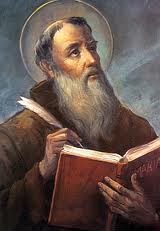
Born at Brindisi in 1559; died at Lisbon on 22 July, 1619. In baptism he received the names of Julius Caesar. Guglielmo de Rossi — or Guglielmo Russi, according to a contemporary writer — was his father's name; his mother was Elisabetta Masella. Both were excellent Christians. Of a precocious piety, Lorenzo gave early evidence of a religious vocation. The Conventuals of Brindisi were entrusted with his education. His progress in his studies was very rapid, and, when barely six, he had already given indication of his future success in oratory. Consequently, he was always the one chosen to address, in accordance with the Italian custom, a short sermon to his compatriots on the Infant Jesus during the Christmas festivities. When he was twelve years of age his father died. He then pursued his studies at Venice with the clerics of St. Mark's and under the supervision of one of his uncles. In 1575 he was received into the Order of Capuchins under the name of Brother Lorenzo, and, after his profession, made his philosophical and theological studies at the University of Padua. Owing to his wonderful memory he mastered not only the principal European languages, but also most of the Semitic tongues. It was said he knew the entire original text of the Bible. Such a knowledge, in the eyes of many, could be accounted for only by supernatural assistance, and, during the process of beatification, the examiners of the saint's writings rendered the following judgment: "Vere inter sanctos Ecclesiae doctores adnumerari potest."

Such unusual talents, added to a rare virtue, fitted Brother Lorenzo for the most diverse missions. When still a deacon he preached the Lenten sermons in Venice, and his success was so great that he was called successively to all the principal cities of the peninsula. Subsequently, thanks to his numerous journeys, he was enabled to evangelize at different periods most of the countries of Europe. The sermons he left fill no less than eight folio volumes. He adopted the method of preaching in favour with the great Franciscan missionaries, or rather with apostolic workers of all times, who, aiming primarily to reach men's hearts and convert them, always adapt their style of discourse to the spiritual needs of their hearers. Brother Lorenzo held successively all the offices of his order. From 1596 to 1602 he had, as general definitor, to fix his residence in Rome. Clement VIII assigned him the task of instructing the Jews; thanks to his knowledge of Hebrew and his powerful reasoning, he brought a great number of them to recognize the truth of the Christian religion. His saintliness, combined with his great kindliness, completed the preparing of the way for the grace of conversion. His success in Rome caused him to be called to several other cities, where he also baptized numerous Jews. At the same time he was commissioned to establish houses of his order in Germany and Austria. Amid the great difficulties created by the heretics he founded the convents of Vienna, Prague, and Graz, the nuclei of three provinces. At the chapter of 1602 he was elected vicar-general. (At that time the Order of Capuchins, which had broken away from the Observants in 1528 and had an independent constitution, gave its first superior the title of vicar-general only. It was not until 1618 that Pope Paul V changed it to that of minister general). The very year of his election the new superior began the visitation of the provinces. Milan, Paris, Marseilles, Spain, received him in turn. As his coming was preceded by a great reputation for holiness, the people flocked to hear him preach and to receive his blessing. His administration characterized by wise firmness and fatherly tenderness, was of great benefit to the order. At the Chapter of 1605 he refused to undertake for a second term the government of his brethren, but until his death he was the best adviser of his successors.

It was on the occasion of the foundation of the convent of Prague (1601) that St. Lorenzo was named chaplain of the Imperial army, then about to march against the Turks. The victory of Lepanto (1571) had only temporarily checked the Moslem invasion, and several battles were still necessary to secure the final triumph of the Christian armies. Mohammed III had, since his accession (1595), conquered a large part of Hungary. The emperor, determined to prevent a further advance, sent Lorenzo of Brindisi as deputy to the German princes to obtain their cooperation. They responded to his appeal, and moreover the Duke of Mercœur, Governor of Brittany, joined the imperial army, of which he received the effective command. The attack on Albe-Royal (now Stulweissenburg) was then contemplated. To pit 18,000 men against 80,000 Turks was a daring undertaking and the generals, hesitating to attempt it, appealed to Lorenzo for advice. Holding himself responsible for victory, he communicated to the entire army in a glowing speech the ardour and confidence with which he was himself animated. As his feebleness prevented him from marching, he mounted on horseback and, crucifix in hand, took the lead of the army, which he drew irresistibly after him. Three other Capuchins were also in the ranks of the army. Although the most exposed to danger, Lorenzo was not wounded, which was universally regarded as due to a miraculous protection. The city was finally taken, and the Turks lost 30,000 men. As however they still exceeded in numbers the Christian army, they formed their lines anew, and a few days later another battle was fought. It always the chaplain who was at the head of the army. "Forward!" he cried, showing them the crucifix, "Victory is ours." The Turks were again defeated, and the honour of this double victory was attributed by the general and the entire army to Lorenzo.

Having resigned his office of vicar-general in 1605, he was sent by the pope to evangelize Germany. He here confirmed the faith of the Catholics, brought back a great number to the practice of virtue, and converted many heretics. In controversies his vast learning always gave him the advantage, and, once he had won the minds of his hearers, his saintliness and numerous miracles completed their conversion. To protect the Faith more efficaciously in their states, the Catholic princes of Germany formed the alliance called the "Catholic League". Emperor Rudolph sent Lorenzo to Philip III of Spain to persuade him to join the League. Having discharged this mission successfully, the saintly ambassador received a double mandate by virtue of which he was to represent the interests of the pope and of Madrid at the court of Maximilian of Bavaria, head of the League. He was thus, much against his wishes, compelled to settle in Munich near Maximilian. Besides being nuncio and ambassador, Lorenzo was also commissary general of his order for the provinces of Tyrol and Bavaria, and spiritual director of the Bavarian army. He was also chosen as arbitrator in the dispute which arose between the princes, and it was in fulfillment of this role that, at the request of the emperor, he restored harmony between the Duke of Mantua and a German nobleman. In addition to all these occupations he undertook, with the assistance of several Capuchins, a missionary campaign throughout Germany, and for eight months travelled in Bavaria, Saxony, and the Palatinate.

Amid so many various undertakings Lorenzo found time for the practices of personal sanctification. And it is perhaps the greatest marvel of his life to have combined with duties so manifold an unusually intense inner life. In the practice of the religious virtues St. Lorenzo equals the greatest saints. He had to a high degree the gift of contemplation, and very rarely celebrated Holy Mass without falling into ecstasies. After the Holy Sacrifice, his great devotion was the Rosary and the Office of the Blessed Virgin. As in the case of St. Francis of Assisi, there was something poetical about his piety, which often burst forth into canticles to the Blessed Virgin. It was in Mary's name that he worked his miracles, and his favourite blessing was: "Nos cum prole pia benedicat Virgo Maria." Having withdrawn to the monastery of Caserta in 1618, Lorenzo was hoping to enjoy a few days of seclusion, when he was requested by the leading men of Naples to go to Spain and apprise Philip III of the conduct of Viceroy Ossuna. In spite of many obstacles raised by the latter, the saint sailed from Genoa and carried out his mission successfully. But the fatigues of the journey exhausted his feeble strength. He was unable to travel homeward, and after a few days of great suffering died at Lisbon in the native land of St. Anthony (22 July, 1619), as he had predicted when he set out on his journey. He was buried in the cemetery of the Poor Clares of Villafranca.

The process of beatification, several times interrupted by various circumstances, was concluded in 1783. The canonization took place on 8 December, 1881. With St. Anthony, St. Bonaventure, and Blessed John Duns Scotus, he is a Doctor of the Franciscan Order.

The known writings of St. Lorenzo of Brindisi comprise eight volumes of sermons, two didactic treatises on oratory, a commentary on Genesis, another on Ezechiel, and three volumes of religious polemics. Most of his sermons are written in Italian, the other works being in Latin. The three volumes of controversies have notes in Greek and Hebrew.


Thursday, July 14, 2011

"Let us permit a Saint to labour for a Saint."


Share/Bookmark

-St. Thomas Aquinas, speaking of his friend Bonaventure upon finding him engaged in writing the life of St. Francis of Assisi.

Acta of St. Bonaventure, Bishop, Confessor, and Doctor of the Church (taken from Matins of his Feast).
Online Source: www.breviary.net

Lesson iv

The town of Bagnorea (now called Bagnoreggio) in Tuscany,
where St. Bonaventure was born in 1221
Bonaventúra, Balneorégii in Etrúria natus, a letháli morbo adhuc puer, beáti Francísci précibus, cujus religióni, si convaluísset, voto matris dicátus fúerat, evásit incólumis.  Itaque adoléscens, fratrum Minórum institútum amplécti vóluit, in quo ad eam doctrinæ præstántium Alexándro de Ales magístro pervénit, ut séptimo post anno Parísiis magistérii láuream adéptus, libros Sententiárum públice summa cum laude sit interpretátus, quos étiam præcláris póstea commentáriis illustrávit.  Nec sciéntiæ solum eruditióne, sed et morum integritáte vitæque innocéntia, humilitáte, mansuetúdine, terrenárum rerum contémptu et cæléstium desidério mirífice excélluit ; dignus plane, qui tamquam perfectiónis exémplar haberétur, et a beáto Thoma Aquináte, cui summa caritáte conjúnctus erat, sanctus appellarétur.  Is enim, cum sancti Francísci vitam illum scribéntem comperísset : Sinámus, ait, Sanctum pro Sancto laboráre.
Bonaventure was born at Bagnorea in Tuscany.  In his infancy he was dangerously ill, and his mother made a vow that, if he recovered, she would dedicate him to the Order of Blessed Francis.  While he was still a young man he entered the Order by his own wish.  Under the teaching of Alexander of Hales he advanced so quickly in learning, that in seven years he lectured publicly at Paris on the Books of the Sentences, with great applause.  He afterwards explained the same Books by a brilliant Commentary.  He was distinguished, not only for the profundity of his learning, but for the integrity of his morals, the innocency of his life, his humility, meekness, contempt of earthly things, and desire of heavenly treasures ; and was fully worthy to be regarded as a model of perfection, and to be called a saint by blessed Thomas Aquinas, to whom he was united by ties of the closest friendship.  For Thomas, finding Bonaventure engaged in writing the life of St. Francis, said : Let us permit a Saint to labour for a Saint.
V.  Tu autem, Dómine, miserére nobis.
R.  Deo grátias.
V.  But thou, O Lord, have mercy upon us.
R.  Thanks be to God.
R.  Invéni David servum meum, óleo sancto meo unxi eum : * Manus enim mea auxiliábitur ei.
V.  Nihil profíciet inimícus in eo, et fílius iniquitátis non nocébit ei.
R.  Manus enim mea auxiliábitur ei.
R.  I have found David my servant, with my holy oil have I anointed him. * My hand shall hold him fast.
V.  The enemy shall not be able to do him violence ; the son of wickedness shall not hurt him.
R.  My hand shall hold him fast.

V.  Jube domne, (Dómine) benedícere.
V.  Vouchsafe, Reverend Father (O Lord), thy blessing.
Benedíctio 5: Christus perpétuæ det nobis gáudia vitæ.R.  Amen.
Benediction 5: May Christ bestow upon us the joys of life eternal.
R.  Amen.
Lesson v
Divíni amóris flamma succénsus, erga Christi Dómini passiónem, quam júgiter meditabátur, ac Deíparam Vírginem, cui se totum devóverat, singulári ferebátur pietátis afféctu ; quem in áliis étiam verbo et exémplo excitáre, scriptísque opúsculis augére summópere stúduit.  Hinc illa morum suávitas, grátia sermónis et cáritas in omnes effúsa, qua singulórum ánimos sibi arctíssime devinciébat.  Quam ob rem, vix quinque et trigínta annos natus, Romæ summo ómnium consénsu generális órdinis miníster eléctus est ; susceptúmque munus per duodevigínti annos admirábili prudéntia gessit ac laude sanctitátis.  Plura constítuit regulári disciplínæ et amplificándo órdini utília ; quem una cum áliis ordínibus mendicántibus advérsus obtrectatórum calúmnias felíciter propugnávit.
He was consumed with the flame of divine love, and had a special feeling of devotion to the Passion of Christ the Lord, which was the subject of constant meditation to him ; and to the Virgin Mother of God, to whose service he vowed himself ; and this devotion he strove also to arouse in others both by word and example, and he laboured to spread it by his writings and treatises.  And so came that sweetness of manner, grace of speech, and the charity which he extended to all, by which he completely and utterly conquered every soul.  Wherefore, when only thirty-five years of age he was elected, at Rome, by unanimous consent, Minister General of the Order ; and having accepted the office, he fulfilled it for eighteen years with admirable prudence and the recognition of his sanctity.  He made many rules, useful for regular discipline and the increase of the order ; which, together with the other mendicant orders, he defended successfully against the calumnies of their enemies.
V.  Tu autem, Dómine, miserére nobis.
R.  Deo grátias.
V.  But thou, O Lord, have mercy upon us.
R.  Thanks be to God.

St. Clare and St. Bonaventure
R.  Pósui adjutórium super poténtem, et exaltávi eléctum de plebe mea : * Manus enim mea auxiliábitur ei.
V.  Invéni David servum meum, óleo sancto meo unxi eum.
R.  Manus enim mea auxiliábitur ei.
R.  I have laid help upon one that is mighty, I have exalted one chosen out of the people. * My hand shall hold him fast.V.  I have found David, my servant, with my holy oil have I anointed him.
R.  My hand shall hold him fast.

V.  Jube domne, (Dómine) benedícere.
V.  Vouchsafe, Reverend Father (O Lord), thy blessing.
Benedíctio 6: Ignem sui amóris accéndat Deus in córdibus nostris.
R.  Amen.
Benediction 6: May God enkindle in our hearts the fire of his holy love.
R.  Amen.
Lesson vi

St. Bonaventure presiding at the Council of Lyons
Ad Lugdunénse concílium a beáto Gregório décimo accersítus et cardinális epíscopus Albanénsis creátus, árduis concílii rebus egrégiam navávit óperam ; qua et schísmatis dissídia compósita sunt, et ecclesiástica dógmata vindicáta.  Quibus in labóribus, anno ætátis suæ quinquagésimo tértio, salútis vero millésimo ducentésimo septuagésimo quarto, summo ómnium mæróre decéssit, ab univérso concílio, ipso præsénte Románo Pontífice, fúnere honestátus.  Eum Xystus quartus, plúrimis maximísque clarum miráculis, in Sanctórum númerum rétulit.  Multa scripsit, in quibus summam eruditiónem cum pietátis ardóre conjúngens, lectórem docéndo movet : quare a Xysto quinto Doctóris Seráphici nómine mérito est insignítus.
He was summoned to the Council of Lyons by blessed Gregory X, and having been created Cardinal Bishop of Albano, he diligently performed a noted work for the council in very difficult circumstances ; in which the dissensions of the schism were composed, and the dogmas of the Church vindicated.  In the midst of these labours he died, to the great grief of all, in the fifty-third year of his age, and in the year of salvation 1274, and his funeral was honoured by the whole council and by the presence of the Roman Pontiff himself.  Sixtus IV, after Bonaventure had become illustrious for many and great miracles, placed him in the list of the Saints.  He wrote many books, in which the highest erudition and the fire of piety are so united as both to touch and instruct the reader.  Sixtus V on this account worthily distinguished him by the name of the Seraphic Doctor.
V.  Tu autem, Dómine, miserére nobis.
R.  Deo grátias.
V.  But thou, O Lord, have mercy upon us.
R.  Thanks be to God.

The funeral of St. Bonaventure in the presence of the Roman Pontiff
R.  Iste est, qui ante Deum magnas virtútes operátus est, et omnis terra doctrína ejus repléta est : * Ipse intercédat pro peccátis ómnium populórum.V.  Iste est, qui contémpsit vitam mundi, et pervénit ad cæléstia regna.
R.  Ipse intercédat pro peccátis ómnium populórum.V.  Glória Patri, et Fílio, et Spirítui Sancto.
R.  Ipse intercédat pro peccátis ómnium populórum.
R.  This is he who wrought mighty deeds and valiant in the sight of God, and all the earth is filled with his doctrine: May his intercession avail for the sins of all the people.V.  He was a man who despised the life of the world and attained unto the kingdom of heaven.
R.  May his intercession avail for the sins of all the people.V.  Glory be to the Father, and to the Son, and to the Holy Ghost.
R.  May his intercession avail for the sins of all the people.
