Tuesday, January 22, 2013
St. Thomas' Division of the Pauline Epistles (Outline & Horizontal Charts)
Outline of the Pauline Corpus (from his Commentary on Romans; click link to download):
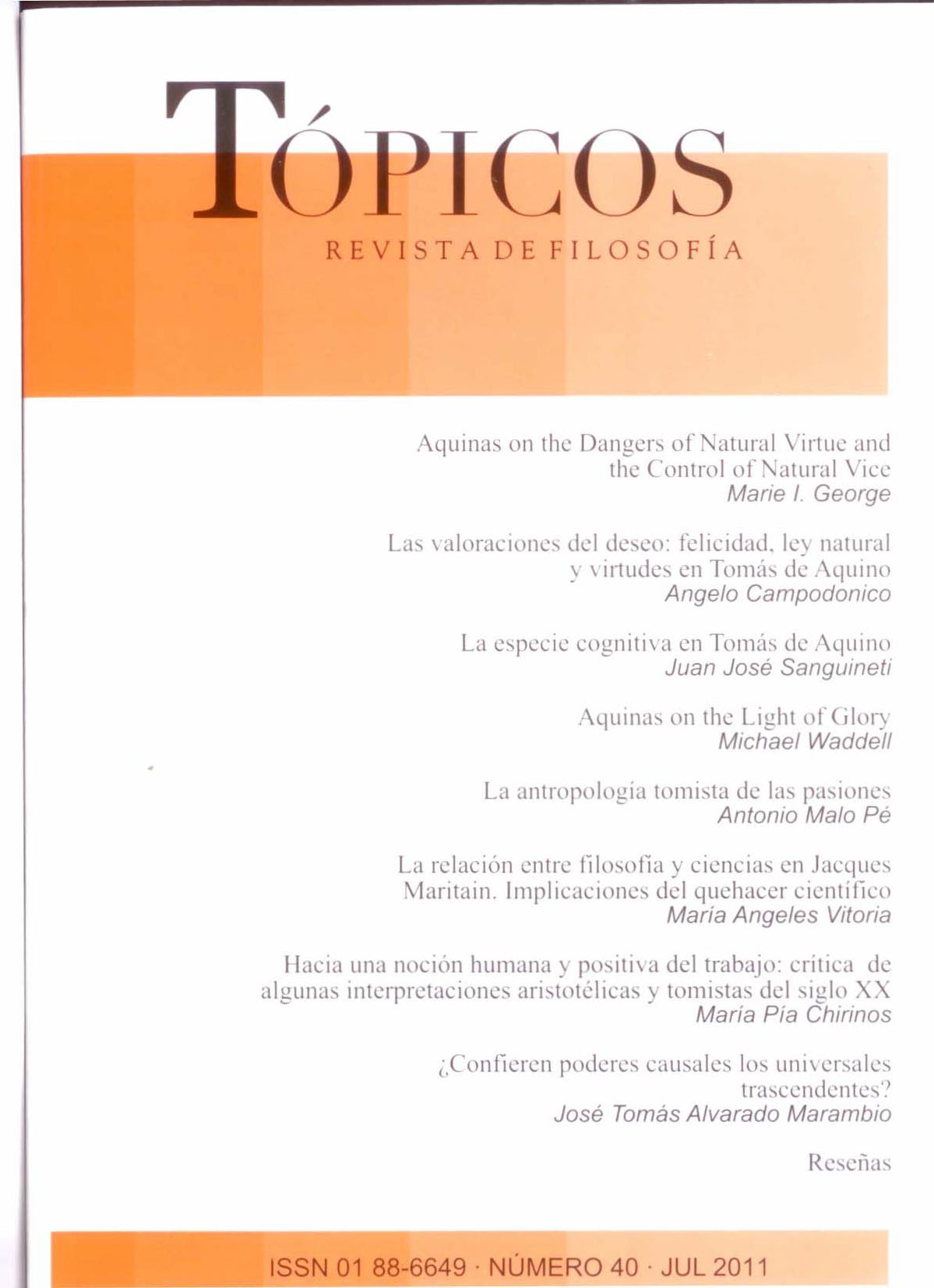
Pauline Corpus: Horizontal Charts by Francisco J. Romero Carrasquillo (click to download).
Sunday, January 13, 2013
Announcing the Ite ad Thomam Translation Project
Introduction
Rationale for the Project: The Ite ad Thomam Translation Project, in existence since 2009, and currently organized by STAGS, aims to make available in English translation some of the principal, representative works of Scholastic Thomism, including course manuals and commentaries on St. Thomas currently available in Latin through Ite ad Thomam's Out-of-Print Library (ITOPL).
Traditionally, Thomists have presented philosophy and theology in Latin and in its native scholastic methodology. This methodology allowed philosophical and theological disciplines to advance objectively and in a scientific manner (understanding 'science' as Aristotle did), and the Latin language gave it the precision and universality it required for being transmitted effectively throughout the world.
Since the turn of the 20th century, however, Thomists gradually began to abandon both the Latin language and the scholastic method that had characterized Thomism since its inception. The abandonment of the method has brought dire consequences for Thomism, for philosophy and theology, and for the intellectual life of the Church. Moreover, the abandonment of Latin has caused a linguistic gap between the novelty-ridden Thomism of today and the traditional Scholastic Thomism of past decades and centuries.
The overall result is that the contemporary English-speaking Thomist, professional and layman alike, is generally not habituated to thinking scholastically, because he has no easy access to Scholastic-Thomistic works in English. Priests and seminarians no longer know how to form a solid theological argument, and as a consequence, have a difficult time defending the faith. Self-professed Thomists do not know how to utilize the very method that St. Thomas used. The result is that Thomism is derided, and seen at best (often among Thomists themselves) as one option among many others. The restoration of Thomism requires a translation of Scholastic-Thomistic works into a current universal language, such as English.
The project thus expects to have a great impact on both university and seminary education by making available in English to seminarians and university students the scholastic manuals that have been in a sense hidden away from them in the last five decades.
Fundraising: The Ite ad Thomam Translation project depends on generous donors for its existence. Translating texts from Scholastic Latin into English is not quite a glamorous job. It is a slow, meticulous, and financially unrewarding task, and it is no wonder so few are interested in doing it. It not only takes hours just to translate a handful of pages, but it also presupposes years of training in subject-specific skills with very little job-market value. Moreover, translation comes with little to no academic recognition, so scholarly prestige is not earned in the process. And unfortunately for translators, publishers today tend to keep most of the little profit they get from sales. If a translator gets any royalties at all, it is usually a very small percentage of the editor's revenue, and it is often not monetary at all (but in the form of free copies of the book). For this reason, fundraising is an important part of making a translation possible. We ask you to consider the importance of this project and make a generous financial contribution towards this noble endeavor.
Tuesday, January 01, 2013
The Spanish Jesuits' Theology Manual (BAC) Now Available Online in Spanish Translation
Link to results page in Scribd.com.
(Latin original of all four volumes is available on pdf from ITOPL.)
Thursday, November 29, 2012
'Journée Thomiste' at Le Saulchoir on 20th Century Northern European Thomism
"Thomismes en débat au XXe siècle: France, Allemagne, Pologne, Angleterre"
(Le Saulchoir, December 1, 2012)
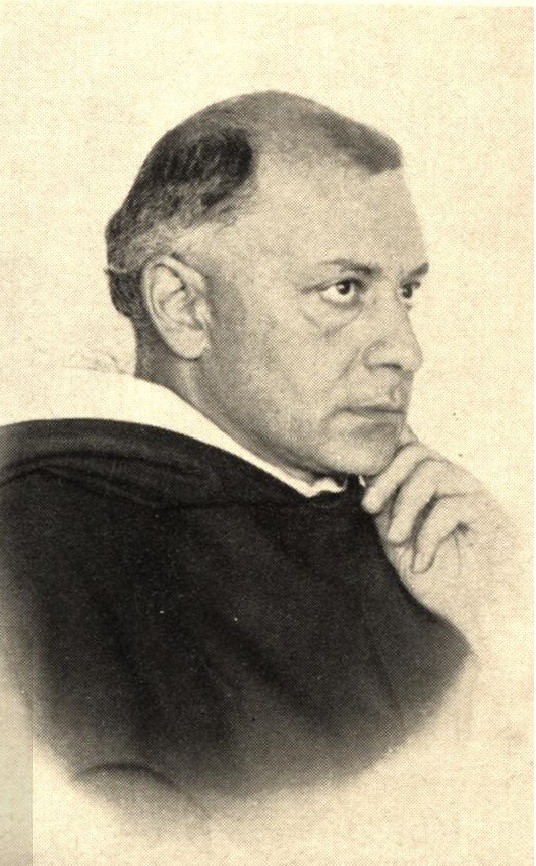
| Fr. Ambroise Gardeil, O.P. Anti-Modernist, Thomist, Spiritual Writer Mentor of Fr. Garrigou-Lagrange |
Wednesday, November 28, 2012
General Outline of the Summa (Download Link)
Link: Schema generale della SUMMA THEOLOGIAE pdf free ebook download (www.istitutoteologicoassisi.it)
'via Blog this'
Wednesday, October 31, 2012
Garrigou-Lagrange on the Number of the Elect
Taken from Predestination, pp. 219-220 (available from ITOPL):
Monday, October 29, 2012
American Catholic Philosophical Association 2012 Meeting, Los Angeles, Nov. 2-4
Dear friends,
This coming weekend, November 2-4, I'll be at the ACPA meeting in L.A. On Friday at 2pm I'll be presenting a shortened version of my forthcoming paper on “The Dialectical and Scientific Status of Revealed Theology: Averroes' Rationalism and the Nuanced Position of Aquinas.”
I was wondering if anyone following the blog and generally interested in traditional Catholic scholarship is planning on attending the conference. It would be nice if those of us attending all got together and had a beer, got to know each other, and brainstormed about traditional Catholic scholarship in general and initiatives such as Ite ad Thomam and S.T.A.G.S. in particular. Another practical benefit of doing this is possibly carpooling together to the nearest TLM, which is something I myself am wondering how I'm going to do... If interested, please reply to this post, or send me an email (see sidebar for address).
For more information on the conference, see the ACPA webpage.
In Christo rege,
Paco
Saturday, September 01, 2012
Where to Send Your Paper? A Survey of Philosophy Journals
Here is a link to a list of philosophy journals that are rated on a 12-level scale according to a survey done in 2006. Level 1 is the best; level 12 is the least good. This is a valuable resource for researchers who are looking for an appropriate journal to send their work. Of course, it is not an infallible way to evaluate journals, but it does help as a rule of thumb. I also add a list of journals included in the Philosopher's Index, because before you send your paper to a journal, it is always a good practice to make sure that journal is indexed, given that non-indexed journals are--for better or worse--generally considered to be of inferior scholarly quality and prestige.
Link to Philosophy Journals Survey.
Link to Philosopher's Index Source List.
Sunday, August 26, 2012
Monday, August 20, 2012
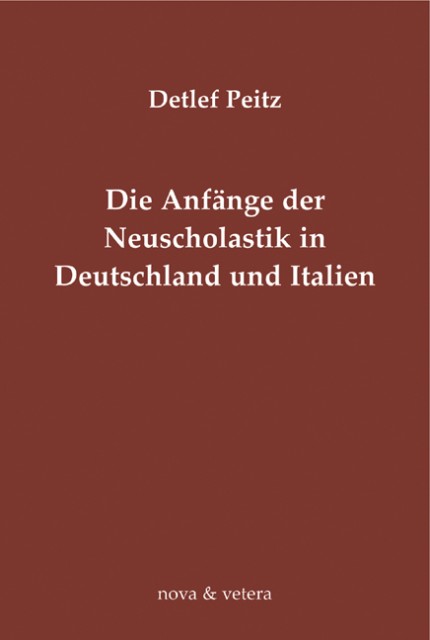
The Rise of Neo-Scholasticism in Italy and Germany, by Detlef Peitz (Book Review)
Book Review of:
Detlef Peitz, Die Anfänge
der Neuscholastik in Italien und Deutschland
(“The Rise of Neo-Scholasticism in Italy and Germany”).
Bonn, Germany: Nova et Vetera, 2006.
Thomas Storgaard, STAGS Doctor (Cand.)
University of Arhus, Denmark
Copyright of Ite ad Thomam © 2012
This book tells the fascinating story of the rise of Neo-Scholasticism
in Italy and Germany. Author Detlef Peitz’s doctoral dissertation from 2005 has
been put in print, to the joy and benefit of all Catholic theologians and
philosophers. Here we have a painstakingly and meticulously erudite work on an
important episode in the history of Catholic theology and philosophy. Sometimes
the amount of information provided can be overwhelming, but it serves its purpose
in telling this important story, which is crucial for understanding the theological
conflict between modernists and traditional Catholics from the modernist crisis
around 1900 up to the Second Vatican Council—and beyond, up to the present day.
All the arguments currently offered by modernists and traditionalists were already
laid down during the years from around 1840 to 1864 with the publication of Quanta Cura by Pope Pius IX. The Neo-Scholastics
had an opposing force in the “The Tubingen School of Catholic Theology,”
especially represented by the two dogmatic theologians Johann Sebastian von
Drey (1773-1854) and Johannes Evangelist von Kuhn (1806-1887), who were heavily
influenced by German romanticism and by the philosopher Friedrich Wilhelm Joseph
Schelling (1775-1854). Another opposing
school is that of the Kantian thinker, Georg Hermes (1775-1834), a professor of
Catholic dogma at the Catholic theological faculty in Bonn. This faculty was
set up by the Prussian government in 1818 in order to influence the Catholic
Church and its clergy through enlightenment ideas. Another opponent in Italy who
founded an order of priests was Antonio Rosmini, whose Psychologism became a point
of attack upon the Neo-Scholastics. Anton
Günther (1783-1863) was another theologian, heavily influenced by Kant and
Hegel, who had quite a number of followers and who attacked the Neo-Scholastics. The book also sketches the importance of Catholic
periodicals in Italy and Germany for the promotion of Neo-Scholasticism.
The book is divided up into four long chapters: (1)
The Paving of the Way for Neo-Scholasticism; (2) The Rise of Neo-Scholastic Works;
(3) The Establishment of Neo-Scholasticism; and (4) The Main Points of the Neo-Scholastic
System.
Chapter One describes the painful rediscovery of
Scholasticism in the wake of the Enlightenment, the French Revolution, and the
tumultuous years of Napoleon after the Congress of Vienna. After the dust
settled, there was time to reflect on what had happened in previous years. The doctrinal
and philosophical heritage of Thomism was better preserved in the Dominican
order than in the Jesuit order. The Dominicans not only followed St. Thomas as
their official theologian, but saw him as the Doctor Angelicus and normative theologian of the Church, despite
the breakdown of Scholasticism within Catholic philosophical and theological
discourse since ca. 1650. Yet this heritage was preserved by thinkers such as Antoine
Goudin, O.P. (1639-1695), Luduvico Cardinal Gotti (1664-1742), and Charles René
Billuart, O.P. (1685-1757). The Jesuits were plagued by internal strife over which
philosophical discourse to pursue. Older Jesuits were attracted to Enlightenment
ideas, and the younger members of the Society favored the traditional Jesuit theology
and philosophy of the Doctor Eximius,
Francisco Suárez, S.J. (1548-1617), Luis de Molina, S.J. (1535-1615), Juan Martínez
de Ripalda, S.J. (1595-1648), and Gabriel Vázquez, S.J. (1549-1604), but there
was also some interest in rediscovering St. Thomas, a desire inspired by the
Jesuit commentators of Aquinas. But individual theologians struggled with
weeding out Enlightenment ideas, and some failed to do so. A seminary in
Piacenza, Italy was founded ca. 1750 to promote Thomism. Later on, towards the end of the 18th
Century in Mainz, Germany, the now-famous “School of Mainz” was founded, which
achieved high renown for its promotion of Neo-Scholastic Thomism, despite its
secularization in 1803 by the prince bishopric of Mainz during the Napoleonic
years. The Roman School is also very important, due to its influence in promoting
Neo-Scholasticism in Germany and Italy. The Roman School was situated at the Collegium Romanum. Its most famous theologians are Josef Kleutgen,
S.J. and Matteo Liberatore, S.J. We shall
take a look at these thinkers below. One of the first theologians to promote Neo-Scholasticism
in Germany was Franz Jakob Clemens (1815-1862). He did not simply regress into
the past and its problems and specific context, but used Thomism as a tool for dealing
with the erroneous philosophical and theological ideas of his own time, e.g., subjectivism.
His approach to theological problem-solving
was praised by Pope Leo XIII in Aeterni Patris
in 1879. Apart from the newly
established seminaries in the “new Thomistic spirit” of the day, we also find
periodicals such as Scienza e fede
(Italy), Civiltà catolica (Italy),
and Der Katholik (Germany), which
promoted the revival of Thomism.
In Chapter Two, Peitz presents Fr. Joseph Kleutgen’s Theologie der Vorzeit (“Theology of the
Past”), published in 1853, and his Philosophie
der Vorzeit (“Philosophy of the Past”), published in 1860. Because they were written in German, these two
works obtained a relatively wide readership.
Thanks to the philosophical and theological merits of these works, Neo-Scholasticism
was redefined in Germany. In them we
find a mixture of Thomism and Suarezianism. Anton Günter had criticized Kleutgen from the perspectives
of modern philosophy and of the thought of St. Anselm of Canterbury, claiming
that we have an immediate conscience of God. In these works, Kleutgen uses both St. Thomas
and Suárez to refute Günter. Kleutgen defends
Aquinas’ first way against the claims of Kant, Duns Scotus, and Suárez, and the
second and third ways against the attacks of the traditionalists (Bonald, de
Maistre), with the aid of Suárez’s thought. The fourth way is unfortunately not discussed
in the book, but the fifth way is defended, along the lines of Domingo Báñez’s
commentary, against the objections of Georg Hermes and Jakob Frohschammer. But as we shall see when we discuss the
thought of Matteo Liberatore, it is quite a difficult task to reconcile together
every scholastic tradition. Suarezianism
and Thomism in particular do not easily reconcile together. Kleutgen, thus, received much criticism for
attempting this reconciliation.
Hermann Ernst Plassmann (1817-1864) was the first of
the Thomists of the “strict observance” in the modern period. He was profoundly influenced by Fr. Antoine
Goudin, O.P. in his approach to Thomism.
Although he was a Jesuit and professor of theology at the Roman
university of La Sapienza, he later obtained
another degree in theology at the (Dominican) College of St. Thomas in Rome (the
Angelicum) and is for this reason presented
thereafter as a graduate of the Angelicum.
His main Thomistic work is titled Die Schule des Heiligen Thomas von Aquin (“The
School of St. Thomas Aquinas”), in 5 volumes (Vorhalle, Logik, Psykologie, Moral, and Metaphysik),
perhaps the most important Thomistic work of the period in Germany. For what has been considered to be a very
polemical work, Plassmann did not get good reviews, mainly due to his tone; but
that aside, it is a profoundly Thomistic piece of writing. He follows St.
Thomas very closely in all his theological and philosophical arguments (e.g., hylemorphism),
but does not fall into the trap of dealing with the problems of the past, but
directs his critique at his contemporary opponents inside and outside of the
Church. There is no going back and forth between the Suarezian and Thomistic
camps. His is a pure, unadulterated
Thomism.
The third important philosopher and theologian is Fr.
Matteo Liberatore, S.J. (1810-1892). Liberatore was first influenced by
Immanuel Kant at the beginning of his intellectual career, and he even writes
against Thomism in his Institutiones
Logicae et Metaphysicae (1840-42).
There, he takes a stance against Thomistic dotrines such as hylemorphism
and, in particular, against the thesis that the soul is the form of the body. In the early 1850s, however, he begins to turn
towards Thomism, thanks to the periodical Civilta
Catolica. He then rewrites his Institutiones Metaphysicae and Elementi, strikes anti-thomistic
passages, and throughout the rest of the decade gradually becomes a Thomist. In his work, Della conoscenza intellettuale (“On Intellectual Cognition”),
published in 1857, he defends, among other Thomistic doctrines, the principle
of non-contradiction against Kant and Rosmini (and his followers), the latter
of whom had argued for a distinction, if not a separation, of ideal and real
worlds. But Liberatore’s own argument is
somewhat flawed, because, among other things, he identifies essence with nature,
and thereby blurs the real distinction between inner and outer worlds. From this we can see that he also stands in the
Jesuit-Suarezian tradition. He does not
distinguish between ens and essentia in extramental objects. They are the identical in extramental objects,
and are distinct only in the mind. He somewhat follows the Suarezian critique
of the five ways of St. Thomas Aquinas, but makes a compromise and ultimately reduces
them to three ways, with the following three distinct starting points: (1) the
relation between cause and effect, (2) the removal of the incompleteness of
creatures, and (3) the eminence of each creature. How does this connect with his Thomistic aspirations?
Liberatore never answers this question. He was, therefore, criticized for taking a middle
ground between Thomistic and Suarezian positions. His later psychology is also an eclectic blend
of Thomistic hylemorphism—with its definition of the soul as form of the body
at the forefront—together with other Platonic and Augustinian elements.
The third chapter of the book discusses the
dissemination of Neo-Scholastic thought. In this chapter, the author presents some
lesser-known, yet important theologians from the Jesuit and Dominican
traditions, such as Matthias Josef Scheeben (Cologne, Germany), Thomas Maria
Zigliara, O.P. (known for his Summa
Philosophica), and Constantin Schätzler.
These authors did much to popularize the thought of the theologians
discussed in the previous chapters. Chapter
Three also discusses the works of other Neo-Scholastics such as Karl Werner,
who dedicated his career to the history of theology, as well as Alois Schmid,
who attempted to reconcile Neo-Scholasticism and modern philosophy.
The fourth and last chapter deals with Neo-Scholastic
philosophical and theological issues. I shall
limit my discussion to two topics, one in philosophy and one in theology. The first, philosophical topic is the concept
of ‘being’ as a metaphysical foundation.
This issue gives us a good sense of what is distinctive in Hermann Ernst
Plassmann’s Thomistic notion of ‘being’. Plassmann is convinced that in Aquinas we have
the ultimate metaphysical conception of ‘being’. In things themselves, he affirms, there is a real
distinction between ens and essentia (existence, or being, and
essence). Likewise, this is also a distinction between
form and matter, and act and potency. But
matter does not in itself possess act. In
itself it is pure potency. Thus, being
is the ultimate reality. This encompasses
not only sensible reality but also possible reality. Yet, can one extend this notion of ‘being’ ad infinitum? Both Plassmann and Kleutgen deny this explicitly.
It follows, then, that ‘being’ is not a univocal
concept. It would seem to be an
ambiguous, or equivocal concept. If so,
it would be very difficult to distinguish between the different types of
beings. But one must remember that ‘being’
is not a genus, and thus Plassmann uses the concept of analogy to understand and make explicit the concept of ‘being’. Being appears in different contexts, and thus
there is a tension between act and potency. Plassmann turns to the Thomistic real
distinction between being and essence to resolve the issue, whereas, as we have
seen, Kleutgen and Liberatore turn to the Suarezian doctrine of the distinction
of being. Furthermore, Plassmann posits
another distinction, that between subsistence and existence, because neither
form nor matter is, but only the “supposit” is, and things have not being in
themselves, but participate in being.
The theological concept that I think deserves mention is
the relation between the act of faith and grace. This has to do with the classical questions of
whether (and how) man’s natural abilities contribute anything to the act of
grace, and how supernatural grace relates to the human mind. Kleutgen emphasizes the connection between
faith and credibility, whereas Plassmann demands a strict distinction between them.
Faith must not be “of necessity.” Faith is not something formal, but is grounded
in the divine and objective act of grace (cf., Scheeben). The supernatural character of the faith is
important as well. The content of faith
has a divine origin, pace Von Kuhn,
for whom faith originates in man himself. Kleutgen agrees that faith has its own principles
and that it is a higher knowledge of all things. In this sense, faith grounds theology as a new
science, from where everything proceeds and to which everything returns. Kuhn also understands the term perficere to mean the continuing
perfection of man, his being able to improve, rather than conceive it according
to its proper meaning, as an elevation of man to the divine order. Kuhn claims that the classical natural-supernatural
distinction risks setting the stage for a mechanistic conception of grace. Constantin von Schätzler answers by denying
this and accuses Kuhn of being a Molinist: it is only a danger if grace is
turned into a mechanistic contraption, as if grace were of a worldly, human
origin, and as though it proceeded automatically from nature to a supernatural
level of being.
In the end, one must say that Detlef Peitz has made a
monumental contribution to the history of philosophy and theology through his
narrative of the beginnings of Neo-Scholasticism in Italy and Germany. One thing must be said concerning the setting
of the book. At times the words are written together, without spaces between
them (likethis), perhaps in order to save space, which is, to state the
obvious, quite annoying.
Peitz’s overall assessment of the Neo-Scholastic
movement is very positive. In his view,
one of the causes of the decline of Neo-Scholasticism—besides the Latin manuals
and the widening gap between modern science on the one hand, and theology and
metaphysics on the other—was its being too sure of itself, a phenomenon that
has happened within many other movements. Not much could be done about this, of course. But what can be done today, and is not being
done, is to present Neo-Scholasticism in a positive light in Catholic
seminaries and theological institutes around the world and to consider
seriously whether it could represent a better way of doing theology and
philosophy in the Church. (Of course it
is!) The “anthropological turn” in
philosophy and theology has been an utter disaster for the Church, because
theology and philosophy are seen as something that originates within man. This also makes the new theology vulnerable to
Feuerbach’s critique. The natural
sciences and society at large have turned their back to religion and
Scholasticism. This is lamentable,
because the Catholic faith and Neo-Scholasticism still have many things to
offer with regards to the assessment of the natural and supernatural worlds. This is true for biology, nuclear physics and
theology itself.
Thursday, August 16, 2012
Absurd: A "Revised Traditional Missal," As Opposed to a "Traditional Traditional Missal"?
Revised Traditional Missal Planned for Next Summer in Rome?
| The 1965 "Transitional" Rite of Mass |
Tuesday, August 14, 2012
Thursday, August 09, 2012
Tuesday, July 31, 2012
The Communicatio Idiomatum in St. Thomas Aquinas
The Communicatio
Idiomatum in St. Thomas Aquinas
By
Hilaire K. Troyer de Romero
Copyright of Ite ad Thomam © 2012
Introduction
In
ST III.16, St. Thomas Aquinas
discusses the question of what may be said about Christ. We find this treatment in the Summa situated well after Aquinas’
thorough explanation of the Hypostatic Union because what may be said of Christ
follows directly from the reality of the Hypostatic Union. More specifically, the answer lies in the
concept known as the communicatio idiomatum (or ‘communication of
properties’). This concept refers to an
ontological, and not just logical, reality in Christ. It can be defined as “the mutual exchange of divine and human properties in
virtue of the Hypostatic Union.”[1] As a logical reality, it is sometimes referred
to as the ‘predication of properties’.
Sacred Scripture is replete with practical examples of this concept.[2] Misunderstandings of the communicatio idiomatum have been at the heart of numerous
Christological heresies such as Nestorianism and Monophysitism. In this paper, I shall explain the principal
elements of the communicatio idiomatum as presented by St. Thomas in ST III.16, beginning with its direct
connection to the Hypostatic Union, and then a brief overview of the general
rules that can be gleaned from St. Thomas’ treatment of this issue.
I. Communicatio idiomatum and the Hypostatic Union
In the first article of
question 16, St. Thomas begins his treatment by examining a fundamental
Christological statement, “God is man.”
Here Aquinas establishes the immediate connection between the communicatio idiomatum and the
Hypostatic Union. He says,
Hence,
supposing the truth of the Catholic belief, that the true Divine Nature is united with true Human Nature not only in person, but also in suppositum or hypostasis;
we say that this proposition is true and proper, ‘God is man’ –not only by the truth of its terms, that is, because Christ is true God and true man, but by the truth of the predication.
For a word signifying the common nature in the concrete may stand for all contained in the common nature, as this word ‘man’ may stand for any individual man. And thus this word ‘God,’ from its very mode of signification, may stand for the
Person of the Son of God, as was said in I.39.4.[3]
The “Catholic belief”
referred to here is the Hypostatic Union.
For the sake of clarity I shall review a few key terms found in the text
above. A suppostium or hypostasis is a bearer of properties,
that is, any primary, or individual, substance that subsists in itself. Aquinas refers to the suppositum or hypostasis
as a “subsistence,” rather than as a mere substance, to express the connotation
of “subsisting in itself.”[4] A person is a particular kind of hypostasis or suppositum, namely, an individual substance of a rational nature.[5] If we speak of an ordinary man, such as Aristotle, the suppositum
or hypostasis is Aristotle himself;
and that hypostasis has one human nature. The suppositum is the “who” (the quis
est), namely Aristotle, and the
nature is the “what” (quid est),
namely a man. The two are not identical: Aristotle subsists in the human
nature but we do not say that the nature is Aristotle, since this would
be the same thing as saying that “Aristotle is humanity,” which is patently
false.[6]
In the case of Christ, the suppositum or hypostasis is the quis est,
the Divine Second Person, who subsists in the two natures, which are united
substantially.[7]
The communicatio idiomatum is the logical consequence of the perichoresis, or unity of the two
natures in Christ, that results from the Hypostatic Union.[8] That is, there is a natural interchange of
properties between the two, because of the substantial union whereby the divine
nature penetrates the Human Nature (without changing it) within the one Divine
Personality or hypostasis that we
call the Logos.
Returning to the text at
hand, the proposition “God is man” is a true statement and not merely in an
analogical or metaphorical sense, in the way many heresies have interpreted it,[9] precisely because of this Union of One Person
and two natures. In other words, when
the subject of a sentence refers to the Second Person of the Trinity, it is
possible to predicate of that subject the concrete properties of either nature,
regardless of whether the term in the subject of the sentence connotes the divine
nature or the human nature of Christ. Since the Person of the Son of God for Whom this
word ‘God’ stands, is a suppositum of
human nature this word “man” may be predicated truly and properly of this word ‘God’. Just as it is possible to say that “Socrates is
man,” it is possible to say that “God is man,” when by “God” we mean “The
Second Person.” In
the statement “God is man,” the term ‘man’ is being predicated of the Divine
Person, the Son of God as of the suppositum, and not of the divine nature
itself. This suppositum has both human and divine natures and hence both human
and divine properties. The inverse statement, namely,
“Man is God,” which Aquinas examines in article 2 of question 16, is also true
because the term “man” can refer to any hypostasis
that has a human nature. So it can refer
to the Second Person as the subject who, as I mentioned above, has both human
and divine natures. The statement would
be false, of course, if the term ‘Man’ were to refer to all men, or any man
other than Christ, such as Socrates, because then it would refer to a suppositum that possesses human nature
only.
II.
Corollaries
Throughout question 16, Aquinas examines particular
statements regarding Christ and asks whether or not they are true. The result of his discussion of each
statement is an overall framework, or a set of rules, that govern the communicatio idiomatum. Below I address the primary rules that can be
gleaned from question 16, which follow as logical consequences of the
particulars of the Hypostatic Union.
A. Only Concrete
Terms of Concrete Subjects May Be Predicated of Either Nature
The
most fundamental of these rules arises from the distinction between concrete
and abstract terms, as St. Thomas explains in Article 1. Concrete terms are those that refer to a
property as it exists in a subject (man, carnal, animate, etc.), whereas abstract
terms refer to properties in se, apart from a subject (divinity,
humanity, truth, etc.).[10]
This means that the concrete term will signify the suppositum and abstract terms will signify the nature apart from
the suppositum[11]
Aquinas, in his reply to Objection 2
in Article 1, says,
[I]n
the mystery of the Incarnation the
Natures, being distinct, are not predicated one of the other, in
the abstract. For the divine nature is not the human nature. But because they agree in suppositum, they are predicated of each other in the concrete.[12]
Fr. Garrigou-Lagrange
formulates this rule thus:
[C]oncrete words of concrete subjects, both of natures
and properties, generally speaking, can of themselves be predicated of either
[nature]; but abstract words of abstract subjects cannot of themselves formally
be predicated of either.[13]
In other words, because concrete terms directly signify the suppositum
and only indirectly the nature, they may be predicated of both the divine and human
natures of Christ. Abstract terms, however, may only be predicated of both
natures when they refer to divine properties, because only in the divine nature
is there an identity between its properties and the nature itself. For example, we may say that “Christ is
Truth,” because the Second Person by virtue of His Divinity is indeed Truth
itself. But we cannot say that “Christ is humanity” because in this case, the
abstract term “humanity” is not identical with the divine suppositum.[14]
B. Reduplication Limits
the Concrete Term to One Nature
Another general rule is that we must exercise great care when
there is an instance of reduplication such as in the statement, “Christ, as man
is a creature.” In such instances the reduplication limits the concrete term to
one particular nature so that what is predicated must be true of that nature by
itself.[15]
For example, in article 10, Aquinas examines
the truth of the statement, “Christ, as man, is a creature.” Here he affirms
the statement because the reduplication “as man” means the concrete term
“creature” refers to the human nature specifically, which is indeed created.
It must however be borne in mind that the term covered by the
reduplication signifies the nature rather than the suppositum, since it is added as a predicate, which is taken
formally, for it is the same to say “Christ as Man” and to say “Christ as He is
a Man.” Hence this is to be granted rather than denied: “Christ as Man is a
creature.” But if something further be added whereby [the term covered by the
reduplication] is attracted to the suppositum,
this proposition is to be denied rather than granted, for instance were one to
say: “Christ as ‘this’ Man is a creature.”[16]
Following the same guideline, in article 11,
Aquinas points out that the statement “Christ, as man, is God” would be
false, because the reduplication limits the concrete term “God” to the human
nature alone which, though possessed by God in the Second Person, is not
identical to God. In some instances, the
reduplication adds clarification, as in the first example found in article 10,
and in others it makes an otherwise true statement false—as seen with the
example from article 11.
C. Essential Properties of the Divine Nature Must Not be
Predicated denominatively of Christ
A third rule is that adjectival
names, in the concrete, that are derived cannot always be accurately predicated
of Christ. For example, we cannot call Christ “lordly.” [17]
Aquinas says in ST III.16.3:
Now ‘God’ and
‘Lord’ are predicated essentially
of the Son of God; and hence they
ought not to be predicated denominatively, since this is derogatory to the
truth of the union. Hence, since we say ‘lordly’ denominatively from ‘lord’, it
cannot truly and properly be said that this Man is lordly, but rather that He is
Lord. [18]
In
other words, to call Christ ‘lordly’ would imply that He is not God because, to
use the word ‘lordly’ with respect to Christ, either (a) is not fitting to Him
who is Lord of Lords and therefore derogatory, and fails to show a true belief
in the Hypostatic Union, or (b) is indicative of mere god-likeness, which is
heretical, as the Church has already decreed many times since its condemnation
of Arianism.
D. Phrases that Sound
Heretical Should be Avoided
Although the communicatio
idiomatum does provide us with a great amount of freedom with regard to
what we say about Christ, St. Thomas warns us against those statements that may
be technically true but that can easily be interpreted in a heretical way. For example, if we were to say, “Christ is a
creature,” we run the risk of sounding like the Arians, who believed Christ was
completely created and, therefore, less than the Father. If what we mean to say is that Christ’s human
nature is created, it would be better expressed with a clarification, such as
that which Aquinas suggests in article 8: “And hence we must not say absolutely
that Christ is a ‘creature’ or ‘less than the Father’; but with a
qualification, viz. ‘in His human nature’."[19] In all cases, our use
of language concerning Christ must be faithful to the reality of the Hypostatic
Union. Those predicates that appear
ambiguous should always be clarified so as to avoid heretical interpretations. It is always of the utmost importance that
the language we use display logical congruence with the Hypostatic Union and
the divinity of Christ. Aquinas says,
“As Jerome [Gloss, Ord. in Hosea 2:16] says, ‘words spoken amiss lead to
heresy’; hence with us and heretics the very words ought not to be in common,
lest we seem to countenance their error.”[20]
Conclusion
In sum, the communicatio
idiomatum is simply a consequence of
the Hypostatic Union. Because the two
natures in Christ are united in the one suppositum,
the Son of God, we may predicate what belongs to one nature of the other in the
concrete. Yet the two natures are not intermingled or confused, so we must
always ensure that the rules discussed above are always observed, so as not to
imply a lack of unity or a confusion of the natures in Christ. Joseph Pohle summarizes the communicatio idiomatum as a logical
reality thus:
Formulated in logical terms, the ontological law underlying the communicatio idiomatum gives us the following rule of predication: “Whatever is
predicated of the Divine Person of Christ according to His Divine Nature, can
and must be predicated of the same Divine Person also in His human nature, and vice versa; but the predicates proper to
the Divine Nature must not be assigned to the human nature, and vice versa.” The first part of this rule
is based on upon the unity of the one Divine Person in two natures; the second,
upon the fact that the two natures co-exist separately and in-confused in one
Person.[21]
It is on the basis of this
principle that the Church was able to develop her Christological doctrine and
combat the heresies that have so relentlessly assailed her. St. Cyril of
Alexandria in his third letter to Nestorius, expresses this in a profound way:
For we do not divide up the
words of our Saviour in the gospels among two hypostases or persons. For the
one and only Christ is not dual, even though he be considered to be from two
distinct realities, brought together into an unbreakable union. In the same
sort of way a human being, though he be composed of soul and body, is
considered to be not dual, but rather one out of two. Therefore, in thinking
rightly, we refer both the human and divine expressions to the same person. For
when he speaks about himself in a divine manner as “he that sees me sees the
Father,” and “I and the Father are one,” we think of his divine and unspeakable
nature, according to which he is one with his own Father through identity of
nature and is the “image and impress and brightness of his glory.” But when,
not dishonouring the measure of his humanity, he says to the Jews: “But now you
seek to kill me, a man who has spoken the truth to you,” again no less than
before, we recognise that he who, because of his equality and likeness to God
the Father is God the Word, is also within the limits of his humanity. For if
it is necessary to believe that being God by nature he became flesh, that is
man ensouled with a rational soul.... All the expressions, therefore, that
occur in the gospels are to be referred to one person, the one enfleshed
hypostasis of the Word. For there is one Lord Jesus Christ, according to the Scriptures.[22]
Bibliography:
Council of
Ephesus.
Garrigou-Lagrange,
Reginald. De Christo Salvatore.
Turin: R. Berruti, 1948. <http://www.ewtn.com/library/theology/christ.htm>
Ott, Ludwig. Fundamentals of Catholic Dogma. St.
Louis: B. Herder, 1964.
Pohle, Joseph;
Arthur Preuss (trans., ed.). Christology:
A Dogmatic Treatise on the Incarnation. St. Louis: B. Herder, 1916.
Tanquerey,
Adolphe. A Manual of Dogmatic Theology.
Translated by John J. Byrnes. New York: Desclee Company, 1969.
The Holy Bible (Douay- Rheims Version). London: Baronius
Press, 2003.
Thomas Aquinas,
Saint. Summa Theologica. Notre Dame, IN: Ave Maria Press, 1981.
[2] Cf. John 8:58; Acts 3:15, 2:8; Romans 8:32, 6:3; I
Cor. 2:8;
[3] Summa theologiae (henceforth,
ST) III.16.1.
[4] Cf. ST I.29.2c:
“In another sense substance means a subject or suppositum, which subsists in the genus of substance. To this,
taken in a general sense, can be applied a name expressive of an intention; and
thus it is called suppositum. It is
also called by three names signifying a reality—that is, “a thing of nature,” “subsistence,”
and “hypostasis,” according to a threefold consideration of the substance thus
named. For, as it exists in itself and not in another, it is called “subsistence”;
as we say that those things subsist which exist in themselves, and not in
another.”
[5] Cf. ST I.I.29 Aquinas sometimes uses the term hypostasis to include the concept of “rational nature.” It seems
that the terms suppositum, hypostasis, and person, are used interchangeably.
[6] Cf.
ST III.2.2c.
[7] This by the grace of union that imparts the Personal Being
of the Word on the human nature of Christ. Cf. Adolphe Tanquerey, A Manual of Dogmatic Theology, Vol. 2,
p. 28.
[8] Cf. Pohle & Preuss, p. 184:
“Though practically identical with Perichoresis, the Communication of Idioms
may more appropriately be regarded as an effect thereof.”
[9] St. Thomas references the errors of Photinus and Nestorius
specifically in ST III.16.1.
[10] Adolphe Tanquerey, A
Manual of Dogmatic Theology, Vol. 2, p. 28.
[11] Cf. Ludwig Ott, Fundamentals of Catholic Dogma, p. 161: “communication idiomatum fit in concreto, non
in abstracto.”
[12] ST III.16.1. Cf.
article 5: “Now
concrete words stand for the hypostasis of the nature;
and hence of concrete words we may predicate indifferently what belongs to
either nature--whether
the word of which they are predicated refers to one nature,
as the word “Christ,” by which is signified “both the Godhead anointing and the
manhood anointed”; or to the Divine Nature
alone, as this word “God”
or “the Son of God”; or to the
manhood alone, as this word “Man” or “Jesus.”
Hence Pope Leo says (Ep. ad Palaest.,
cxxiv): “It is of no consequence from what substance
we name Christ;
because since the unity of person remains inseparably, one and the same is
altogether Son of Man by His flesh, and
altogether Son of God by the Godhead
which He has with the Father.”
[13] Garrigou-Lagrange, Christ
the Saviour, Ch. 18, Subsection: “The Consequences Of The Union As Regards
Those Things That Belong To Christ In Himself”.
[14] Ibid.: “It must be observed concerning this
communication that concrete names, such as God, man, in opposition to abstract
names, such as Godhead, humanity, signify directly the suppositum, and indirectly the nature. For “God,” signifies the suppositum that has the divinity, and “man”
signifies the suppositum that has the
humanity. If, therefore, the suppositum
is the same for the two natures, then it is true to say: “God is man,” although
it is false to say: “The Godhead is the humanity.” Thus we shall see that the
generally accepted rule, namely, concrete words of concrete subjects, both of
natures and properties, generally speaking, can of themselves be predicated of
either; but abstract words of abstract subjects cannot of themselves formally
be predicated of either. Thus we shall see that we cannot say the Godhead is
the humanity or that God is the humanity, or that the humanity is God. Therefore we
must take great care to distinguish between abstract terms and concrete terms.
The abstract term signifies the nature separated from the subject, for example,
humanity. The concrete term signifies the nature as existing in the subject,
for example, man. Hence this distinction between concrete and abstract term is of
great importance in distinguishing between the nature and the suppositum, since the nature is an
essential part of the suppositum.
There is the same distinction between “being” as a noun and “being” as a
participle, or between the reality and the real itself.”
[15] Ludwig Ott, Fundamentals of Catholic Dogma, p. 161.
[16] ST III.16.10.c.
[17] Adolphe Tanquerey, A
Manual of Dogmatic Theology, Vol. 2, p. 28.
[18] ST III.16.3; cf., Pohle & Preuss, pp. 188-189;
Adolphe Tanquerey, A Manual of
Dogmatic Theology, Vol. 2, p. 28.
[19] ST III.16.8c.
[20] Ibid.
[21] Pohle & Preuss, p. 186.
[22] Council of
Ephesus, “Letter of Cyril to Nestorius” (Cum
salvator noster).
Labels:
aquinas,
Christology,
Garrigou-Lagrange
Subscribe to:
Posts (Atom)


.jpg)