Friday, January 31, 2014

Another Must-Buy from Editiones Scholasticae: Ed Fesser's Scholastic Metaphysics: A Contemporary Introduction


Share/Bookmark


Here's another great volume published by Editiones Scholasticae.  Looks like it hasn't come out yet (forthcoming May 2014), but from the description it sounds like the volume will be coming heavily from the 'analytical thomist' school.  Naturally, it would mean the author is not using the scholastic method/style that is native to Thomism, but Fesser is a traditional Catholic and a well-formed Thomist, so I'm sure it is well worth reading.  And being familiarized with that school is a must for any English-speaking Thomist today.


See also my translation of Cosmologia by Edouard Hugon, OP (1867-1929), also published by Editiones Scholasticae, on amazon.com.

Friday, January 03, 2014

Is it Possible for God to Create a Creature More Perfect than Our Lady?


Share/Bookmark


I've been studying this question recently, occasioned at first by a conversation with my wife, right before it providentially popped up in my daily philosophical readings--in Hugon's Cursus Philosophiae Thomisticae, Vol. 3 on Metaphysics.  

The Thomistic response may sound impious to some, but it is affirmative. The alternatives are either that Our Lady is infinitely perfect, or that God is not omnipotent, neither of which will stand.  

She is perfect as a creature, and the greatest creature God actually created, "higher than the cherubim, and more glorious beyond compare than the seraphim" (as the Byzantine hymn Axion Estin proclaims), yet not the greatest creature possible for God.  There is no such thing as the greatest creature possible for God--it is a contradiction in terms. 

Here is an excerpt from Hugon's Cursus Philosophiae Thomisticae, which I'm currently translating into English, Vol. 3: Metaphysica, p. 430. (The original Latin work is available from ITOPL):

III. – Second Conclusion: “It is impossible for a creature to be most perfect of all [possible creatures].”  This is the view of St. Thomas, Suárez, and the Scholastics in general.
            A creature, no matter how perfect, is infinitely distant from the participability of the divine perfection, which can never be exhausted.  But between infinitely distant things there can be an infinite number of intermediaries.  Therefore, between God and the most perfect creature there can be an infinite number of intermediary creatures that participate more and more in the divine perfection; and there will never be a creature that fully exhausts the divine participability.
            – You will say: God knows the most perfect of all [possible] creatures.  But God can produce what he knows.  Therefore.


            – I respond: I distinguish the major: That God knows that creature as something outside of the series of possible things, I concede; as something within the series of possible things, I deny.  I contradistinguish the minor, and I deny the consequence.  – Such a creature is impossible.  Therefore, it is known by God as something outside the series of possible things.


Wednesday, January 01, 2014

Happy Feast of the Circumcision!


Share/Bookmark


The first time Our Lord shed His blood for our redemption.  A deep mystery lies hidden in today's Gospel, despite its brevity.  It narrates in two verses the circumcision and naming of Our Lord, thus linking together His first shedding of blood and his mission as 'Savior'--which is the meaning of the Holy Name of 'Jesus'.  (Cf. Bl. Idelfonso Schuster, The Sacramentary, vol. 1, p. 397, available from ITOPL.)

The Feast of the Circumcision is also, coincidentally, a nice, traddy feast that was expunged from the new calendar because it clashed with modern sensibilities.  It behooves us traditional Catholics to show devotion and attachment to this feast.  If we want it back, that is.  This should be in our minds and our hearts as we celebrate the 'New Year'.

PS.  And don't forget you get a plenary indulgence by singing or reciting the Veni Creator, under the usual conditions.


Tuesday, November 12, 2013

Quaeritur: 'Invisible' Membership in the Church?


Share/Bookmark

QuaeriturReading more of Fenton's writings, I am becoming slightly confused... In several places he emphatically shows that the Church is a visible society, and that there is not an invisible Church, and thus that membership in the Church means something visible, and not invisible. 

And yet, he also states that the Catholic dogma is not that one must be a member in order to be saved, only that one must be in some way within the Church; and that it is possible to be within the Church without actually being a member, if one has an implicit desire (hence baptism by desire or by blood). 

My question is this: how can we say that even implicit desire makes one within the Church if the Church is a visible society? If you can be in the Church by some way other than visible membership, doesn't it follow that one can be in the Church invisibly?

I'm having a hard time seeing how Fenton doesn't contradict himself.

For example, these two articles: here and here


RespondeoThe Church, in addition to being the Mystical Body of Christ, which is primarily a supernatural, invisible reality, is also and secondarily a visible society, with a visible structure and hierarchy, visible worship, etc. And hence those of us who participate fully in this visible society are said to be its visible members.


Now someone who is in the state of grace and through no fault of his own is outside of its visible structure can be said to 'belong' to the Church invisibly, without being a visible member through its worship, government, etc. Being a member is much more than belonging. The latter implies somehow mystically participating in the Mystical Body of Christ (being branches of the vine), whereas the former implies also participating in the visible structure of the Church.

For example, a child who is baptized in a Protestant church is invisibly in the state of sanctifying grace and hence belongs to the Mystical Body, but does not visibly profess the Catholic faith, does not visibly attend Catholic worship, and is not part of the hierarchical and legal structure of the Church (e.g., is not bound by canon law).

I remember the pictures in the Baltimore Catechism (St. Joseph's edition): a boat with people in it (visible members) and some people out in the water hanging on to ropes attached to the boat, who are surviving thanks to the fact that they are still hanging on to the boat.   Analogously you could say that some are members of the Mystical Body, whereas others merely 'belong' to the Mystical Body (participate in its saving nature) without being members.  A picture that is really worth a thousand words.

For more on this, I recommend Fr. Romanus' three-part article on Church membership, which goes more technically into the relevant distinctions as presented by the majority of the Church's classical theologians.


Wednesday, October 30, 2013

Continence and Incontinence, A Handy-Dandy Table


Share/Bookmark


The other day in my philosophical psychology course I was teaching my students the differences and mutual relations between (a) sense appetite, (b) the practical intellect, and (c) the will or rational appetite.  I brought up Aquinas' understanding of Aristotle's concept of continence (enkrateia) and incontinence (akrasia) from his Commentary on Aristotle's Nicomachean Ethics, Book 7, which I think illustrates well these differences and relations.  When the question came up of what exactly is the difference between the virtuous man, the continent man, the incontinent man, and the vicious man, I felt suddenly illuminated and saw myself come up with this nice, clean chart which illustrates the differences.  The ensuing discussion was quite interesting.

The three columns state whether each of the four characters (virtuous, continent, incontinent, and vicious) is inclined towards good (G) or evil (E) by the sense appetite (SA), the intellect or practical reason ('R' is for rational, and 'C' is for cognitive), and the will ('R' is for rational, and 'A' is for appetitive).  So the chart says that the virtuous man is inclined towards good both by his sense appetite and by his (practical) reason, and that he actually chooses good with his will.  The continent man is like the virtuous man, except his sense appetite does not incline him towards the good that he knows and chooses, so there is a certain tension within him: he acts against his sense appetite.  The incontinent man, like the continent man, is inclined towards evil by his sense appetite and yet is capable of knowing the good that he ought to do through practical reason, but unlike the continent man, he chooses evil.  Finally, the vicious man is inclined towards evil, rationalizes his evildoing through practical reason, and chooses evil--in at least one respect he is like the virtuous man, namely, in that there is a certain harmony among his powers, albeit a perverse one.

This may be a somewhat simplistic view of Aquinas' doctrine, but I think it captures the basics pretty well.

Tuesday, September 10, 2013

Quaeritur: Petitionary Prayer and the Immutability of Divine Knowing and Willing


Share/Bookmark

Quaeritur: If God's knowledge and will are immutable, unchanging, then why pray for things, if God has already decided what He will do, and knows infallibly what will occur? In other words, if He has already eternally decided that x will happen and infallibly knows it will happen, what's the point of praying for y to happen if it won't happen, and what's the point of praying for x to happen--if it will happen anyway?  So what's the point of praying at all if our prayers are incapable of changing God's knowledge or will?

Respondeo: Correct.  God's intellect and will are immutable, and our prayers cannot change them.  Yet prayer is still valuable and may actually be the cause (a secondary cause, not the primary cause) of our receiving what we pray for.  God's infallible decree that something will happen may be conditional upon your praying for it.  In other words, God may infallibly decree that He will grant x to you if and only if you pray for x, and know that you will pray for x, and hence that you will get (or that you won't pray for it and hence that you won't get it).

The reason why God would want us to pray, and especially why He would make our prayer a condition for granting what we pray for, is that prayer—as Aquinas tells us—is for our own benefit (not God's). Through it we become conscious that we need to receive benefits from Him; it is an act of religious worship (latria), whereby we become conscious of our dependence on and submission to Him. 

Consider the following texts of St. Thomas:

ST II-II.83.2: Whether it is becoming to pray?  I answer that among the ancients there was a threefold error concerning prayer. Some held that human affairs are not ruled by Divine providence; whence it would follow that it is useless to pray and to worship God at all: of these it is written (Malachi 3:14): "You have said: He laboreth in vain that serveth God." Another opinion held that all things, even in human affairs, happen of necessity, whether by reason of the unchangeableness of Divine providence, or through the compelling influence of the stars, or on account of the connection of causes: and this opinion also excluded the utility of prayer. There was a third opinion of those who held that human affairs are indeed ruled by Divine providence, and that they do not happen of necessity; yet they deemed the disposition of Divine providence to be changeable, and that it is changed by prayers and other things pertaining to the worship of God. All these opinions were disproved (in ST I.19.7-8, I.22.2-4; I.115.6; I.116). 

Wherefore it behooves us so to account for the utility of prayer as neither to impose necessity on human affairs subject to Divine providence, nor to imply changeableness on the part of the Divine disposition. In order to throw light on this question we must consider that Divine providence disposes not only what effects shall take place, but also from what causes and in what order these effects shall proceed. Now among other causes human acts are the causes of certain effects. Wherefore it must be that men do certain actions, not that thereby they may change the Divine disposition, but that by those actions they may achieve certain effects according to the order of the Divine disposition: and the same is to be said of natural causes. And so is it with regard to prayer. For we pray not that we may change the Divine disposition, but that we may impetrate that which God has disposed to be fulfilled by our prayers; in other words "that by asking, men may deserve to receive what Almighty God from eternity has disposed to give," as Gregory says (Dial. i, 8)

To the first it must be said that we need to pray to God, not in order to make known to Him our needs or desires but that we ourselves may be reminded of the necessity of having recourse to God's help in these matters.

SCG I.119: That the immutability of divine providence does not suppress the value of prayer.  

[1] We should also keep in mind the fact that, just as the immutability of providence does not impose necessity on things that are foreseen, so also it does not suppress the value of prayer. For prayer is not established for the purpose of changing the eternal disposition of providence, since this is impossible, but so that a person may obtain from God the object which he desires. 

[2] Indeed, it is appropriate for God to consent to the holy desires of a rational creature, not in the sense that our desires may move the immutable God, but that He, in His goodness, takes steps to accomplish these desired effects in a fitting way. For, since all things naturally desire the good, as we proved above, and since it pertains to the supereminence of divine goodness to assign being, and well-being, to all in accord with a definite order, the result is that, in accord with His goodness, He fulfills the holy desires which are brought to completion by means of prayer. 

Saturday, September 07, 2013

The Natural Law Prescribes the Offering of Sacrifices (Even if Your Religion Does Not!)


Share/Bookmark

I'm currently working on a paper on natural religion in Aquinas.  This amazing text from Summa theologiae IIa-IIae has given me much food for thought.  

Natural reason tells man that he is subject to a higher being, on account of the defects which he perceives in himself, and in which he needs help and direction from someone above him: and whatever this superior being may be, it is known to all under the name of God. Now just as in natural things the lower are naturally subject to the higher, so too it is a dictate of natural reason in accordance with man's natural inclination that he should tender submission and honor, according to his mode, to that which is above man.  Now the mode befitting to man is that he should employ sensible signs in order to signify anything, because he derives his knowledge from sensibles. Hence it is a dictate of natural reason that man should use certain sensibles, by offering them to God in sign of the subjection and honor due to Him, like those who make certain offerings to their lord in recognition of his authority. Now this is what we mean by a sacrifice, and consequently the offering of sacrifice is of the natural law.[1]


Just think of it: the natural law prescribes the offering of (physical) sacrifices, i.e., the actual immolation of a victim (hostia) to God in recognition of our dependence on him.  Since grace far from destroying the natural law perfects it, it follows that our Religion's prescription of offering the sacrifice of the Mass is actually an instance of positive (divine) law specifying the natural law.[2]

So what should we conclude of religions who for some reason or another ultimately deny man's actual need to offer sacrifice to God, such as Islam, post-Christian Judaism, and Protestantism?  It seems this could be the foundation for a philosophical argument against the truth (or at least the moral adequacy?) of these religions...


------------------

[1] ST II-II.85.1c: [N]aturalis ratio dictat homini quod alicui superiori subdatur, propter defectus quos in seipso sentit, in quibus ab aliquo superiori eget adiuvari et dirigi. Et quidquid illud sit, hoc est quod apud omnes dicitur Deus. Sicut autem in rebus naturalibus naturaliter inferiora superioribus subduntur, ita etiam naturalis ratio dictat homini secundum naturalem inclinationem ut ei quod est supra hominem subiectionem et honorem exhibeat secundum suum modum.  Est autem modus conveniens homini ut sensibilibus signis utatur ad aliqua exprimenda, quia ex sensibilibus cognitionem accipit. Et ideo ex naturali ratione procedit quod homo quibusdam sensibilibus rebus utatur offerens eas Deo, in signum debitae subiectionis et honoris, secundum similitudinem eorum qui dominis suis aliqua offerunt in recognitionem dominii. Hoc autem pertinet ad rationem sacrificii. Et ideo oblatio sacrificii pertinet ad ius naturale.


[2] Cf. ST I-II.95.2c: [S]ciendum est quod a lege naturali dupliciter potest aliquid derivari, uno modo, sicut conclusiones ex principiis; alio modo, sicut determinationes quaedam aliquorum communium. Primus quidem modus est similis ei quo in scientiis ex principiis conclusiones demonstrativae producuntur. Secundo vero modo simile est quod in artibus formae communes determinantur ad aliquid speciale, sicut artifex formam communem domus necesse est quod determinet ad hanc vel illam domus figuram. Derivantur ergo quaedam a principiis communibus legis naturae per modum conclusionum, sicut hoc quod est non esse occidendum, ut conclusio quaedam derivari potest ab eo quod est nulli esse malum faciendum. Quaedam vero per modum determinationis, sicut lex naturae habet quod ille qui peccat, puniatur; sed quod tali poena puniatur, hoc est quaedam determinatio legis naturae. Utraque igitur inveniuntur in lege humana posita. Sed ea quae sunt primi modi, continentur lege humana non tanquam sint solum lege posita, sed habent etiam aliquid vigoris ex lege naturali. Sed ea quae sunt secundi modi, ex sola lege humana vigorem habent.

Monday, May 27, 2013

Garrigou-Lagrange on Ascetical and Mystical Theology as Applied Moral Theology


Share/Bookmark
From Fr. Réginald Garrigou-Lagrange, O.P. - Christian Perfection and Contemplation, pp. 12-14.
(Full work on PDF available from ITOPL.)


Saturday, May 25, 2013

Dr. Romero's Translation of Hugon's Cosmology Now Available for Preorder from Amazon.com


Share/Bookmark


Pre-order the volume and be the first to write a review on Amazon.com!!!


Tuesday, May 14, 2013

Dr. Romero's Translation of Hugon's Cosmology Now in Print!!!


Share/Bookmark


Hugon's Cosmology is one of the most methodically rigorous manuals of natural philosophy in the Latin scholastic tradition.  It was a standard philosophy textbook in seminaries during the first half of the 20th Century, the kind of textbook that formed the young minds of men like Alfredo Ottaviani, Garrigou-Lagrange, Marcel Lefebvre, and Joseph Fenton.  And thanks to the Ite ad Thomam Translation Project it now is available in English translation.  

With this manual you will learn to use the scholastic method.  Don't just believe what Thomists hold; learn to demonstrate it!  

Order a copy now from Editiones Scholasticae!!!

Tuesday, January 22, 2013

St. Thomas' Division of the Pauline Epistles (Outline & Horizontal Charts)


Share/Bookmark

Outline of the Pauline Corpus (from his Commentary on Romans; click link to download):


Sunday, January 13, 2013

Announcing the Ite ad Thomam Translation Project


Share/Bookmark


Introduction


Rationale for the Project: The Ite ad Thomam Translation Project, in existence since 2009, and currently organized by STAGS, aims to make available in English translation some of the principal, representative works of Scholastic Thomism, including course manuals and commentaries on St. Thomas currently available in Latin through Ite ad Thomam's Out-of-Print Library (ITOPL).  

Traditionally, Thomists have presented philosophy and theology in Latin and in its native scholastic methodology.  This methodology allowed philosophical and theological disciplines to advance objectively and in a scientific manner (understanding 'science' as Aristotle did), and the Latin language gave it the precision and universality it required for being transmitted effectively throughout the world.

Since the turn of the 20th century, however, Thomists gradually began to abandon both the Latin language and the scholastic method that had characterized Thomism since its inception. The abandonment of the method has brought dire consequences for Thomism, for philosophy and theology, and for the intellectual life of the Church.  Moreover, the abandonment of Latin has caused a linguistic gap between the novelty-ridden Thomism of today and the traditional Scholastic Thomism of past decades and centuries.  

The overall result is that the contemporary English-speaking Thomist, professional and layman alike, is generally not habituated to thinking scholastically, because he has no easy access to Scholastic-Thomistic works in English.  Priests and seminarians no longer know how to form a solid theological argument, and as a consequence, have a difficult time defending the faith.  Self-professed Thomists do not know how to utilize the very method that St. Thomas used.  The result is that Thomism is derided, and seen at best (often among Thomists themselves) as one option among many others.  The restoration of Thomism requires a translation of Scholastic-Thomistic works into a current universal language, such as English.

The project thus expects to have a great impact on both university and seminary education by making available in English to seminarians and university students the scholastic manuals that have been in a sense hidden away from them in the last five decades.

Fundraising: The Ite ad Thomam Translation project depends on generous donors for its existence.  Translating texts from Scholastic Latin into English is not quite a glamorous job.  It is a slow, meticulous, and financially unrewarding task, and it is no wonder so few are interested in doing it.  It not only takes hours just to translate a handful of pages, but it also presupposes years of training in subject-specific skills with very little job-market value.  Moreover, translation comes with little to no academic recognition, so scholarly prestige is not earned in the process.  And unfortunately for translators, publishers today tend to keep most of the little profit they get from sales.  If a translator gets any royalties at all, it is usually a very small percentage of the editor's revenue, and it is often not monetary at all (but in the form of free copies of the book).  For this reason, fundraising is an important part of making a translation possible.  We ask you to consider the importance of this project and make a generous financial contribution towards this noble endeavor.

Works Proposed: For more information on which works are currently being translated, click here


Tuesday, January 01, 2013

The Spanish Jesuits' Theology Manual (BAC) Now Available Online in Spanish Translation


Share/Bookmark


Link to results page in Scribd.com.

(Latin original of all four volumes is available on pdf from ITOPL.)

Thursday, November 29, 2012

'Journée Thomiste' at Le Saulchoir on 20th Century Northern European Thomism


Share/Bookmark
"Thomismes en débat au XXe siècle: France, Allemagne, Pologne, Angleterre"
(Le Saulchoir, December 1, 2012)

Fr. Ambroise Gardeil, O.P.
Anti-Modernist, Thomist, Spiritual Writer
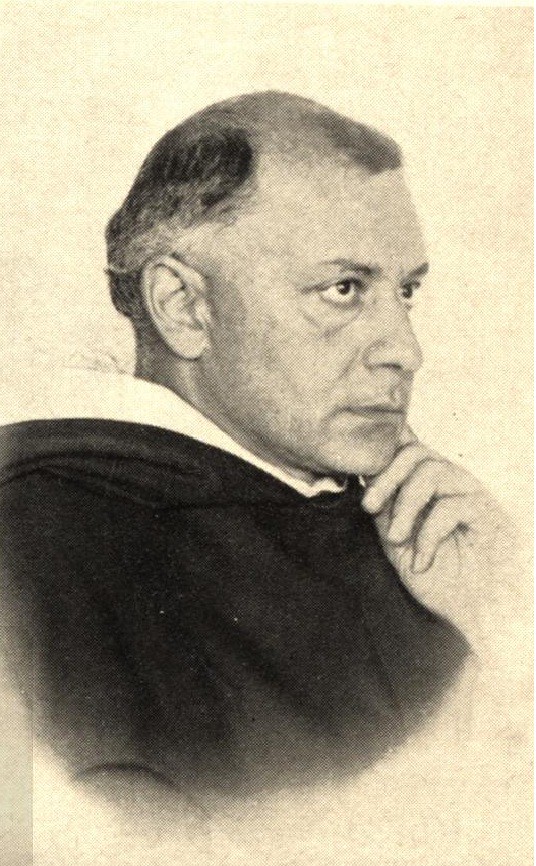
Mentor of Fr. Garrigou-Lagrange
Link to Thomistica.net.

Theology Professor Position Open at Ave Maria University


Share/Bookmark


Link to Thomistica.net article.

Wednesday, November 28, 2012

General Outline of the Summa (Download Link)


Share/Bookmark


Link: Schema generale della SUMMA THEOLOGIAE pdf free ebook download (www.istitutoteologicoassisi.it)

'via Blog this'

Wednesday, October 31, 2012

Garrigou-Lagrange on the Number of the Elect


Share/Bookmark
Taken from Predestination, pp. 219-220 (available from ITOPL):


Monday, October 29, 2012

American Catholic Philosophical Association 2012 Meeting, Los Angeles, Nov. 2-4


Share/Bookmark


Dear friends,


This coming weekend, November 2-4, I'll be at the ACPA meeting in L.A.  On Friday at 2pm I'll be presenting a shortened version of my forthcoming paper on “The Dialectical and Scientific Status of Revealed Theology: Averroes' Rationalism and the Nuanced Position of Aquinas.”  

I was wondering if anyone following the blog and generally interested in traditional Catholic scholarship is planning on attending the conference.  It would be nice if those of us attending all got together and had a beer, got to know each other, and brainstormed about traditional Catholic scholarship in general and initiatives such as Ite ad Thomam and S.T.A.G.S. in particular.  Another practical benefit of doing this is possibly carpooling together to the nearest TLM, which is something I myself am wondering how I'm going to do...  If interested, please reply to this post, or send me an email (see sidebar for address).

For more information on the conference, see the ACPA webpage.

In Christo rege,
Paco

Saturday, September 01, 2012

Where to Send Your Paper? A Survey of Philosophy Journals


Share/Bookmark


Here is a link to a list of philosophy journals that are rated on a 12-level scale according to a survey done in 2006.  Level 1 is the best; level 12 is the least good.  This is a valuable resource for researchers who are looking for an appropriate journal to send their work.  Of course, it is not an infallible way to evaluate journals, but it does help as a rule of thumb.  I also add a list of journals included in the Philosopher's Index, because before you send your paper to a journal, it is always a good practice to make sure that journal is indexed, given that non-indexed journals are--for better or worse--generally considered to be of inferior scholarly quality and prestige.

Link to Philosophy Journals Survey.
Link to Philosopher's Index Source List.

Sunday, August 26, 2012

Fr. Z on a Recent Ecclesia Dei Response on Universae Ecclesiae


Share/Bookmark


Link to post on Fr. Z's Blog.