What shall be the binding force of these theses? They are safe norms of intellectual guidance. [1336] This decision of the Congregation, confirmed by Benedict XV, was published March 7, 1916.
The next year, 1917, saw the promulgation of the New Code, which [1337] makes the method, the principles, and the teaching of St. Thomas binding on the professors and students both in philosophy and in theology. Among the sources of this canon the Code cites the decree of March 7, 1916.
Pope Benedict XV, on various occasions, expressed his mind on this point. He approved, for instance, in a special audience, the intention of P. E. Hugon, O. P.: to write a book [1338] on the twenty-four theses. The author of the book [1339] reports that the Pontiff said that he did not intend to impose the twenty-four theses as compelling internal assent, but as the doctrine preferred by the Church. [1340]
Footnotes:
1336 Proponantur veluti tutae normae directivae.
1337 Can. 1366, § 2.
1338 Les vingt-quatre theses thomistiques, Paris, Tequi, 1922.
1339 Ibid.: p. vii.
1340 P. Guido Mattiussi, S. J. had written already in 1917 a work of first importance on this subject: Le XXIV tesi della filosofia di S. Tommaso d'Aquino approvate dalla Sacra Congreg. degli Studi, Roma.
Wednesday, June 07, 2006
Can Non-Thomists be Good Catholics? --Pt. 2.
Monday, June 05, 2006
Friday, June 02, 2006
Was Man Created Before or After the Animals?
-First a little bit of background. Modern historical critical scholars claim that Genesis 1 and 2 represent two different and conflicting accounts of creation. They say this primarily due to the way in which these two passages name God (Gen. 1 “Elohim” and Gen. 2 “Yahweh,”) but also due to other apparent discrepancies, such as the one you are talking about, as well as discrepancies of order and duration of events, language, emphases, etc. They conclude that the two passages must have been written/edited by different authors, Gen. 1-2:3 supposedly being the “Elohist” account and 2:4ff being the “Yahwist” account. (You have heard of the "JEDP" theory, right?) These apparent discrepancies are the root of the apparent contradiction that you are asking about.
The main discrepancy, that between the names of God, can be solved simply if we realize that (regardless of whether all of Genesis was written by Moses or by different authors/editors), the Primary Author of Scripture, the Holy Ghost, had two different intentions in these two accounts. In Gen. 1 He calls Himself Elohim (= “God,” which connotes God’s power and majesty: “GOD THE ALMIGHTY!!!”), wishing to express His lordship and dominion over the earth. In Gen. 2 He calls Himself Yahweh (= “I AM WHO AM,” which connotes a personal revelation to the chosen people of the covenant), wishing to express his personal covenant with Adam and Eve.
Of course, there are other apparent discrepancies. But ultimately, because the Primary Author of ALL of Scripture is the Holy Ghost, all the discrepancies can be resolved. I can’t possibly solve them all (and perhaps there are some that will never been resolved), but we can tackle in detail the one you mentioned.
The discrepancy concerning the order and duration of events is simply resolved if we realize that although scripture intends to convey history, it is not history in the sense that we understand it. What we call “history” in the modern sense is really only one type of history, the kind best described as archivist history, where chronological accuracy has primary importance. But the history of Scripture can best be described as Semitic religious history, which orders events not necessarily in chronological order, but in order of importance or in an order that has religious meaning. (Cf. even the Gospels sometimes go back and forth chronologically.) So it’s perfectly normal for Gen. 1 to give the overall chronological big picture and then for Gen. 2 to go back, slow down, and give the details with all their religious importance.
So on the one hand, there’s Genesis 1, which gives a day-by-day account of creation. On day one, “God” (Elohim) made light and darkness; On day two, God made and divided the waters, making the firmament of heaven and the seas; On day three God separated the sea from dry land and created plants; On day four God made the rulers of those things made in day one, namely, the Sun and the moon; On day five God made the rulers of those things made in day two, namely, birds and fish; On day six God made the rulers of those things made in day three, namely, animals and men. In verses 24-5, the animals are made first. The next verses, Genesis 1:26ff, have God making man and woman and immediately blessing them and giving them dominion over the (already-created) animals. All of this happened on the sixth day of creation. Then this account of the seven days of creation (the hexameron) ends in Genesis 2 with the Day Seven (verses 1-3).
On the other hand, there is Genesis 2, verses 4ff, where there seems to be yet another account of creation, and this time the Creator is named the “Lord God” (Yahweh). This account does not do a day-by-day narration of events, but rather starts with the creation of the heavens and the earth and says, “in the day that the Lord God created the heavens and the earth (v. 4)... the Lord God formed man of the slime of the earth (v. 7).” Then it describes Paradise until v. 17. In vv. 18ff the creation of Eve is narrated: "It is not good for man to be alone: let us make him a help like unto himself...” But then Genesis 2:19 narrates the event of God bringing the animals before Adam. Some translations say that He “formed” the animals “and brought” them before Adam (who was presumably created before the animals). And only after this is Eve made from the side of Adam.
So, in sum, the problem is that, whereas in Gen. 1:24-5 God made the animals and in Gen. 1:26ff He made man and woman, in Gen. 2:7 Adam was made, and then in Gen. 2:19 “God formed... [the] wild animals....” So Gen. 1 is saying animals first then both man and woman, but Gen. 2 is saying Adam first, then the animals, then Eve.
This is mainly a problem of translation--specifically, the translation of 2:19, where Genesis mentions the creation of animals. Does this passage mean to narrate the creation of animals (as if it hadn't narrated it yet), or to recall the already-narrated creation of animals? In other words, does the Sacred Author mean 2:19 as new information or simply as a recap of something that had already happened?
Since I don’t know Hebrew, I can’t help you with the original text. So let’s look at some translations:
The Douay Rheims (the traditional Catholic English translation) is very clear:
In other words, we could read it as "God, having previously formed... the beasts... brought them to Adam.” This translation clearly conveys that by v. 19 God had already formed the animals and that now he’s just bringing them to Adam. This solves the apparent contradiction.And the Lord God HAVING FORMED out of the ground all the beasts of the earth, and all the fowls of the air, brought them to Adam...
Now, the Douay is a very literal translation of St. Jerome's Latin Vulgate. The Vulgate, which is the official Latin translation of the Roman Rite (and which was officially declared by Trent to be an infallible translation!), is even more clear. Here is the text along with a word-by-word translation:
This Latin construction, formatis... cunctis animantibus terrae... (= "all the animals of the earth having been formed") is what grammarians call an "ablative absolute," which is, in principle, a phrase that is "grammatically independent of the sentence of which it occurs" (Scanlon, Latin Grammar, p. 120). In other words, the phrase speaks of an event which occurs at a time different from that of the main sentence. To render the passage in a crudely literal way: “Therefore, all the animals of the earth and all the birds of the sky having been formed from the ground [understood, already, at some other time], the Lord God lead them to Adam....”FORMATIS (having been formed) igitur (therefore) Dominus (the Lord) Deus (God) de (from) humo (the ground) cunctis (all) animantibus (the animals) terrae (of the earth) et (and) universis (all) volatilibus (the birds) caeli (of the sky) adduxit (lead) ea (them) ad (to) Adam (Adam)....
Now, the Septuagint (from the Latin, Septuaginta literally, "The Seventy") was a compilation done from seventy exactly identical but independent translations done by seventy Hellenistic Jewish rabbis. Their unanimity was taken as a sign from God's approval. The Septuagint reads (in Roman transliteration, with word-by-word translation in parenthesis):
In Greek there is no ablative absolute. The Greeks instead were crazy about their participles: it would be something completely normal for them to say something like this: “Jesus, coming out of Nazareth, walking through the cities of Galilee, being baptized in the Jordan river, preaching to the lost tribes of Israel, dying on the cross, and being buried in the tomb, rose on the third day.” So all those verbs, the participles (“coming,” “walking,” “being baptized,” “preaching,” “dying,” “being buried”) speak of events that happened at a different time from the main verb of the sentence, “rose.” The same thing happens here in the Greek of Gen. 2:19: “And, again, God, forming from the ground all the animals of the earth and all the birds of the sky, and leading them to Adam...” So the sentence very clearly allows the “forming” (eplasen) and the “leading” (êgagen) to have taken place at (significantly) different times.Kai (And) EPLASEN (forming) ho (the) Theos (God) eti (therefore) ek (from) tês (the) gês (ground) panta (all) ta (the) thêria (animals) tou (of the) agrou (earth), kai (and) panta (all) ta (the) peteina (birds) toû (of the) ouranou (sky); kai (and) êgagen (leading) auta (them) pros (to) ton (the) Adam (Adam)...
But the newer (less Catholic) translations of 2:19 are unaware of these nuances:
New American Bible:
So the Lord God FORMED out of the ground various wild animals and various birds of the air, and he brought them to the man...
The King James Version has the same problem:
And out of the ground the Lord God FORMED every beast of the field, and every fowl of the air; and brought them unto Adam ...
Jerusalem Bible isn’t better:
So from the soil Yahweh God fashioned all the wild beasts [missing: “of the earth”] and all the birds of heaven. These he brought to the man...
The New International Version is much better:
Now, the Lord God had FORMED out of the ground all the wild animals and all the birds in the sky. He brought them to the man ...
So the NIV seems to render the first sentence as a reminder and not as a new piece in the chronological narrative.
Anyway, that’s my two cents.
Thursday, June 01, 2006
Lingua Latina: Latin morphology drills
Here's a VERY helpful program called Lingua Latina that drills you in most aspects of Latin morphology.Instructions for free download:
1) Go to the Lingua Latina webpage.
2) Look for the heading: "Download Lingua Latina"
3) Follow the instructions there.
4) Have a blast reviewing your forms!
Wednesday, May 31, 2006
Conference on Aristotelian Science
The Posterior Analytics and Aristotelian Sciences
Raynor Library, Conference Center A
Marquette University, Milwaukee, WI
June 8-9, 2006
Presented by the Midwest Seminar in Ancient and Medieval Philosophy and
The Conference is intended to provide a formal occasion and central location for philosophers and scholars of the Midwest region (and elsewhere) to present and discuss their current work on the Posterior Analytics and Aristotelian Sciences in ancient and medieval philosophy.
ATTENDING ONLY:
There are no conference fees. However, if you are attending the conference but not presenting, please email Richard.Taylor@Marquette.edu so that he can have a reasonable count for seating. The Library also needs a list of names of visitors.
CONFERENCE SCHEDULE:
All sessions will be held in the Conference Center in the basement of Raynor Library (1355 W. Wisconsin Ave.).
THURSDAY JUNE 8
(1) 9-10:55 am Prof. Robert Bolton, Rutgers University, "Causal Explanation and Demonstrative Knowledge in Aristotelian Science"
(2) 11:00 am -12:30 pm Ms Mariska Leunissen, Leiden University, "The Structure of Teleological Explanations: Theory and Practice"
(3) 2-3:30 pm Prof. Richard Tierney, University of Wisconsin-Milwaukee, "Aristotle on the Necessity of Demonstrative Propositions (Posterior Analytics I.4)"
(4) 3:45-4:55 Prof. Owen Goldin, Marquette University, "Why are the Posterior Analytics analytic? Thoughts from the Commentators"
(5) 5:00-6:45 Prof. Christina Van Dyke, Calvin College, "An Aristotelian Theory of Divine Illumination: Robert Grosseteste's Commentary on the Posterior Analytics" with Comment by Jeremiah Hackett, University of South Carolina.
FRIDAY JUNE 9
(6) 9-10:55 am Prof. John Longeway, UW Parkside. "On the role of ekthesis inAristotle's account of science and demonstration"
(7) 11:00 am -1:00 pm James South, Marquette University, "Zabarella and Demonstration"
(8) 2:30-4:00 pm Chad Wiener, University of Georgia, "Science, Nature, and Essence in Aristotle's Parts of Animals."
(9) 4:00-5:30 pm Dr Isabelle Moulin, "The Moving Activity of the Aristotelian Prime Mover. Some Perspectives"
For details, see http://homepage.mac.com/mistertea/Personal45.html,
or contact: Owen.Goldin@Marquette.edu
Monday, May 29, 2006
Omnes imitandi, nemo imitandus... (Ex Grege Latine Loquentium)
Idest, "licet latinitas omnium auctorum imitanda sit, latinitas nullius (v.g. Ciceronis) imitanda est."
Sententia quae suffragio proponitur duabus constat propositionibus quae invicem opponuntur et contrariae mihi videntur, secundum veteris scholasticae logicae denominationem. Nunc autem contrariae propositiones, veritate respecta, ita se habent ut ambae simul verae esse non possint, falsae autem possint. Falsum enim est 'omnes imitandos esse', idemque falsum 'neminem imitandum'. E contra, propositiones particulares affirmativae 'aliqui imitandi sunt', 'aliqui imitandi non sunt', mihi veritati concordes videntur. Sunt certe qui imitatione digni videantur, alii vero indigni. Sic Socrates concives interrogans suos, ut ab eis veritatem ratione duce extorquere possit, imitatione dignus videbatur, eumque iuvenes imitare conabantur, ut ipse Socrates apud iudices declaraverat: 'pollakis emé mimountai' (Cf. Plat. Apol. Soc. 23c) Singillatim acceptae, propositiones contrariae quae sententiam suffragio propositam continent falsae sunt, mea quidem opinione. Nec coniunctio earum falsitatem in veritatem mutare potest.
Valete.
Franciscus Portudivitensis altero hispanico in grege, idest Ioanni Oleastrensi spd
Recte cogitas, Joannes. Vivat Scholastica inter hispanicos!
... Sed contra, logica scholastica traditionalis distinguit inter suppositionem "absolutam" (seu abstractam sive collectivam) et suppositionem "personalem" (seu individualem). Ecce explicatio Cardinalis Zigliarae, O.P. (1833-1893) in magno opere eius, Summa Philosophica, vol. 1 (p. 50):
"Suppositio universalis est, 'acceptio termini pro conceptu experimente rem pluribus communem, ut homo'. -- Sed animadverte quod homo (et idem dicito de aliis universalibus) potest accipi et simpliciter pro natura abstracte sumpta, prout nempe significat 'animal rationale', et pro suppositis seu individuis humanis, Petro, Paulo, Antonio, etc.: quod ex adjunctis dignoscitur. Ita, si dicam, 'homo est animal rationale', sumitur 'homo' in utroque sensu; at si dicam, 'omnis homo moritur', homo sumitur pro individuis: non enim moritur natura humana universaliter accepta, sed accepta ut in individuo existens. Suppositio priori sensu dicitur 'universalis absoluta'; posteriori dicitur 'universalis personalis'."
Falsitas autem sententiae (saltem secundae partis) facile demonstratur per exempla. Omnis enim disciplina habet proprium exeplum et regula, ut per se patet in disciplinis ecclesiasticis. Latinitas enim Bibliae Vulgatae et Sacrae Liturgiae Romanae imitanda est in precibus. Latinitas Patrum latinorum, praesertim SS. Hieronymi, Augustini, Ambrosii et Gregorii Magni, imitanda est in exegesi, in sermonibus et in homiliis. S. Thomas etiam imitandus est in philosophia et theologia scholastica. Latinitas Codicis Iuris Canonici imitanda est in rebus canonicis, etc., etc.
Vale et tu.
Friday, May 26, 2006
Utrum sint Iesuitae latine loquentes? (Ex Grege Latine Loquentium)
Ad complures ordines Germanos epistulas interretiales misi et monachos sciscitatus sum, qui apud eos usus Latinitatis esset. Ordines contemplativi, qui dicuntur, sese Latine orare responderunt. At duas epistulas inter se contrarias ab Iesuitis accepi. Ad primam meam epistulam, quae Germanice scripta erat, Iesuitae apud se Latinitatem iacere responderunt et ad vitam suam in lingua Latina momenta esse maxima negaverunt. Haec omnia, quae compereram, et ad Gregem Latine Loquentium et exemplar epistulae meae ad Iesuitas misi. Tum praeter opinionem alteram epistulam ab Iesuitis accepi et eam quidem Latine conscriptam, quibus apud sese Latinitatem esse aliquo loco et numero contenderunt. Ecce textus epistulae latine conscriptae:
Societas Iesu non est quidem fundata ut Latinitatem in Ecclesia catholica excoleret, sed fidem ut promoveret in christianis. Illa nihilominus in aetate, qua dicta Societas nata est, ubique in Ecclesia adhuc vigebat immo florebat usus linguae Latinae, ideoque etiam documenta fundamentalia ordinis Latine conscripta sunt, et per saecula usque ad hunc diem omnes Societatis, vel saltem fere omnes, textus officiales Latine compositi sunt. Unde sequitur usum huius pervenerabilis linguae etiam in Iesuitarum ordine omnino non cecidisse in desuetudinem, econtrario florere et prosperare.
Vale!
Patres e Societate Iesu.
-Franciscus Thomae s.p.d.
Hoc tantum scio: "Non cum Iesu itis si cum Iesuitis itis."
Vale.
De latinitate in monasteriis (Ex Grege Latine Loquentium)
Tua pace, si licet paululum hac de questione philosophari: cultus linguae, cuiuscumque linguae, spectat loquelam humanam quae pertinet ad os atque adaures. Loquela, per se, non pertinet ad oculos, id est, ad paginam scriptam. Quamvis studium litterarum magnopere adiuvat cultum linguisticum, per se, omnis lingua pendet ab auribus et a voce viva. Lingua quae tantummodo ad legendum vel scribendum adhibetur, aliquantulum dormitat, sine illo fundamento orationis (nota bene: dicitur "oratio" vel "orator" propter "os, oris").
His dictis, timeo non esse iam ullum coetum ecclesiasticum in toto terrarum orbe ubi cultus linguae latinae viget. Huc illuc, alius vel alius colit linguam latinam, privatim, sed nullum habemus iam ordinem religiosum ubi usus linguae latinae pergit, non tantummodo in celebrationibus liturgicis vel in breviario ceterisque exercitiis spiritualibus, sed etiam uti sermo prorsus communis aptus ad omnem studium, omnemque confabulationem cuiuscumque generis, tum in cotidianis laboribus tum in colloquiis sive privatis sive publicis tum in commercio epistularum, in apellationibus telephonicis, etc. Sola consociatio quae talem sibi proposuit finem est Familia Sancti Hieronymi, de qua tibi fortasse placeret legere. Apud situm interretialem vide Constitutionem huius consociationis canonicae.
Vale.
Thomas Andreae s.p.d.
Recte dicis apud monachos usum linguae Latinae in rebus liturgicis esse, hoc est eos Latine orare. Iesuitae autem Latine scribere sciunt. Deest ordo catholicus, cuius participes inter sese Latine colloquuntur. Hoc soli ii privatim faciunt, quos "activistas" vere nominamus, ut Pater Caelestis Eichenseer aliique, qui ab eo profecti eius rationem sequuntur. Ego autem, si monachus essem, cum aliis coenobîtis Latine colloqui conarer et usum linguae Latinae a scriptis abstraherem et ad colloquia cottidiana traducerem, ut tota vita coenobiâlis Latina fieret. Quapropter monachorum maxime mihi placet Reginaldus Foster, qui diem noctemque in rebus Latinisita versatur, ut non solum Latine scribat scriptaque corrigat sed etiam loquatur. Idem quotannis tempore aestivo conventûs institutionesque Latine loquendi Romae agit; quibus ego conventibus, quod tempus defuit, nondum adfui; sed ab eis, qui intererant, eum optime Latine loqui accepi.
Cura, ut valeas!
Thomas tuus.
Thursday, May 25, 2006
De Erroribus Novi Catechismi -Commentum ad Primam Partem.
Rectissime scribebas, Francisce :Quando autem de erroribus Novi Catechismi loquebar, tres "doctrinas saltem temerarias" in mente habebam :
A. De spe salutis pro infantibus mortuis sine Baptismo;
B. De spe salutis pro omnibus qui sunt extra ecclesiam;
C. De libertate religiosa (publica) etiam paganorum et idololatrae quicivitatem catholicam incolunt.
Secunda autem et tertia propositiones maioris momenti mihi videntur esse in quantum (ut aiunt scolastici!) ad multitudinem hominum quotidie pertinent necnon ad quaestionem veritatis. Si nulla enim est veritas, qua de causa inquirunt tot homines quid sit verum vel falsum in rebus scientificis, historicis cet.? Si quid verum est, praecipue quoad Deum atque vitam futuram, quomodo fieri potest ut veritas non maius momentum ac iura habeat quam error? Socrates de hac re multa iam dixit, suo tempore! De eadem re, Ecclesia perfecte atque definite iudicavit ab initio atque temporibus hodiernis, documentis etiam solemnibus Summorum Pontificum (videlicet Quanta cura vel Syllabus a Pio IX divulgata). Attamen, quisquis de his rebus curat, omnino catholicum esse eum oportet atque integrae fidei studiosissimum, nec tantum christianum, sensu lato, vel deistam, spiritualistam cet. Quaestio Catechismi pertinet tantum ad homines quibus disputationes theologicae pondus quoddam habent, propterea quod ad vitam aeternam et ad salutem adtinent. Si quis de salute aeterna non curat aut "salutem" nihil esse censet nisi modum dicendi Ecclesiae, sicut symbolum regni, pacis, humanitatis vel aliquid simile, quid interest disputare de definitionibus theologicis? Hae nugae sunt! At, ut bene scis, Francisce strenue, inter catholicos ipsos, permulti sunt hodie qui a distinctionibus antiquissimis atque definitionibus classicis abhorrent quia veritatem dogmaticam nimis severam esse iudicant! Itaque, facilius est iterum atque iterum clamare, urbi et orbi, "Deus est amor" vel "conscientia humana" regula rerum est suprema. Ut aliis verbis dicam, si universi homines iam salvi facti sunt eo quod Deus eos amat, quid necesse est Catechismum non solum legere, verum etiam... conscribere? Pudor maximus multos homines, de illis rebus, tenet qui sentiunt in quaestionibus illis theologicis, aliquid inesse "obscaeni"!
Gratias tibi ago pro commento. De his duabus rebus post paucos dies scribam.
-Franciscus.
Vide:
De Erroribus Novi Catechismi--Prima pars.
De Erroribus Novi Catechismi--Primae parti objectiones et responsa.
Friday, May 19, 2006
Les « notae theologicae »
Voici les « notae theologicae », c’est-à-dire, les différents niveaux de doctrines catholiques. (Cf. Societatis Iesu in Hispania Professores, Sacrae Theologiae Summa, Madrid: Biblioteca de Autores Cristianos, 1952; pp. 7-8.)1. D’abord, le plus haut niveau ce sont les doctrines « de fide divina et catholica » (“de foi divine et catholique”), c’est-à-dire, les doctrines définies solennellement par le Magistère comme appartenant au « fidei depositum » (“dépôt de la foi”) : par exemple, la divinité du Christ. Si une doctrine s’oppose à l’une des doctrines « de fide », alors elle est appelée à juste titre une « haeresis » (“hérésie”) : par exemple, l’Arianisme.
2. Ensuite, le niveau suivant, ce sont les doctrines « proximae fidei » (“proches de la foi”), c’est-à-dire, les doctrines qui n’ont pas encore été définies par le Magistère, mais que, selon le « consensus theologorum » (“consensus des théologiens”) appartiennent au « fidei depositum » (“dépôt de la foi”) : par exemple, la doctrine du « votum baptismi » (“le baptême de désir”). Si certaines doctrines s’opposent à l’une des doctrines « proximae fidei », alors elle est appelée à juste titre une doctrine « proxima haeresi » (“proche de l’hérésie”) : par exemple, la doctrine du Père Feeny.
3. Ensuite, il y a des doctrines qui sont « de fide ecclesiastica » (“de foi ecclésiastique”): ce sont les doctrines qui ne sont pas formellement révélées (et, donc, qui ne sont pas expressément contenues dans le « fidei depositum »), mais qui ont une connexion intime avec le « fidei depositum » : par exemple, la doctrine sur l’âme comme forme immédiate et substantielle du corps. Si une doctrine s’oppose à l’une des doctrines « de fide ecclesiastica », alors elle est appelée à juste titre une « error in fide ecclesiastica » (“erreur dans la foi ecclésiastique”) : par exemple, la doctrine des Averroïstes.
4. Ensuite, le niveau suivant, ce sont les « doctrinae catholicae » (“doctrines catholiques”), c’est-à-dire, celles qui sont enseignées par toute l’Église mais qui ne sont pas définies infailliblement par le Magistère: par exemple, ce qui se trouve dans plusieurs encycliques, etc. Si une doctrine s’oppose à l’une des « doctrinae catholicae », alors elle est appelée à juste titre une « error in doctrina catholica » (“erreur dans la doctrine catholique”) : par exemple, nier que la Vierge soit la médiatrice de toutes les grâces.
5. Ensuite, il y a les doctrines « theologice certae » (“théologiquement certaines”), qui sont enseignées dans les écoles catholiques comme reliées à la révélation (mais non comme contenues expressément dans la révélation): par exemple, la théorie de la privation du mal. Si une doctrine s’oppose à l’une des doctrines « theologice certae », alors elle est appelée à juste titre une « error in theologia » (“erreur en théologie”) : par exemple, nier que le mal est une privation de l’être, et dire qu’il est une réalité positive.
6. Ensuite, il y a des « doctrinae ita tenendae, ut contrariae sint temerariae » (“doctrines qu’il faut tenir, de telle sorte que les doctrines opposées soient téméraires”), c’est à dire, les vérités proposées par les Congrégations Romaines qui ne jouissent pas de l’approbation du Pontife Romain.
7. Ensuite, à l’avant-dernier niveau, il y a des doctrines « communes et certae in theologia » (“communes et certaines en théologie”), qui sont considérées comme bien fondées par le consensus des écoles théologiques (i.e., les théologiens scholastiques sanctionés par le Magistère avant Jean XXIII, qui a utilisé “le remède de la miséricorde” et non plus la condamnation des erreurs) . Les thèses opposées à celles-ci sont appelées « falsae in theologia » (“fausses en théologie”) ou bien « temerariae » (“téméraires”).
8. Enfin, il y a des doctrines « probabiles » (“probables”), « tutae » (“sauves”), ou bien « toleratae » (“tolérées”), dont la vérité est ouverte à la discussion.
On doit remarquer que le fait de nier une doctrine qui se trouve au premier niveau peut seul constituer une hérésie. Nier des doctrines qui sont entre le deuxième et le septième niveaux, c’est une offense grave contre la vertu de la foi et le premier commandment (et c’est aussi une erreur doctrinale grave), mais ce n’est pas une hérésie.
Pour une explication plus détaillé, voir aussi: "Valeur et censures des propositions en théologie" par l'abbé Bernard Lucien.
Tuesday, May 16, 2006
The Salamanticenses on Economics -An Open Question.
I read articles posted on the Mises.org website every-so-often. Seeking to advance the economic principles of the Austrian School, it claims an intellectual heritage that goes back to the late Scholastics:My question is, to what extent does the Austrian School represent a legitimate flowering of the Scholastic tradition? While I know that a good many traditional Catholics such as Thomas Woods supports the economictheory of the Austrian School, I also know that the Austrian School is typically identified with a Libertarian political philosophy, namely that not only ought the government practice a laissez faire relationship with respect to the economy but also with respect to "personal morality" (e.g. abortion). While I hesitate to lump all Libertarians -- there are many kinds such as anarcho-libertarians and conservative libertarians, for example--together, I am hesitatant to affirm too strongly the Austrian School. Have you any insights?The story of the Austrian School begins in the fifteenth century, when the followers of St. Thomas Aquinas, writing and teaching at the University of Salamanca in Spain, sought to explain the full range of human action and social organization. These Late Scholastics observed the existence of economic law, inexorable forces of cause and effect that operate very much as other natural laws.Over the course of several generations, they discovered and explained thelaws of supply and demand, the cause of inflation, the operation of foreign exchange rates, and the subjective nature of economic value--allreasons Joseph Schumpeter celebrated them as the first real economists. The Late Scholastics were advocates of property rights and the freedom tocontract and trade. They celebrated the contribution of business tosociety, while doggedly opposing taxes, price controls, and regulationsthat inhibited enterprise. As moral theologians, they urged governments toobey ethical strictures against theft and murder. And they lived up to Ludwig von Mises's rule: the first job of an economist is to tell governments what they cannot do"
I'm afraid this one's way beyond my field! I do know that the Salamanca theologians (also known as the Salmanticenses) are one of the most eminently faithful Thomists of all history. Not that they were fundamentalist Thomists ("Sola Summa")--in fact, they are known for going beyond Aquinas in many ways, especially for asking more minute questions relating to the issues of modernity. But their reputation as faithful to the principles of the Master remains unsurpassed to this day. Here's what Garrigou-Lagrange has to say about them in his book Reality:
In fact, back in the old days, their authority was so eminent in the theological world that if you could show that your theological argument was supported by the Salmanticenses, that automatically made your argument probabilior (more probable than the opposing argument). So I would be inclined to trust their orthodoxy and faithfulness to the principles of Aquinas in all their doctrines. In my view, they're "innocent until proven guilty."In their methods the Carmelites of Salamanca, the Salmanticenses, resemble John of St. Thomas. They first give, in summary, the letter of the article, then add disputationes and dubia on controverted questions, discussing opposed views in detail. Some of these dubia on secondary questions may seem superfluous. But he who consults the Salmanticenses on fundamental questions must recognize in them great theologians, in general very loyal to the teaching of St. Thomas. You may test this statement in the following list of subjects: the divine attributes, the natural desire to see God, the obediential potency, the absolute supernaturalness of the beatific vision, the intrinsic efficaciousness of divine decrees and of grace, the essential supernaturalness of infused virtues, particularly of the theological virtues, the personality of Christ, His liberty, the value, intrinsically infinite, of His merits and satisfaction, the causality of the sacraments, the essence of the sacrifice of the Mass.
But, specifically with regards to the question on economics, I put it on the table as an open question for anyone to offer an answer. Informative comments are most welcome!
Saturday, May 13, 2006
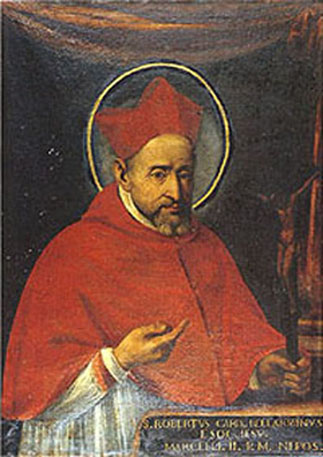
Sanctus Robertus Bellarminus, Confessor et Ecclesiae Doctor (Duplex)
Tertio Idus Maji.Sanctus Robértus Bellarmínus, Confessor et Ecclesiæ Doctor (Duplex)
The Thirteenth Day of May.
Saint Robert Bellarmine, Confessor and Doctor of the Church (Double)
Ex Martyrologio
From the Martyrology
Sancti Robérti Bellarmíno, e Societáte Jesu, Cardinális atque olim Epíscopi Capuáni, Confessóris et Ecclésiæ Doctóris, cujus dies natális décimo quinto Kaléndas Octóbris recensétur.
St. Robert Bellarmine, of the Society of Jesus, cardinal and one time bishop of Capua, confessor and doctor of the Church, whose birthday is kept on the 17th of September.Ex II Nocturno.
From the 2nd Nocturn.
Robertus, Politianus, e patrícia Bellarminórum gente, matrem pientíssimam hábuit Cynthiam Cervini, Marcelli Papæ secúndi sorórem. Eximia pietáte et castíssimis móribus quamprimum enituit, id unum exoptans, ut Deo soli placeret et ánimas Christo lucrifáceret. Patrium Societátis Jesu collegium summa cum ingenii et modéstiæ laude frequentávit ; ac duodeviginti annos natus, Romæ eamdem Societátem ingréssus, religiosárum virtútum ómnibus exemplo fuit. Emenso in Romano Collegio philosophíæ curriculo, missus est primum Floréntiam, tum Montem Regalem ; deinde Patavium ad sacram theologíam addiscéndam, ac póstea Lovanium, ubi concionatoris munere, nondum sacérdos, mirifice functus est. Lovanii præterea, sacerdotio auctus, theologíam ita dócuit, ut plurimos hæreticos ad Ecclésiæ unitátem reduxerit, ac theologus per Europam claríssimus haberétur, eumque Sanctus Cárolus Mediolanénsis epíscopus aliique veheménter sibi expéterent.
Robert, a native of Montepulciano and of the noble family of Bellarmine, had for his mother the most pious Cynthia Cervini, sister of Pope Marcellus II. From the first he was conspicuous for exemplary piety and most chaste manners, earnestly desiring this one thing, to please God alone and to win souls to Christ. He attended the college of the Society of Jesus in his native town where he was highly commended for his intelligence and modesty. At the age of eighteen he entered the same Society at Rome, and was a model of all religious virtues. Having passed through the course of philosophy at the Roman College, he was sent first to Florence, then to Monreale, later to Padua to teach sacred theology, and afterwards to Louvain where, not yet a priest, he ably discharged the office of preacher. After ordination at Louvain, he taught theology with such success that he brought back many heretics to the unity of the Church, and was regarded throughout Europe as a most brilliant theologian ; and St. Charles, Bishop of Milan, and others keenly sought after him.
Romam ex desidério Gregórii Papæ décimi tertii revocatus, theologicam controversiárum disciplínam trádidit in Collegio Romano : ibique vitæ spiritualis magister constitútus, angelicum juvenem Aloísium per sanctitátis sémitas moderátus est. Ipse Collegium Romanum ac deinde Neapolitanam Societátis Jesu Provinciam ad Sancti Ignatii mentem gubernávit. In Urbem íterum accersítus, a Cleménte octavo ad summa Ecclésiæ negotia, máximo cum christianæ rei emolumento, est adhibitus : tum invitus et frustra reluctans, in Cardinalium númerum cooptátus quia, ut palam asseruit ipse Póntifex, tunc non habebat parem Ecclésia Dei quod ad doctrínam. Ab eodem Pontifice consecrátus Epíscopus, Capuanam Archidiœcésim triennium sanctíssime administrávit : quo munere deposito, Romæ ad mortem usque degit, integérrimus ac fidelíssimus Summi Pontificis consiliarius. Multa præcláre scripsit, illud meritum adeptus in primis quod, sanctum Thomam ducem et magistrum secutus, de suórum necessitate témporum próvide cónscius, invicto doctrinæ róbore et amplíssima testimoniórum copia e Sacris Litteris et e Sanctórum Patrum ditíssimo fonte apte deprompta novos erróres debellávit, traditiónis catholicæ et Romani Pontificátus jurium strenuus præprimis adsertor. Complúribus étiam ad pietátem fovéndam libellis exstat insígnis ac præsertim aureo catechismo, quem licet aliis gravíssimis negotiis distentus, tum Capuæ tum Romæ púeros ac rudes docére non prætermittebat. Robertum æquævus Cardinalis a Deo missum judicávit, qui catholicos erudíret, pios cóleret, hæreticos profligaret ; Sanctus Franciscus Salesius doctrinæ fontem hábuit ; Summus Póntifex Benedíctus décimus quartus hæreticórum malleum dixit, ac Benedíctus décimus quintus catholicam religiónem propagántibus et tuéntibus exemplar indicávit.
Recalled to Rome at the wish of Pope Gregory XIII, he taught the science of controversial theology at the Roman College, and there, as spiritual diréctor he guided the angelic youth Aloysius in the paths of holiness. He governed the Roman College and then the Neapolitan province of the Society of Jesus in accordance with the spirit of St. Ignatius. Again summoned to Rome, he was employed by Clement VIII in the most important affairs of the Church, with the greatest advantage to the Christian state ; then against his will and in spite of opposition, he was admitted among the number of the cardinals, because, as the Pontiff publicly declared, he did not have his equal among theologians in the Church of God at the time. He was consecrated bishop by the same Pope, and administered the archdiocese of Capua in a most saintly manner for three years : having resigned this office, he lived in Rome until his death, as a most impartial and trusty counsellor to the Supreme Pontiff. He wrote much, and in an admirable manner. His principal merit lieth in his complete victory in the struggle against the new errors, during which he distinguished himself as a strenuous and outstanding víndicator of Catholic tradition and the rights of the Roman See. He gained this victory by following St. Thomas as his guide and teacher, by a prudent consideration of the needs of his times, by his irrefragable teaching, and by a most abundant wealth of testimony well-chosen from the sacred writings and from the very rich fountain of the Fathers of the Church. He is eminently noted for very numerous short works for fostering piety, and especially for that golden Catechism, which he never failed to explain to the young and ignorant both at Capua and at Rome, although preoccupied with other very important affairs. A contemporary cardinal declared that Robert was sent by God the instruction of Catholics, for the guidance of the good, and for the confusion of heretics ; St. Francis de Sales regarded him as a fountain of learning ; the Supreme Pontiff Benedict XIV called him the hammer of heretics ; and Benedict XV proclaimed him the model of promoters and defenders of the Catholic religion.
Vitæ religiosæ studiosíssimus, eam, inter purpuratos Patres adlectus, in exemplum servávit. Opes ultra necessarias nóluit ; módico famulatu, ténui cultu habituque contentus : suórum non studuit opuléntiæ, ac vix adduci pótuit ut inópiam idéntidem levaret. De se humillime sensit, et mira fuit animi simplicitate. Deíparam diléxit unice : plures horas quotídie oratióni tríbuebat. Parcíssime víctitans, ter in hebdomada jejunábat : in se constanter austérus, caritáte in próximum flagrávit, vocátus sæpenúmero Pater páuperum. E baptismate innocéntiam ne vel levi quidem culpa macularet strenue contendit. Prope octogenarius, ad Sancti Andréæ in Colle Quirinali, extremem in morbum íncidit, quem sólito virtútum fulgóre illustrávit. Moribundo Gregórius Papa décimus quintus et plures Cardinales adstitérunt, tantum Ecclésiæ cólumen éripi complorantes. Die sacrórum Stígmatum sancti Francisci, quorum memóriæ ubíque celebrandæ auctor fuerat, obdormívit in Dómino, anno millésimo sexcentésimo vigésimo primo. Mortuo tota cívitas parentávit, Sanctum uno ore conclámans. Eum vero Pius undecimus, Póntifex maximus, Beatórum primum ac deinde Sanctórum número adscripsit, et paulo post, ex Sacrórum Rituum Congregatiónis consulto, universalis Ecclésiæ Doctórem declarávit. Ejus corpus Romæ in templo Sancti Ignatii, apud sepúlcrum Sancti Aloísii, ut ipse optarat, pia veneratióne cólitur.
He was most zealous in the religious life and he maintained that manner of life after having been chosen as one of the empurpled cardinals. He did not want to any wealth beyond what was necessary ; he was satisfied with a móderate household, and scanty fare and clothing. He did not strive to enrich his relatives, and he could scarcely be induced to relieve their poverty even occasionally. He had the lowest opinion of himself, and was of wonderful simplicity of soul. He had an extraordinary love for the Mother of God ; he spent many hours daily in prayer. He ate very sparingly, and fasted three times a week. Uniformly austere with himself, he burned with charity towards his neighbour, and was often called the father of the poor. He earnestly strove that he might not stain his baptismal innocence to even the slightest fault. Almost eighty years old, he fell into his last illness at St. Andrew's on the Quirinal hill, and in it he shewed his usual radiant virtue. Pope Gregory XV and many cardinals visited him on his deathbed, lamenting the loss of such a great pillar of the Church. He fell asleep in the Lord in the year 1621, on the day of the sacred Stigmata of St. Francis, the memory of which he had been instrumental in having celebrated everywhere. The whole city mourned his death, unanimously proclaiming him a Saint. The Supreme Pontiff Pius XI inscribed his name, first, in the number of the Blessed, and then in that of the Saints, and shortly afterwards, by a decree of the Sacred Congregation of Rites, he declared him a Doctor of the universal Church. His body is honoured with pious veneration at Rome in the church of St. Ignatius, near the tomb of St. Aloysius, as he himself had desired.
Sancte Robérte Bellarmíne, ora pro nobis.
Saint Robert Bellarmine, pray for us.
O, Sancte Doctor Ecclesiæ, ora pro nobis.
O, Holy Doctor of the Church, pray for us.
O, Fons Doctrinæ, ora pro nobis.
O, Fount of Doctrine, pray for us.
O, Catholicam Religiónem Propagántibus et Tuéntibus Exemplar, ora pro nobis.
O, Model of Promoters and Defenders of the Catholic religion, pray for us.
O, Hæreticórum Malleus, ora pro nobis.
O, Hammer of Heretics, pray for us.
El Padre Harrison sobre "el limbo"
Queridos amigos:Ultimamente ha habido mucha discusión -¡y mucha confusión!- entre los católicos sobre cuál es el destino eterno de los niños que mueren sinbautismo. En el artículo adjunto, comentando una respuesta que salió el domingo pasado en el periódico católico de Puerto Rico, "El Visitante", he intentado aclarar esta cuestión, para explicar lo que entiendo que es la verdadera posición de nuestra Santa Madre Iglesia. Es especialmente importante lo señalado sobre un error que hay en la traducción oficial al español del#1261 del Catecismo de la Iglesia Católica.
Su amigo en Jesucristo resucitado,
P. Brian Harrison, O.S.
---------------
¿ES CIERTO QUE EL LIMBO NO EXISTE?
Por el P. Brian W. Harrison, O.S., S.T.D.
En El Visitante del 7-13 de mayo, en la columna “Quiero saber” (p. 13), el P. Pedro Reyes ha contestado una lectora que le había preguntado sobre el por qué del bautismo de niños, si “no hay limbo” como destino de aquellos que mueren sin dicho sacramento.
El P. Pedro ha ofrecido en su contestación muchas citas muy apropiadas de nuestro Código de Derecho Canónico, de la Sagrada Escritura, y de varios documentos pertinentes del Magisterio de la Iglesia, que en su conjunto manifiestan la voluntad muy clara de la Iglesia al efecto de que los niños pequeños definitivamente deben ser bautizados. El Padre también nos dice, muy correctamente, que el “principio teológico” en el que “se fundamenta” la “necesidad de bautizar a los niños” es el siguiente: “la recepción de hecho o al menos de deseo [del bautismo] es necesaria para la salvación”. Exactamente. Y justamente porque los niños pequeños, a diferencia de los adultos, no son capaces de “desear” el bautismo, la gran tradición bimilenaria de la Iglesia, hasta hace muy poco, era prácticamente unánime en enseñar (aunque sin llegar a una definición dogmática) que bajo la Nueva Alianza de Cristo tales niños, por el pecado original que tienen, no se pueden salvar si mueren sin la recepción del sacramento.
Por eso quiero suplementar la respuesta del P. Pedro sobre este tema (al cual he dedicado investigaciones teológicas bastante extensas que se publicarán próximamente) con unas observaciones adicionales que creo son necesarias para una comprensión más completa y realista de la posición de la Iglesia sobre este asunto.
En el tercer párrafo de su artículo, el Padre observa que “ya se nos dice que no existe el limbo de los niños”. ¿”Se nos dice”? Pero la pregunta clave es, “¿Quién nos lo dice?” Muchos ya creen que es la misma Santa Madre Iglesia, pero eso no es cierto. La respuesta correcta es que muchos teólogos (en realidad, la gran mayoría de ellos) ya no creen en el limbo, y nos están asegurando que todo ser humano que muere antes de llegar al uso de la razón – bautizado o no bautizado – va a alcanzar la visión beatífica, es decir, la gloria del Cielo. En diciembre pasado, representantes de la Comisión Internacional de Teólogos, después de un congreso en Roma sobre el tema, hizo público su consenso sobre dicha conclusión optimista, la cual fue ampliamente reportada en la prensa, televisión e Internet.
Sin embargo, los teólogos, como tales, no son el magisterio de la Iglesia. Sus opiniones, aunque puedan llegar a constituir una mayoría abrumadora en un momento dado de la historia, siempre son falibles. Tales opiniones son especialmente cuestionables cuando nos resulta muy difícil, si no imposible, compaginarlas con numerosas declaraciones anteriores de los Sucesores de los Apóstolos – los papas y obispos. Pues, toda la credibilidad intelectual del catolicismo depende radicalmente de su coherencia doctrinal diacrónica: o sea, la ausencia de contradicción entre lo que la Iglesia eseñaba en siglos anteriores y lo que nos enseña hoy. Pues Jesucristo prometió que el Espíritu Santo estaría con los Apóstoles y sus sucesores “todos los días, hasta el fin del mundo” (Mateo 28, 20).
Ahora bien, para algunos teológos (entre los cuales este servidor–y reconozco que en este momento somos una pequeña minoría), el limbo sí existe para los niños que mueren sin bautismo. Y lo creemos porque la tradición constante de la Iglesia, por dieciocho siglos o más, fue unánime en negar rotundamente la tesis planteada por el dominante liberalismo teológico de hoy, a saber, que todos los infantes muertos, bautizados y no bautizados, van para el Cielo. Aquí no hay espacio para citar a todo lo que han afirmado los Papas y Concilios Ecuménicos para frenar tal optimismo exagerado, pero unos ejemplos son los siguientes.
En el remoto año 417, el Papa San Inocencio I escribió a los padres del Sínodo de Milevis, insistiendo a los católicos liberales de aquel entonces, “La idea de que los niños puedan llegar a los premios de la vida eterna aun sin la gracia del bautismo es totalmente necia” (latín perfatum est, cf. Denzinger-Schoenmetzer 219).
El Concilio Ecuménico de Florencia, en su Bula Cantate Domino del 4 de febrero de 1442, insiste enérgicamente en la gran importancia de bautizar a los niños lo antes posible, “por el peligro de muerte, que con frecuencia puede ocurrir, ya que no se les puede suministrar ningun otro remedio excepto el sacramento del bautismo, mediante el cual ellos son arrebatados del dominio del demonio y adoptados entre los hijos de Dios” (DS 1349).
Papa Sixto V, en su Constitucion Effrænatam del 29 de octubre de 1588 contra el aborto, subraya que lo lamentable de este delito no es tan sólo la destrucción de la vida corporal de las pequeñas víctimas no nacidas, sino también “el sacrificio indudable de [sus] almas” (animarum certa iactura), las cuales quedan “exclu[ídas] de la beata visión de Dios” (a beata Dei visione exclusit), justamente por haber muerto así sin bautismo. (Cf. P. Gasparri [ed.], Codex Iuris Canonici Fontes, vol. I, p. 308.)
En el 1794, el Sumo Pontífice Pio VI condena como “falsa y temeraria” la opinión de algunos que “califica[n] de fábula pelagiana aquel lugar, . . . [adonde van] las almas de los que mueren con la sola culpa del pecado original, que los fieles suelen llamar el limbo de los niños” (DS 2626). Bueno, ¿no es eso más o menos lo que están haciendo hoy la ‘ilustrada’ mayoría de nuestros teólogos? Ellos están rechazando el limbo, calificándolo, en efecto, de ‘fábula’, es decir, mito, leyenda, cuento – cosa que en realidad no existe.
Quizás alguien me dirá que el mismo Catecismo de la Iglesia Católica ya ha descartado el limbo. Pero eso sería una exageración. Más exactamente, el Catecismo refleja el hecho de que ya, en las décadas recientes, nuevas preguntas han surgido sobre el tema, con mucha discusión teológica por y contra la realidad del limbo. Por lo tanto, este reciente compendio autoritativo de doctrina católica, reconociendo que el mismo liderato de la Iglesia ya no está muy seguro sobre el verdadero destino de aquellos niños no bautizados, ha optado por dejar abierta esta cuestión, por lo menos temporalmente. En otras palabras, la Iglesia permite que la discusión pueda continuar, por el momento, entre los que creen, y no creen, en la existencia del limbo. La afirmación básica del Catecismo sobre tales niños es que “La Iglesia sólo puede confiarlos a la misericordia divina, como hace en el rito de las exequias por ellos” (art. 1261). Afirmación esencialmente ‘agnóstica’ sobre su destino eterno ¡y ciertamente muy lejos de una garantía de que todos van para el Cielo! Pues aunque esos niños vayan al limbo, eso también manifestará “la misericordia divina,” dado que en ese caso ellos disfrutarán una felicidad eterna (aunque natural, no sobrenatural), incluyendo la resurrección de sus cuerpos –ya adultos– a la inmortalidad en el día final, cuando Dios “destruirá a la muerte para siempre” y “enjugará toda lágrima de los ojos” (cf. Isaías 25, 8; Apoc. 21, 4).
Efectivamente, al examinar aquel “rito de las exequias”, lo encontramos muy reservado, sin la más mínima sugerencia de que esos niños muertos sin bautismo posiblemente puedan llegar a la gloria celestial. No hay oración alguna por su salvación (sólo por la consolación de sus familiares en luto). Y estoy hablando de la nueva edición oficial del Misal, publicada por el Vaticano en 2002 (diez años después del Catecismo), en la cual no se ha cambiado en nada el rito original de Pablo VI (Misal de 1969). De hecho, este rito desalienta toda clase de esperanza excesiva por la salvación de aquellos niños de parte de sus familiares. Pues, una rúbrica oficial recuerda al sacerdote o diácono que presida las exequias: “En la catequesis, es importante la vigilancia para que la doctrina sobre la necesidad del bautismo no se oscurezca en la mente de los fieles”. (“In catechesi autem advigilandum est, ne doctrina de necessitate baptismi in mentibus fidelium obscuretur”: Missale Romanum, 3era. editio typica, Ciudad del Vaticano: 2002, p. 1197.) Este testimonio de la sagrada liturgia es muy importante. Todo sacerdote y teólogo conoce bien el refrán, lex orandi, lex credendi (“El culto [oficial de la Iglesia] expresa confiablemente su fe”).
Un poquito más arriba en el Catecismo, en el art. 1257, se ha reafirmado, coerentemente con el 1261, que “La Iglesia no conoce otro medio que el Bautismo para asegurar la entrada en la bienaventuranza eterna” (énfasis mío). ¡Palabras que deben ser grabadas en la mente de los padres católicos para cuando nacen sus hijos! Además, debemos señalar aquí un error en la traducción oficial del Catecismo al español. Leemos también en art. 1261 que ciertos argumentos bíblicos “nos permiten confiar en que haya un camino de salvación para los niños que mueren sin bautismo” (énfasis mío). Esta es una exageración, pues el original del 1992 en francés emplea el verbo espoir, no confier. Y la versión definitiva en latín del 1997 también usa el verbo sperare: esperar. Este verbo, claro, es más cauteloso que confiar. Según el Diccionario de la Real Academia Española, este último significa “esperar con firmeza y seguridad”. Por lo tanto, la verdadera enseñanza del Catecismo es simplemente que se puede esperar – ¡pero no dice con ‘firmeza’ ni ‘seguridad’! – que haya tal ‘camino de salvación’ para aquellos niños.
En mi humilde opinión, estamos en una situación semejante a la de los años 1966-1968, cuando una gran mayoría de los teólogos, y hasta algunos obispos y cardenales, esparaban con mucha “firmeza y seguridad” (¡y algunos se atrevían a predicarlo públicamente!) que el Papa Pablo VI iba a avalar la recomendación de una Pontificia Comisión que había estudiado la cuestión del control de natalidad, y así cambiar la bimilenaria doctrina cristiana en contra del uso de prácticas antinaturales. Para sorpresa de casi todos, el Santo Padre no lo hizo, sino, dándole la razón a la pequeña minoría conservadora (¡pero correcta!), insistió nuevamente, mediante su encíclica Humanae vitae, en la sana doctrina tradicional en contra del uso de anticonceptivos. Asimismo, yo me atrevo a predecir que cuando el presente Pontífice, Benedicto XVI, llegue a emitir su juicio (probablemente dentro de uno o dos años) sobre las recomendaciones de la Comisión de teológos que le están instando a ‘abolir’ el limbo, el Santo Padre sorprenderá grandemente a todos, negándose a hacerlo.
Si algún lector tiene interés en un artículo mío más extenso sobre este tema, lo puede encontrar en la sección “articles” del sitio www.SeattleCatholic.com. Su título es “Could Limbo be ‘Abolished’?”
Garrigou's De Revelatione: Is it about Apologetics or about Revelation?
You have a high regard for De Revelatione … what exactly is it about and why do you prize it so? It seems (in spite of its name) it is about apologetics. I gather this from a reference in the Monster of Thomism where the author asserts that a book by J. Walshe was largely a translation of De Revelatione. When I got that book I found it was all about apologetics so I guess it is about reason reflecting on revelation?This work is not “apologetics” in our sense of the word. The best way to look at it is as Garrigou’s introduction to his commentaries to the Summa and—since the Summa, for him, represents the true order and methodology of theology—to theology itself.
The first hundred or so pages of the first volume consist in very fundamental issues. First, he gives a very thorough introduction to theology in general (the best I’ve ever seen, in fact), where he deals with the definition, division, object and methodology of Sacred Theology. Then he discusses the notion, methodology and division of fundamental theology, that is, the “branch” of theology that deals with the fundamentals of revelation: e.g., what is revelation, to what extent it can be defended, what are the sources of revelation, what is Scripture, what is Tradition, what is the Church, what is the extent of the authority of the Church, etc.
Then he begins “Apologetics” proper; but he does not conceive apologetics in the contemporary sense—that is, as an ultimately practical endeavor that consists in utilizing all means available (rhetoric if need be) to persuade non-Catholics of the truth of the Faith and bringing them to the Catholic Church. For Garrigou, on the other hand, “Apologetics” is a scientific (properly theological) task. Just as the job of any supreme science is partially to defend its principles against its opponents (e.g., Metaphysics defends the possibility for true intellectual knowledge of reality), so Theology must have some function that consists in defending its principles. So Garrigou’s primary goal in De Revelatione is to demonstrate, in a scientific way, the possibility and existence of revelation against its opponents, namely, rationalism, naturalism, pantheistic evolutionism, agnosticism, and especially modernism. This is why it is called “apologetics”: because he is defending the faith. But his is a thoroughly scientific/scholastic defense of the most fundamental theological subjects (all of which would fall outside of the scope of most works by popular apologists): the nature, possibility, existence, modes, necessity and credibility of revelation, the nature and development of dogma, the notion of mystery and its relationship to the intellect, the supernatural and its relationship to nature, the act of faith, etc.
Why I am so interested in De Revelatione? Because it is such a thorough exposition and defense of the fundamentals of the faith. I see it as the key to solving most of the problems in modern-day theology. Almost all the disputed issues that I ever deal with truly boil down the question of revelation. For example, the issue of Limbo boils down to what are the sources of revelation and what authority they have. If the consensus of the Church Fathers and the theologians is truly authoritative, then it is undisputable that the souls of infants who die without baptism cannot attain eternal salvation. Another issue is that of sedevacantism (the idea that Popes since John XXIII are not really popes, but anti-popes because they have taught heresy) can be solved given a proper understanding of the theological notes—that is, that there are different levels of Catholic doctrine and, even if some popes have taught questionable doctrines in the last few decades, nevertheless they are not heretics. And the list of issues is endless: the morality of contraception can be solved if we realize that the teaching of previous popes is biding, even though it is not de fide; the issue of ordination of women can easily be cast aside if we become aware of the fact that universal Church discipline is an infallible “organ” of tradition; and so on. And many of these fundamental issues and their philosophical underpinnings are dealt with in De Revelatione.
Friday, May 12, 2006
De Erroribus Novi Catechismi--Primae parti objectiones et responsa
I. Gratias tibi refero propter haec exempla quae tu tam benigniter nobis praebuisti, haud dubium est quin diu profundeque meditatus sis his de rebus. Pariter autem, mea saltem sententia, haud dubium est quin hae res notae erant et theologis qui catechismum renovavit et papae qui eundem approbaverit, vulgaverit.
-Distinguo. Tam doctrinam de notis theologicis quam consensum patrum, theologorum, fideliumque necnon sententias Magisterii Ecclesiastici de sorte eorum qui sine baptismo abierunt, et Cardinali Schönborn (idest, editori Novi Catechismi) et PP. Joanni Paulo II notae erant—concedo. Ei easdem doctrinas credent—nego.
Probo. Cardinalis Schönborn et PP. Joannes Paulus II sunt inter adhaerentes “Novae Theologiae” (gallice, “La Nouvelle Theologie”). Unum ex primis principiis huius theologiae est locos theologicos ita reinterpretare ut eius consensus auctoritasque destruantur et sic doctrinae quae super hos locos fundantur minus certae videantur—cf. libellum ab Hans Urs Von Balthasar scriptum, et ab ipso Cardinale Schönborn praefatum, nomine “Schleifung der Bastionen: Von der Kirche in Dieser Zeit” (Demolitio Castellorum: De Ecclesia in Hoc Tempore). Adhaerentes istae Novae Theologiae, etiam si doctrinas stricte fide divina credendas credant, plures tamen doctrinas catholicas assensu religioso tenendas (vide notas theologicas) vel reiciunt vel ignorant vel tergiversantur vel nove reinterpretantur. Notas igitur Theologicas, ut prius docebantur in Ecclesia, minime tenere volunt. Et ipsum consensum patrum, theologorum, fideliumque “de-construunt,” arguendo contra eorum unanimitatem (vide infra explicationem notionis “consensus” in theologia traditionali catholica). Sic, fundamentum theologiae traditionalis destruentes, novitates doctrinales in theologiam mittunt. (P. Garrigou-Lagrange articulum optimum de nova theologia gallice scripsit: "La Nouvelle Théologie: Où va-t-elle?."
II. Quos credo non tantum novam doctrinam promulgare quantum confirmare nullam esse salutem praeter Christum cuius misericordiae concredendae sint animae omnium defunctorum.
-Distinguo. Novam doctrinam in Novo Catechismo promulgare (lege, “definire”) noluerunt—concedo. Firmiter assere nullam esse salutem praeter Christum et Ecclesiam sensu antiquo et vero quo in Concilio Florentino et alibi invenies—nego.
Probo. Concilium Oecumenicum Florentinum “firmiter credit, profitetur et praedicat, 'nullos extra catholicam Ecclesiam exsistentes, non solum paganos', sed nec Judaeos aut haereticos atque schismaticos, aeternae vitae fieri posse participes; sed in ignem aeternum ituros, 'qui paratus est diabolo et angelis eius' (Mt 25, 41), nisi ante finem vitae eidem fuerint aggregati: tantumque valere ecclesiastici corporis unitatem, ut solum in ea manentibus ad salutem ecclesiastica sacramenta proficiant, et ieiunia, eleemosynae ac cetera pietatis officia et exercitia militiae christianae praemia aeterna parturiant. 'Neminemque, quantascumque eleemosynas fecerit, etsi pro Christi nomine sanguinem effuderit, posse salvari, nisi in catholicae Ecclesiae gremio et unitate permanserit' (Decretum pro Iacobitis; vide Denzinger 714 [1351]).”
Nullus autem eorum qui adhaerunt Novae Theologiae hoc ad verbum credit. Hoc est una ex doctrinis (etiam, unum ex dogmatibus) quae nove interpretare cupiunt. Alterum enim principium Novae Theologiae est modernismum quantum possibile in theologiam catholicam accomodare. Modernismus autem omnes acatholicos “bonae voluntatis” salvos esse ponit. Ergo, et adhaerentes Novae Theologiae hoc saltem sperare volunt (cf. praesertim Hans Urs Von Balthasar “Was dürfen wir hoffen?” ubi auctor rhetorice percontat “An sperare audemus omnes homines salvos esse?” Et respondet affirmative.) Ei saltem concedere volunt extra ecclesiam nullam salutem esse (hac enim doctrina de fide est). Sed ut hoc dogma nove reinterpretari possit et sic videatur merus flatus vocis esse, id ad veritatem modernarum aurium minus offensivam reducere student—e.g., ad has veritates: “Nullam esse salutem praeter Christum,” vel “Nullam esse salutem nisi PER Christum,” quasi dicens acatholicos “per Christum” salvari posse. Sed falsitas huius interpretationis probatur ex locis theologicis, qui firmiter testantur quoniam ei qui extra ecclesiam moriuntur salvari nequeunt (quod post paucos dies demonstrare cogitabam). Et si extra ecclesiam vere nulla salus, minime tunc salutem OMNIUM defunctorum sperare possumus, quia manifeste non omnes moriuntur intra ecclesiam.
III. Mihi mirum est quod tu memoravisti Originem qui, nisi fallor, credidit omnes etiam diabolum et angelos eius salvi servati fore, quae doctrina graece vocatur apokatastasis . Lege, quaeso, quod scripsit in libro De Principiis 2. 10. 6-8 "quanto magis intellegendum est medicum nostrum deum volentem diluere vitia animarum nostrarum, quae ex peccatorum et scelerum diversitate collegerant, uti huiuscemodi poenalibus curis, insuper etiam ignis inferre supplicium his, qui sanitatem animae perdiderunt?" Re vera vis tu Origena nitier? Et Tertulliano? Iste Montanista??
-Distinguo. Origines et alii qui primis saeculis Ecclesiae libros de re theologica scripserunt aliquas doctrinas heterodoxas docuerunt—concedo. Hoc destruxit argumentum ex consensu patrum—nego.
Probo. Licet hi non sint “Patres ecclesiae” sensu stricto, sed “Antiqui Scriptores Ecclesiastici” tantum (quia aliquas doctrinas heterodoxas docuerunt), si tamen cum Patribus (sensu stricto) consentiunt, argumentum ex consensu Patrum roborare possunt. Unde theologi scholastici eorum sententias inter testimonia Patrum computare solent. (Cf. Patres Societatis Jesu in Hispania Professores, Sacrae Theologiae Summa, Vol. 1, p. 756-766.)
IV. Scripseras: <
-Distinguo: Haec sententia est vera—concedo. Interpretationem—nego.
Probo. Haec sententia ait de episcopis in “conferentiis episcoporum” et in “conciliis particularibus,” quae doctrinas infallibiliter definire nequeunt. Concilium autem Tridentinum est Concilium Oecumenicum sive Universale. Est ergo capax infallibiliter definiendi.
V. [Scripseras:] <
-Distinguo: Eum cui datae sunt claves regni caelorum audiendum est–concedo et firmiter profiteor. Catechismus Novus vocem eius cui datae sunt claves regni caelorum repraesentat—firmiter nego.
Probo. Finis Novi Catechismi (sicut et Concilii cuius Catechismus est) nihil aliud fuit quam antiquam fidem Catholicam ad hujus aetatis morem componere. PP. Joannes Paulus II novas doctrinas definire noluit, sed antiquas doctrinas nove exprimere voluit. Novum Catechismum ut dogmatice tenendum non praentendit, sed practice tantum, ut “regula ad fidem docendam,” intendit (cf. Fidei Depositum). Cum ergo eum non infallibiliter proclamavit, nihil prohibet ut hic Catechismus a precisionibus theologicis doctrinarum antiquarum aberret.
Conclusio: Si mihi audire noles, sic fiat. Sed audi saltem eum qui claves regni caelorum exercet cum definit:
“Illorum autem animas, qui in mortali peccato vel cum solo originali decedunt, mox in infernum descendere, poenis tamen disparibus puniendas.” (Concilium Oecumenicum Florentinum; vide Denzinger 693 [1306].)
Vale, valete!
Vale et tu.
Vide:
De Erroribus Novi Catechismi--Prima pars.
De Erroribus Novi Catechismi--Commentum ad Primam Partem.
Tuesday, May 09, 2006
Disputed Question on Limbo--Positive Exposition.
And many others teach likewise.
Even if the doctrine of the “limbus puerorum” is not itself de fide (i.e. to be believed with the theological virtue of faith), nevertheless it is sententia communis, doctrina tenenda and doctrina catholica, and as such, it is to be held by all with religious assent—such that a doctrine that is opposed to it is, at the very least, offensiva piarum aurium, temeraria and iniuriosa scholis catholicis, and perhaps savoring of a greater error.